Shopping Cart
Remove All
  • TargetMol
    Your shopping cart is currently empty

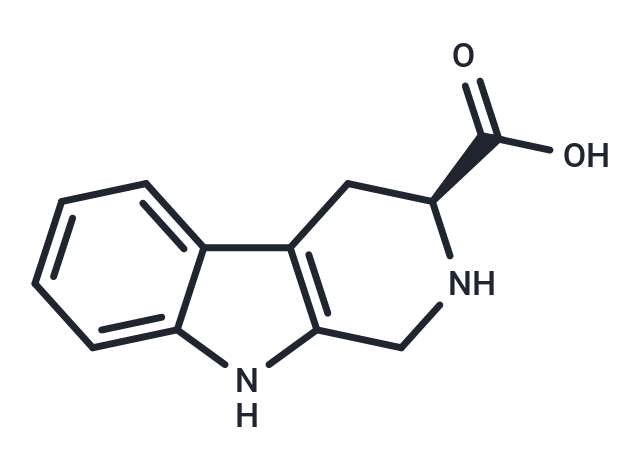
TNCA

Copy Product Info
😃Good
Catalog No. T7716Cas No. 42438-90-4
Alias Lycoperodine-1

TNCA (Lycoperodine-1) is a high-affinity CaSR ligand (CaSRL) with co-agonist activity.

TNCA

TNCA

Copy Product Info
😃Good
Purity: 97.73%
Catalog No. T7716Alias Lycoperodine-1Cas No. 42438-90-4
TNCA (Lycoperodine-1) is a high-affinity CaSR ligand (CaSRL) with co-agonist activity.
Pack SizePriceUSA WarehouseGlobal WarehouseQuantity
10 mg$31In StockIn Stock
25 mg$52In StockIn Stock
50 mg$81In StockIn Stock
100 mg$123In StockIn Stock
500 mg$297-In Stock
Add to Cart
Add to Quotation
In Stock Estimated shipping dateUSA Warehouse[1-2 days] Global Warehouse[5-7 days]
All TargetMol products are for research purposes only and cannot be used for human consumption. We do not provide products or services to individuals. Please comply with the intended use and do not use TargetMol products for any other purpose.
Questions
TargetMol
View More

Batch Information

Select Batch
Purity:97.73%
Appearance:Solid
Color:White to Red
Contact us for more batch information

Resource Download

Product Introduction

TNCA AI Summary
TNCA displays notable bioactivity across several domains, primarily showing significant inhibitory effects on platelet aggregation and thrombus formation. In vitro studies using rabbit blood reveal that it notably affects platelet aggregation induced by adenosine diphosphate (ADP) and platelet activating factor (PAF) at varying doses. This compound also impacts the adhesion of high pulmonary metastatic SACC-LM cells and platelets, alongside reducing wet and dry thrombus weights in male Wistar anesthetized rats. Furthermore, in pig blood assays, TNCA demonstrates inhibitory activity on several platelet aggregation pathways, with IC50 values approximate to 3300 nM for ADP, arachidonic acid, PAF, and thrombin-induced platelet aggregation, suggesting potential as an antiplatelet agent. It exhibits effective antithrombotic activity in the Wistar rat arteriovenous cannula model, reducing thrombus weight at a dose of 5 umol/kg, iv. Beyond its antiplatelet properties, TNCA also shows anti-inflammatory potential by inhibiting iNOS-mediated nitric oxide production in LPS-stimulated mouse RAW 264.7 cells and TNF-alpha-induced NFkappaB activation in human HEK293 cells. It enhances quinone reductase 1 activity in mouse Hepa-1c1c7 cells and inhibits aromatase activity, reflecting potential cytoprotective and enzyme inhibitory functions. Additionally, its antioxidant capability is indicated by a trolox equivalents ratio of 1.68 in the ABTS radical scavenging assay. Overall, the multifaceted bioactivity profile of TNCA suggests significant therapeutic potential across antiplatelet, antithrombotic, anti-inflammatory, cytoprotective, and antioxidant domains..
Note: Summary generated by AI. Data source: ChEMBL
Bioactivity
Description
TNCA (Lycoperodine-1) is a high-affinity CaSR ligand (CaSRL) with co-agonist activity.
SynonymsLycoperodine-1
Chemical Properties
Molecular Weight216.24
FormulaC12H12N2O2
Cas No.42438-90-4
SmilesOC(=O)[C@@H]1Cc2c(CN1)[nH]c1ccccc21
Relative Density.1.377g/cm3
Storage & Solubility Information
StoragePowder: -20°C for 3 years | In solvent: -80°C for 1 year | Shipping with blue ice/Shipping at ambient temperature.
Solubility Information
DMSO: < 2.16 mg/mL (10 mM, insoluble or slightly soluble)

Solution Preparation Table
DMSO
1mg5mg10mg50mg
1 mM4.6245 mL23.1225 mL46.2449 mL231.2246 mL
5 mM0.9249 mL4.6245 mL9.2490 mL46.2449 mL
10 mM0.4624 mL2.3122 mL4.6245 mL23.1225 mL

Calculator

  • Molarity Calculator
  • Dilution Calculator
  • Reconstitution Calculator
  • Molecular Weight Calculator

In Vivo Formulation Calculator (Clear solution)

Please enter your animal experiment information in the following box and click Calculate to obtain the stock solution preparation method and in vivo formula preparation method:
TargetMol | Animal experiments For example, if the intended dosage is 10 mg/kg for animals weighing 20 g , with a dosing volume of 100 μL per animal, TargetMol | Animal experiments and a total of 10 animals are to be administered, using a formulation of TargetMol | reagent 10% DMSO+ 40% PEG300+ 5% Tween 80+ 45% Saline/PBS/ddH2O , the resulting working solution concentration would be 2 mg/mL.

Stock Solution Preparation:

Dissolve 2 mg of the compound in 100 μL DMSOTargetMol | reagent to obtain a stock solution at a concentration of 20 mg/mL . If the required concentration exceeds the compound's known solubility, please contact us for technical support before proceeding.

Preparation of the In Vivo Formulation:

1) Add 100 μL of the DMSOTargetMol | reagent stock solution to 400 μL PEG300TargetMol | reagent and mix thoroughly until the solution becomes clear.

2) Add 50 μL Tween 80 and mix well until fully clarified.

3) Add 450 μL Saline,PBS or ddH2OTargetMol | reagent and mix thoroughly until a homogeneous solution is obtained.

This example is provided solely to demonstrate the use of the In Vivo Formulation Calculator and does not constitute a recommended formulation for any specific compound. Please select an appropriate dissolution and formulation strategy based on your experimental model and route of administration.
All co-solvents required for this protocol, includingDMSO, PEG300/PEG400, Tween 80, SBE-β-CD, and Corn oil, are available for purchase on the TargetMol website.
1 Enter information below:
mg/kg
g
μL
2 Enter the in vivo formulation:
% DMSO
%
% Tween 80
% Saline/PBS/ddH2O

Dose Conversion

You can also refer to dose conversion for different animals. More Dose Conversion

Tech Support

Please see Inhibitor Handling Instructions for more frequently ask questions. Topics include: how to prepare stock solutions, how to store products, and cautions on cell-based assays & animal experiments, etc

Keywords

Related Tags: buy TNCA | purchase TNCA | TNCA cost | order TNCA | TNCA chemical structure | TNCA formula | TNCA molecular weight