


Shopping Cart
Remove All Your shopping cart is currently empty

Synonyms:
| Pack Size | Price | USA Stock | Global Stock | Quantity |
|---|---|---|---|---|
| 25 mg | $1,520 | 6-8 weeks | 6-8 weeks | |
| 50 mg | $1,980 | 6-8 weeks | 6-8 weeks | |
| 100 mg | $2,500 | 6-8 weeks | 6-8 weeks |
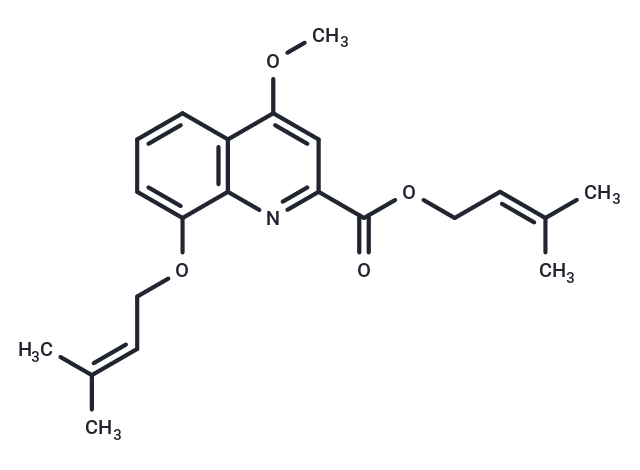
| Description | Ppc-1 is a chemical compound known for its inhibitory effects on the Gram-negative periodontopathogen Porphyromonas gingivalis. It acts as a mitochondrial uncoupler, enhancing mitochondrial oxygen consumption without affecting ATP production. Additionally, Ppc-1 serves as a cell-permeate inhibitor of interleukin-2 (IL-2). This compound exhibits various beneficial activities, including anti-obesity, antibacterial, and anti-inflammatory properties. |
| In vitro | Ppc-1 inhibits the growth of K562 cells (EC50: 13 μM). Ppc-1 displays about 50% inhibition at 15 μM in all cell lines. Ppc-1 has antiproliferative activities in K562 human leukemia, Hela cervical carcinoma, and 3T3-L1 mouse embryonic fibroblast cells. Ppc-1 treatment (0-10 μM; 24 hours; Jurkat cells) significant inhibits IL-2 production in Jurkat cells (IC50: 4 μM). Using the U937-3xκB-LUC human monocytic cell line, Ppc-1 dose-dependently inhibits the lipopolysaccharide-induced NF-κB activation[2][3][4]. |
| In vivo | Ppc-1 distributes into various tissues of individual animals at low levels after a single administration. Ppc-1 stimulates adipocytes in culture to release fatty acids, which might explain the elevated serum fatty acids in Ppc-1-treated mice. Ppc-1 (0-10 mg /kg; Intraperitoneal injection; once a week; for 8 weeks; female ICR mice) treatment inhibits weight gain with no abnormal effects on liver or kidney tissues, and no evidence of tumor formation. Serum fatty acid levels are significantly elevated in mice treated with Ppc-1, while body fat content remained low [1]. |
| Molecular Weight | 355.43 |
| Formula | C21H25NO4 |
| Cas No. | 1245818-17-0 |
| Smiles | O(CC=C(C)C)C=1C2=C(C(OC)=CC(C(OCC=C(C)C)=O)=N2)C=CC1 |
| Relative Density. | 1.105 g/cm3 (Predicted) |
| Storage | Powder: -20°C for 3 years | In solvent: -80°C for 1 year Shipping with blue ice/Shipping at ambient temperature. |
 For example, if the intended dosage is 10 mg/kg for animals weighing 20 g , with a dosing volume of 100 μL per animal, and a total of 10 animals are to be administered, using a formulation of
  10% DMSO+ 40% PEG300+ 5% Tween 80+ 45% Saline/PBS/ddH2O , the resulting working solution concentration would be 2 mg/mL.
Dissolve 2 mg of the compound in 100 μL DMSO to obtain a stock solution at a concentration of 20 mg/mL . If the required concentration exceeds the compound's known solubility, please contact us for technical support before proceeding.
1) Add 100 μL of the DMSO stock solution to 400 µL PEG300 and mix thoroughly until the solution becomes clear.
2) Add 50 µL Tween 80 and mix well until fully clarified.
3) Add 450 µL Saline,PBS or ddH2O and mix thoroughly until a homogeneous solution is obtained.
| Size | Quantity | Unit Price | Amount | Operation |
|---|
 Feedback
 Hello! How can I help you today?
Copyright © 2015-2026 TargetMol Chemicals Inc. All Rights Reserved.
