


Shopping Cart
Remove All Your shopping cart is currently empty

Synonyms:
| Pack Size | Price | USA Stock | Global Stock | Quantity |
|---|---|---|---|---|
| 25 mg | $1,520 | 4-6 weeks | 4-6 weeks | |
| 50 mg | $1,980 | 4-6 weeks | 4-6 weeks | |
| 100 mg | $2,500 | 4-6 weeks | 4-6 weeks |
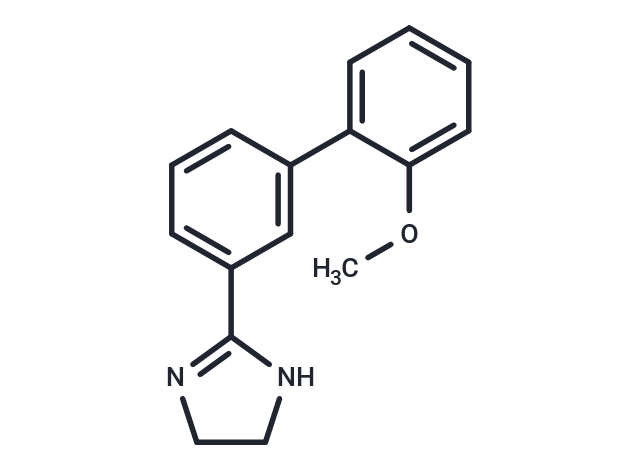
| Description | Compound 4h, also known as 5-HT7R antagonist 2, is a selective inhibitor of the 5-HT7R that disrupts both G protein and β-arrestin signaling pathways. It exhibits a K_i value of 67 nM, with IC_50 values of 2.59 μM in cAMP assays and 39.57 μM in Tango tests. This antagonist is noted for its potential to mitigate repetitive behaviors associated with autism spectrum disorder (ASD) and to foster the restoration of neurogenesis impaired by ASD [1]. Pharmacokinetic analysis in ICR male mice following intravenous and intraperitoneal administration shows a T_max of 0.08 hours and 0.25 hours, a T_1/2 of 0.77 hours and 1.06 hours, and a C_max of 33.07 ng/mL and 156.44 ng/mL, respectively. The AUC_last was recorded at 28.31 ng·h/mL and 143.27 ng·h/mL, with a clearance rate (CL) of 41.61 L/h/kg for intravenous administration. The volume of distribution at steady state (V_ss) was 32.43 L/kg, the mean residence time (MRT) was 0.79 hours and 0.93 hours, and the bioavailability (F) was calculated at 50.60% [1]. |
| Targets & IC50 | 5-HT7 receptor:67 nM (Ki) |
| In vitro | 5-HT7R antagonist 2 (compound 4h) demonstrates significant metabolic stability when incubated with microsomes for 30 minutes and shows no cytotoxicity [1]. In both the G protein and β-arrestin signaling pathways, 5-HT7R antagonist 2 acts as a competitive antagonist [1]. |
| In vivo | Compound 4h acts as a 5-HT7R antagonist and, when administered intraperitoneally at a dosage of 5 mg/kg for 30 minutes, has potential for modulating repetitive behaviors in ASD animal models. This compound also enhances the number of immature neurons associated with ASD [1]. Animal Model: ASD animal models. Dosage: 5 mg/kg. Administration: Intraperitoneal injection. Result: 4h can increase the number of immature ASD neurons. |
| Molecular Weight | 252.31 |
| Formula | C16H16N2O |
| Cas No. | 1448808-50-1 |
| Smiles | N1=C(NCC1)C2=CC=CC(=C2)C3=CC=CC=C3OC |
| Storage | Powder: -20°C for 3 years | In solvent: -80°C for 1 year Shipping with blue ice/Shipping at ambient temperature. |
 For example, if the intended dosage is 10 mg/kg for animals weighing 20 g , with a dosing volume of 100 μL per animal, and a total of 10 animals are to be administered, using a formulation of
  10% DMSO+ 40% PEG300+ 5% Tween 80+ 45% Saline/PBS/ddH2O , the resulting working solution concentration would be 2 mg/mL.
Dissolve 2 mg of the compound in 100 μL DMSO to obtain a stock solution at a concentration of 20 mg/mL . If the required concentration exceeds the compound's known solubility, please contact us for technical support before proceeding.
1) Add 100 μL of the DMSO stock solution to 400 µL PEG300 and mix thoroughly until the solution becomes clear.
2) Add 50 µL Tween 80 and mix well until fully clarified.
3) Add 450 µL Saline,PBS or ddH2O and mix thoroughly until a homogeneous solution is obtained.
| Size | Quantity | Unit Price | Amount | Operation |
|---|
 Feedback
 Hello! How can I help you today?
Copyright © 2015-2026 TargetMol Chemicals Inc. All Rights Reserved.
