


Shopping Cart
Remove All Your shopping cart is currently empty

Synonyms:
| Pack Size | Price | USA Stock | Global Stock | Quantity |
|---|---|---|---|---|
| 1 mg | $563 | 35 days | 35 days | |
| 5 mg | $2,110 | 35 days | 35 days |
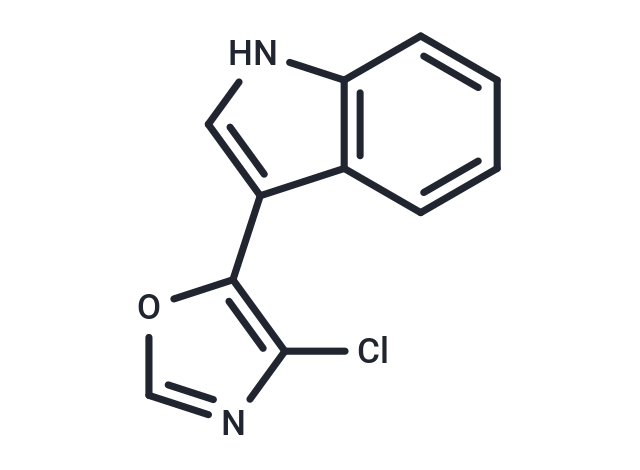
| Description | Streptochlorin is a bacterial metabolite originally isolated from Streptomyces sp. SF2583 that has diverse biological activities, including antiangiogenic, antiproliferative, and anti-allergic properties. It inhibits TNF-α-induced NF-κB transcriptional activity and decreases proliferation of human umbilical vein endothelial cells (HUVECs) when used at concentrations ranging from 5 to 20 μM. Streptochlorin (12 μg/ml) decreases viability of, as well as induces apoptosis and increases the production of reactive oxygen species (ROS) in, Hep3B human hepatocellular carcinoma cells. It does not induce cytotoxicity in RBL-2H3 mast cells at concentrations up to 100 μM. Streptochlorin prevents degranulation in antigen-stimulated mast cells, as well as inhibits Syk kinase and the Src family kinases LYN and Fyn and reduces the secretion of TNF-α and IL-4 induced by dinitrophenyl-human serum album (DNP-HSA) in RBL-2H3 mast cells. It also decreases swelling and reduces scratching behavior in a mouse model of allergic dermatitis induced by dinitrofluorobenzene (DNFB). |
| Molecular Weight | 218.64 |
| Formula | C11H7ClN2O |
| Cas No. | 120191-51-7 |
| Smiles | ClC=1N=COC1C2=CNC=3C=CC=CC32 |
| Relative Density. | no data available |
| Storage | Powder: -20°C for 3 years | In solvent: -80°C for 1 year Shipping with blue ice/Shipping at ambient temperature. |
| Solubility Information | DMSO: Soluble Methanol: Soluble |
 For example, if the intended dosage is 10 mg/kg for animals weighing 20 g , with a dosing volume of 100 μL per animal, and a total of 10 animals are to be administered, using a formulation of
  10% DMSO+ 40% PEG300+ 5% Tween 80+ 45% Saline/PBS/ddH2O , the resulting working solution concentration would be 2 mg/mL.
Dissolve 2 mg of the compound in 100 μL DMSO to obtain a stock solution at a concentration of 20 mg/mL . If the required concentration exceeds the compound's known solubility, please contact us for technical support before proceeding.
1) Add 100 μL of the DMSO stock solution to 400 µL PEG300 and mix thoroughly until the solution becomes clear.
2) Add 50 µL Tween 80 and mix well until fully clarified.
3) Add 450 µL Saline,PBS or ddH2O and mix thoroughly until a homogeneous solution is obtained.
| Size | Quantity | Unit Price | Amount | Operation |
|---|
 Feedback
 Hello! How can I help you today?
Copyright © 2015-2026 TargetMol Chemicals Inc. All Rights Reserved.
