


Shopping Cart
Remove All Your shopping cart is currently empty

Synonyms:
| Pack Size | Price | USA Stock | Global Stock | Quantity |
|---|---|---|---|---|
| 25 mg | $1,520 | 6-8 weeks | 6-8 weeks | |
| 50 mg | $1,980 | 6-8 weeks | 6-8 weeks | |
| 100 mg | $2,500 | 6-8 weeks | 6-8 weeks |
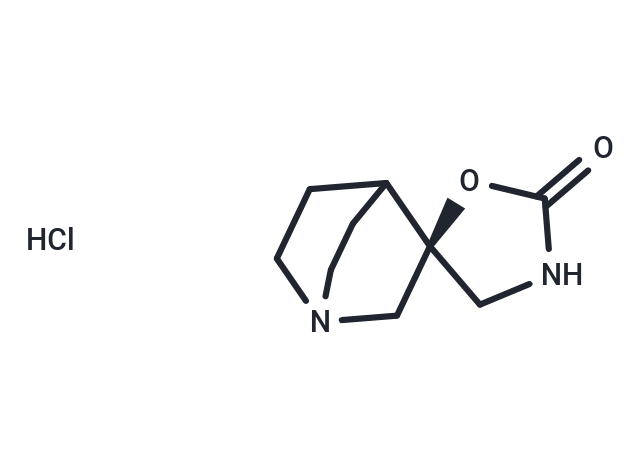
| Description | AR-R17779 hydrochloride is a potent, selective full agonist of the nAChR, demonstrating K i values of 92 nM for the α7 subtype and 16,000 nM for the α4β2 subtype. It is noted for its ability to enhance learning and memory in rats, suggesting potential therapeutic applications. Additionally, this compound exhibits anxiolytic properties and can mitigate inflammation by activating anti-inflammatory cholinergic (vagal) pathways [1] [2] [4]. |
| In vitro | AR-R17779 demonstrates a fivefold increase in potency and is 35,000 times more selective for the α7 nicotinic receptor than (-)-nicotine [1]. Additionally, when applied at a concentration of 200 nM for 24 hours, AR-R17779 effectively inhibits LPS-induced TNF production in macrophages [4]. |
| In vivo | AR-R17779, administered intraperitoneally (i.p.) at doses of 1-5 mg/kg twice daily for 7 days, has been shown to improve arthritis symptoms, reduce synovial inflammation, delay the onset of the disease, and protect against joint destruction in male DBA/1 mice aged 8-10 weeks. This compound, when given subcutaneously (s.c.) at 1-10 mg/kg for 3 weeks, also enhances learning in two radial-arm maze tasks and reverses working memory impairments in rats with fimbria-fornix sections. Notably, in an animal model where arthritis was induced with type II collagen following unilateral cervical vagotomy or sham surgery, doses of 1, 2.5, and 5 mg/kg administered i.p. twice daily from day 20 to day 26 led to amelioration of arthritis, delayed disease onset, and reductions in erosive disease, cartilage degradation, synovial inflammation, and TNFα levels in both plasma and synovial tissue. |
| Molecular Weight | 218.68 |
| Formula | C9H15ClN2O2 |
| Cas No. | 178419-42-6 |
| Smiles | Cl.O=C1NC[C@@]2(CN3CCC2CC3)O1 |
| Relative Density. | 1.31g/cm3 |
| Storage | Powder: -20°C for 3 years | In solvent: -80°C for 1 year Shipping with blue ice/Shipping at ambient temperature. |
 For example, if the intended dosage is 10 mg/kg for animals weighing 20 g , with a dosing volume of 100 μL per animal, and a total of 10 animals are to be administered, using a formulation of
  10% DMSO+ 40% PEG300+ 5% Tween 80+ 45% Saline/PBS/ddH2O , the resulting working solution concentration would be 2 mg/mL.
Dissolve 2 mg of the compound in 100 μL DMSO to obtain a stock solution at a concentration of 20 mg/mL . If the required concentration exceeds the compound's known solubility, please contact us for technical support before proceeding.
1) Add 100 μL of the DMSO stock solution to 400 µL PEG300 and mix thoroughly until the solution becomes clear.
2) Add 50 µL Tween 80 and mix well until fully clarified.
3) Add 450 µL Saline,PBS or ddH2O and mix thoroughly until a homogeneous solution is obtained.
| Size | Quantity | Unit Price | Amount | Operation |
|---|
 Feedback
 Hello! How can I help you today?
Copyright © 2015-2026 TargetMol Chemicals Inc. All Rights Reserved.
