Shopping Cart
Remove All
  • TargetMol
    Your shopping cart is currently empty

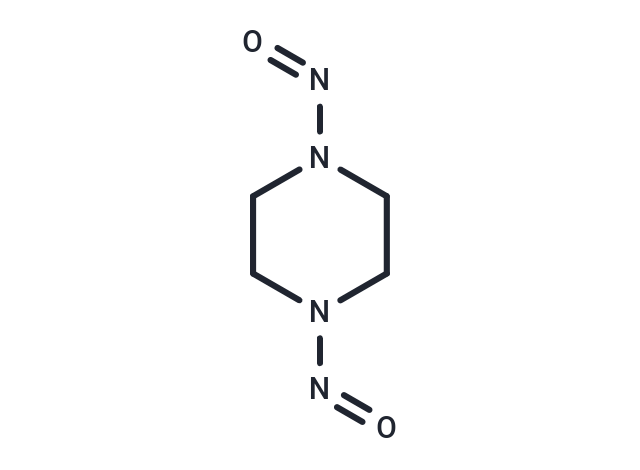
N,N'-Dinitrosopiperazine (Synonyms: DNPZ, 1,4-Dinitrosopiperazine)

Catalog No. T81720 Copy Product Info
🥰Excellent
N,N'-Dinitrosopiperazine (1,4-Dinitrosopiperazine, DNP) is a known carcinogen associated with the development and metastasis of nasopharyngeal carcinoma. Its carcinogenic mechanism involves multiple signaling pathways, particularly exerting effects through the regulation of phosphorylation at the Ser568 site of the LYRIC protein. It can be used to induce esophageal cancer models.

N,N'-Dinitrosopiperazine

Copy Product Info
🥰Excellent
Catalog No. T81720
Synonyms DNPZ, 1,4-Dinitrosopiperazine

N,N'-Dinitrosopiperazine (1,4-Dinitrosopiperazine, DNP) is a known carcinogen associated with the development and metastasis of nasopharyngeal carcinoma. Its carcinogenic mechanism involves multiple signaling pathways, particularly exerting effects through the regulation of phosphorylation at the Ser568 site of the LYRIC protein. It can be used to induce esophageal cancer models.

N,N'-Dinitrosopiperazine
Cas No. 140-79-4
Pack SizePriceUSA StockGlobal StockQuantity
5 mgInquiry8-10 weeks8-10 weeks
50 mgInquiry8-10 weeks8-10 weeks
For In stock only · Estimated delivery: USA Stock (1-2 days) Global Stock (5-7 days)
Add to Quotation
Custom-made molecule. TargetMol’s expert synthesis team delivers cost-effective solutions. Contact us for inquiries. Committed to serving you.However, due to objective factors, there is a small probability that the synthesis may not be successful during the R&D process. We appreciate your understanding.
For research use only—not for human use. No sales to individuals. Use as intended only.
Questions
TargetMol
View More

Resource Download

Product Introduction

Bioactivity
Description
N,N'-Dinitrosopiperazine (1,4-Dinitrosopiperazine, DNP) is a known carcinogen associated with the development and metastasis of nasopharyngeal carcinoma. Its carcinogenic mechanism involves multiple signaling pathways, particularly exerting effects through the regulation of phosphorylation at the Ser568 site of the LYRIC protein. It can be used to induce esophageal cancer models.
In vitro
N,N'-Dinitrosopiperazine (referred to herein as 0.) exhibits specific activity within chemical processes by engaging in reactions characteristic to its molecular structure.
In vivo
N,N'-Dinitrosopiperazine (administered via tail vein injection; 40 mg/kg; 30 days) suppresses cell motility and invasion while promoting nasopharyngeal carcinoma (NPC) metastasis in vivo. Immunohistochemistry (IHC) reveals that phospho-LYRIC levels are elevated in the metastatic tumors of DNP-treated mice compared to untreated controls [1].
Disease Modeling Protocol
Nasopharyngeal carcinoma (NPC) model
  • Modeling Mechanism:

    N,N'-Dinitrosopiperazine (DNP), as a nitrosamine carcinogen, exhibits nasopharyngeal epithelial tissue-specific carcinogenic activity. Its core mechanisms are as follows: ① As a tumor initiator, it damages the DNA of nasopharyngeal epithelial cells after entering the body, inducing gene mutations and initiating the carcinogenesis process; ② It requires synergistic action with tumor promoters (such as Daphne odora extract, WI). WI can activate early EB virus antigens, enhance lymphocyte transformation, create a pro-cancer microenvironment, and accelerate the pathological progression of the nasopharyngeal mucosa from hyperplasia → squamous metaplasia → dysplasia → carcinoma; ③ Low-dose DNP alone (sub-carcinogenic dose) has no tumorigenic ability and requires promoters to break through the carcinogenesis threshold, ultimately forming carcinoma in situ or early invasive carcinoma, mimicking the multifactorial pathogenic characteristics of human nasopharyngeal carcinoma.

  • Related Products:

    N,N'-Dinitrosopiperazine (T81720)

  • Modeling Method:

    Experimental Subject:

    Rats, Hybrid rats, Equal numbers of males and females, 2 months old

    Dosage and Administration Route:

    ① Two-stage modelling:
    - Induction phase: N,N'-Dinitrosopiperazine (DNP), 9 mg/ml solution (containing a small amount of Tween 80 as a solubilising agent), 1 ml per animal, subcutaneous injection, single administration;
    - Promotion phase: 10 days after induction, administration of Wikstroemia indica extract (WI) – 10 mg/ml ethanol solution – 0.1 ml per animal – nasopharyngeal instillation – twice weekly for 7 weeks;
    ② Control treatment:
    - N,N'-Dinitrosopiperazine (DNP) monotherapy group: Subcutaneous injection of 1 ml N,N'-Dinitrosopiperazine (DNP) solution only, without WI intervention;
    - WI monotherapy group: 0.1 ml WI solution administered via nasopharyngeal instillation twice weekly for 7 weeks;

    Dosing Frequency and Duration Model:

    Single dose

  • Validation:

    1. Tumor Characteristics: - Incidence: Only the DNP+WI combination group developed tumors, with 26.1% (6/23) of rats developing nasopharyngeal carcinoma, including 2 cases of carcinoma in situ and 4 cases of early invasive carcinoma (3 cases of poorly differentiated squamous cell carcinoma and 1 case of columnar cell carcinoma); - Pathological Morphology: HE staining showed that tumor cells grew in a papillary, gyral, or mushroom-like pattern, partially obstructing the nasopharyngeal cavity. Invasive carcinoma broke through the basement membrane and invaded the stroma, and some were accompanied by mucus secretion (light blue staining); 2. Precancerous Lesions: - The incidence of squamous metaplasia of the nasopharyngeal mucosa in the combination group was 82.6% (19/23), and the incidence of papillary hyperplasia was 78.3% (18/23), which was significantly higher than that in the single-drug group (incidence ≤50%); 3. Negative Control: No nasopharyngeal carcinoma occurred in the DNP and WI single-drug groups. Only the WI single-drug group showed 1 case of papilloma and 1 case of dysplasia, verifying the specificity of the model.

*Precautions: Animals were euthanized 180 days after modeling, and the nasopharyngeal tissue was completely dissected.

*References:Tang WP,et,al. Wikstroemia indica promotes development of nasopharyngeal carcinoma in rats initiated by dinitrosopiperazine. J Cancer Res Clin Oncol. 1988;114(4):429-31.

SynonymsDNPZ, 1,4-Dinitrosopiperazine
Chemical Properties
Molecular Weight144.13
FormulaC4H8N4O2
Cas No.140-79-4
SmilesO=NN1CCN(N=O)CC1
Storage & Solubility Information
StoragePowder: -20°C for 3 years | In solvent: -80°C for 1 year | Shipping with blue ice/Shipping at ambient temperature.
Solubility Information
DMSO: 3 mg/mL (20.81 mM), Sonication is recommended.
Solution Preparation Table
DMSO
1mg5mg10mg50mg
1 mM6.9382 mL34.6909 mL69.3818 mL346.9090 mL
5 mM1.3876 mL6.9382 mL13.8764 mL69.3818 mL
10 mM0.6938 mL3.4691 mL6.9382 mL34.6909 mL
20 mM0.3469 mL1.7345 mL3.4691 mL17.3455 mL
Note : The dilution table applies only to solid products. For liquid products, please calculate the stock solution based on the stated concentration and/or density.

Calculator

  • Molarity Calculator
  • Dilution Calculator
  • Reconstitution Calculator
  • Molecular Weight Calculator

In Vivo Formulation Calculator (Clear solution)

Please enter your animal experiment information in the following box and click Calculate to obtain the stock solution preparation method and in vivo formula preparation method:
TargetMol | Animal experiments For example, if the intended dosage is 10 mg/kg for animals weighing 20 g , with a dosing volume of 100 μL per animal, TargetMol | Animal experiments and a total of 10 animals are to be administered, using a formulation of TargetMol | reagent 10% DMSO+ 40% PEG300+ 5% Tween 80+ 45% Saline/PBS/ddH2O , the resulting working solution concentration would be 2 mg/mL.

Stock Solution Preparation:

Dissolve 2 mg of the compound in 100 μL DMSOTargetMol | reagent to obtain a stock solution at a concentration of 20 mg/mL . If the required concentration exceeds the compound's known solubility, please contact us for technical support before proceeding.

Preparation of the In Vivo Formulation:

1) Add 100 μL of the DMSOTargetMol | reagent stock solution to 400 μL PEG300TargetMol | reagent and mix thoroughly until the solution becomes clear.

2) Add 50 μL Tween 80 and mix well until fully clarified.

3) Add 450 μL Saline,PBS or ddH2OTargetMol | reagent and mix thoroughly until a homogeneous solution is obtained.

This example is provided solely to demonstrate the use of the In Vivo Formulation Calculator and does not constitute a recommended formulation for any specific compound. Please select an appropriate dissolution and formulation strategy based on your experimental model and route of administration.
All co-solvents required for this protocol, includingDMSO, PEG300/PEG400, Tween 80, SBE-β-CD, and Corn oil, are available for purchase on the TargetMol website.
1 Enter information below:
mg/kg
g
μL
2 Enter the in vivo formulation:
% DMSO
%
% Tween 80
% Saline/PBS/ddH2O

Dose Conversion

You can also refer to dose conversion for different animals. More Dose Conversion

Tech Support

Please see Inhibitor Handling Instructions for more frequently ask questions. Topics include: how to prepare stock solutions, how to store products, and cautions on cell-based assays & animal experiments, etc
Related Tags: buy N,N'-Dinitrosopiperazine | purchase N,N'-Dinitrosopiperazine | N,N'-Dinitrosopiperazine cost | order N,N'-Dinitrosopiperazine | N,N'-Dinitrosopiperazine chemical structure | N,N'-Dinitrosopiperazine in vivo | N,N'-Dinitrosopiperazine in vitro | N,N'-Dinitrosopiperazine formula | N,N'-Dinitrosopiperazine molecular weight