


Shopping Cart
Remove All Your shopping cart is currently empty

Synonyms: Myelin Oligodendrocyte Glycoprotein Peptide (35-55), mouse, rat acetate, MOG peptide (35-55) , mouse, rat acetate (149635-73-4 Free base)
| Pack Size | Price | USA Stock | Global Stock | Quantity |
|---|---|---|---|---|
| 1 mg | $135 | In Stock | In Stock | |
| 5 mg | $393 | In Stock | In Stock | |
| 10 mg | $586 | In Stock | In Stock | |
| 25 mg | $939 | In Stock | In Stock | |
| 50 mg | $1,270 | In Stock | In Stock | |
| 100 mg | $1,720 | - | In Stock |
| Description | MOG peptide (35-55), mouse, rat acetate is a minor component of central nervous system myelin sheaths. It possesses encephalitis-inducing activity, capable of stimulating CD4⁺ T cell proliferation and Th1-type immune responses, thereby triggering relapsing-remitting demyelinating diseases. It is commonly used to establish experimental autoimmune encephalomyelitis (EAE) models. |
| In vitro | Methods: T cells were incubated with mouse and rat myelin oligodendrocyte glycoprotein (MOG peptide (35-55), mouse, rat acetate) at concentrations ranging from 0 to 50 μg/mL for 72 hours. Results: T cells from HLA-DR2 transgenic mice immunized with the mouse-derived MOG peptide (35-55), mouse, rat acetate peptide segment exhibited strong proliferative responses to the mouse-derived MOG peptide (35-55), mouse, rat acetate peptide segment. [1] |
| In vivo | Methods: HLA-DR2 transgenic mice received a single intraperitoneal injection of MOG peptide (35-55) in mouse/rat acetate (200 μg in 0.2 mL) for 38 consecutive days. Results: Encephalitis characteristics were observed in HLA-DR2 (DRB1*1501) mice [1] Methods: EAE models were induced in NOD/Lt and C57BL/6 mice via a single subcutaneous injection of MOG peptide (35-55), mouse, rat acetate emulsified with complete Freund's adjuvant. Each mouse received 200-300 μg of the peptide in emulsion. Results: Following a single injection of the MOG peptide (35-55), mouse, rat acetate, NOD/Lt mice developed a relapsing-remitting disease course, characterized by partial recovery after symptom onset followed by recurrence. C57BL/6 mice developed a chronic progressive paralytic disease with continuous symptom progression and no significant remission. [2] |
| Synonyms | Myelin Oligodendrocyte Glycoprotein Peptide (35-55), mouse, rat acetate, MOG peptide (35-55) , mouse, rat acetate (149635-73-4 Free base) |
| Disease Modeling Protocol | Experimental autoimmune encephalomyelitis (EAE) model
*Precautions: All mice were sacrificed 40 days after modeling. |
| Relative Density. | no data available |
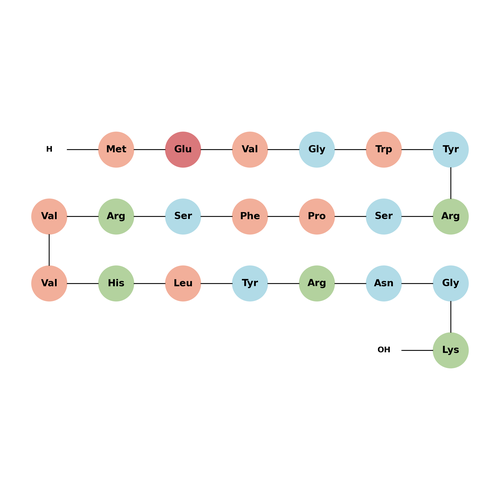
| Sequence | H-Met-Glu-Val-Gly-Trp-Tyr-Arg-Ser-Pro-Phe-Ser-Arg-Val-Val-His-Leu-Tyr-Arg-Asn-Gly-Lys-OH |
| Sequence Short | MEVGWYRSPFSRVVHLYRNGK |
| Storage | Store at low temperature,Keep away from moisture Powder: -20°C for 3 years | In solvent: -80°C for 1 year Shipping with blue ice/Shipping at ambient temperature. |
| Solubility Information | H2O: 90 mg/mL, Sonication is recommended. |
 For example, if the intended dosage is 10 mg/kg for animals weighing 20 g , with a dosing volume of 100 μL per animal, and a total of 10 animals are to be administered, using a formulation of
  10% DMSO+ 40% PEG300+ 5% Tween 80+ 45% Saline/PBS/ddH2O , the resulting working solution concentration would be 2 mg/mL.
Dissolve 2 mg of the compound in 100 μL DMSO to obtain a stock solution at a concentration of 20 mg/mL . If the required concentration exceeds the compound's known solubility, please contact us for technical support before proceeding.
1) Add 100 μL of the DMSO stock solution to 400 µL PEG300 and mix thoroughly until the solution becomes clear.
2) Add 50 µL Tween 80 and mix well until fully clarified.
3) Add 450 µL Saline,PBS or ddH2O and mix thoroughly until a homogeneous solution is obtained.
| Size | Quantity | Unit Price | Amount | Operation |
|---|
 Feedback
 Hello! How can I help you today?
Copyright © 2015-2026 TargetMol Chemicals Inc. All Rights Reserved.
