


Shopping Cart
Remove All Your shopping cart is currently empty

Synonyms:

| Pack Size | Price | USA Stock | Global Stock | Quantity |
|---|---|---|---|---|
| 1 mg | $90 | In Stock | In Stock | |
| 5 mg | $222 | In Stock | In Stock | |
| 10 mg | $355 | In Stock | In Stock | |
| 25 mg | $549 | In Stock | In Stock | |
| 50 mg | $745 | In Stock | In Stock | |
| 100 mg | $1,090 | In Stock | In Stock | |
| 500 mg | $2,230 | - | In Stock | |
| 1 mL x 10 mM (in DMSO) | $245 | In Stock | In Stock |
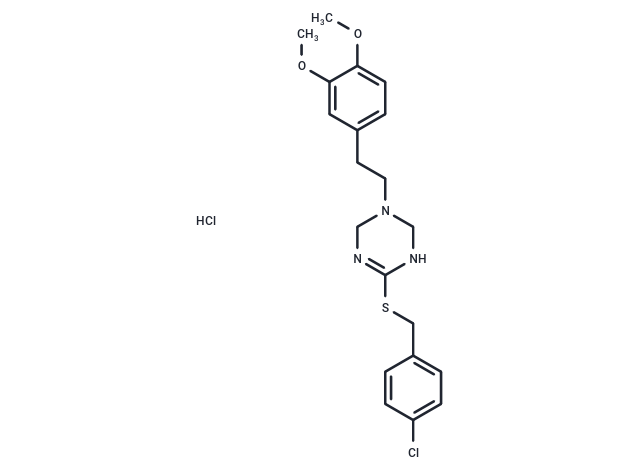
| Description | MAC13243 HCl, an inhibitor of LolA, a periplasmic chaperone that transports lipoproteins from the inner membrane to the outer membrane, is an antimicrobial agent with specificity and significant inhibitory effects on Gram-negative bacteria. |
| In vitro | We investigated the impact of a prototype drug (MAC13243 HCl) interfering with the Gram-negative outer membrane protein LolA on the faecal microbiota. Faecal suspensions from two healthy human donors were exposed to MAC13243 HCl (16, 32, or 64 mg/L) using an in vitro gut model (CoMiniGut). Samples collected 0, 4, and 8 h after exposure were subjected to viable cell counts, 16S rRNA gene quantification and V3-V4 sequencing using the Illumina MiSeq platform. MAC13243 HCl exhibited concentration-dependent killing of coliforms in both donors after 8 h. Concentrations of ≤32 mg/L reduced the growth of aerobic bacteria without influencing the microbiota composition and diversity. An expansion of Firmicutes at the expense of Bacteroidetes and Actinobacteria was observed in the faecal microbiota from one donor following exposure to 64 mg/L of MAC13243 HCl. At all concentrations tested, MAC13243 HCl did not lead to the proliferation of Escherichia coli nor a reduced abundance of beneficial bacteria, which are typical changes observed in antibiotic-induced dysbiosis. These results support our hypothesis that a drug interfering with a specific target in Gram-negative bacteria has a low impact on the commensal gut microbiota and, therefore, a low risk of inducing dysbiosis.[3] |
| Molecular Weight | 442.4 |
| Formula | C20H25Cl2N3O2S |
| Cas No. | 1071638-38-4 |
| Smiles | Cl.COc1ccc(CCN2CNC(SCc3ccc(Cl)cc3)=NC2)cc1OC |
| Relative Density. | no data available |
| Storage | Powder: -20°C for 3 years | In solvent: -80°C for 1 year Shipping with blue ice/Shipping at ambient temperature. | |||||||||||||||||||||||||||||||||||
| Solubility Information | DMSO: 45 mg/mL (101.72 mM), Sonication is recommended.  | |||||||||||||||||||||||||||||||||||
| In Vivo Formulation | 10% DMSO+40% PEG300+5% Tween 80+45% Saline: 2 mg/mL (4.52 mM), Sonication is recommended. Please add the solvents sequentially, clarifying the solution as much as possible before adding the next one. Dissolve by heating and/or sonication if necessary. Working solution is recommended to be prepared and used immediately. The formulation provided above is for reference purposes only. In vivo formulations may vary and should be modified based on specific experimental conditions. | |||||||||||||||||||||||||||||||||||
Solution Preparation Table | ||||||||||||||||||||||||||||||||||||
DMSO
Note : The dilution table applies only to solid products. For liquid products, please calculate the stock solution based on the stated concentration and/or density. | ||||||||||||||||||||||||||||||||||||
 For example, if the intended dosage is 10 mg/kg for animals weighing 20 g , with a dosing volume of 100 μL per animal, and a total of 10 animals are to be administered, using a formulation of
  10% DMSO+ 40% PEG300+ 5% Tween 80+ 45% Saline/PBS/ddH2O , the resulting working solution concentration would be 2 mg/mL.
Dissolve 2 mg of the compound in 100 μL DMSO to obtain a stock solution at a concentration of 20 mg/mL . If the required concentration exceeds the compound's known solubility, please contact us for technical support before proceeding.
1) Add 100 μL of the DMSO stock solution to 400 µL PEG300 and mix thoroughly until the solution becomes clear.
2) Add 50 µL Tween 80 and mix well until fully clarified.
3) Add 450 µL Saline,PBS or ddH2O and mix thoroughly until a homogeneous solution is obtained.
| Size | Quantity | Unit Price | Amount | Operation |
|---|
 Feedback
 Hello! How can I help you today?
Copyright © 2015-2026 TargetMol Chemicals Inc. All Rights Reserved.
