


Shopping Cart
Remove All Your shopping cart is currently empty

Synonyms: PPTD

| Pack Size | Price | USA Stock | Global Stock | Quantity |
|---|---|---|---|---|
| 1 mg | $68 | - | In Stock | |
| 5 mg | $163 | - | In Stock | |
| 10 mg | $263 | - | In Stock | |
| 25 mg | $428 | - | In Stock | |
| 50 mg | $623 | - | In Stock | |
| 100 mg | $878 | - | In Stock | |
| 1 mL x 10 mM (in DMSO) | $179 | - | In Stock |
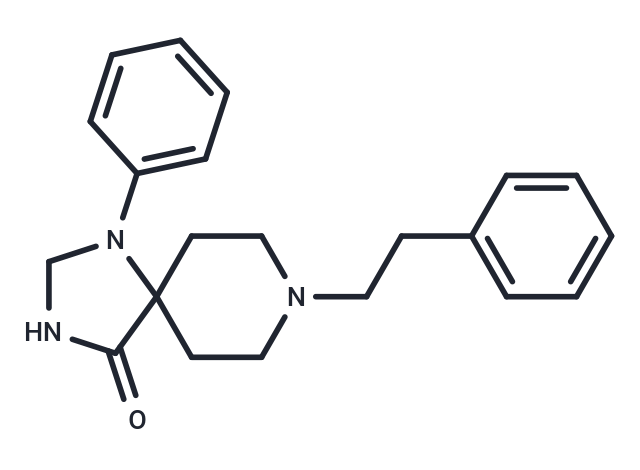
| Description | ZIP14-IN-1 is a selective inhibitor of ZIP14. It can significantly inhibit the activity of ZIP14, but has no significant effect on ZIP8 (SLC39A8). ZIP14-IN-1 can effectively block the uptake of various divalent metal ions including zinc, iron, manganese and cadmium mediated by ZIP14. Its mechanism of action is to bind to the binding pocket formed at the dimer interface of ZIP14, thereby interfering with the metal ion transport pathway. In addition, ZIP14-IN-1 can reduce the levels of reactive oxygen species (ROS) and lipid peroxidation, alleviate metal-induced cytotoxicity, and can be used in related research on cancer cachexia . |
| In vitro | In TREx-hZIP14 cells, the IC50 value of ZIP14-IN-1 (Compound 14) for inhibiting ZIP14-mediated zinc ion uptake is 8.1 μM; in contrast, in TREx-hZIP8 cells, no significant inhibitory effect was detected even when the concentration was increased to 37 μM [1]. When the concentration of ZIP14-IN-1 is in the range of 0.03 to 50 µM, it can inhibit the uptake of four metal ions (zinc, iron, manganese, and cadmium) in both TREx cell lines and Xenopus laevis oocytes, among which the IC50 values for inhibiting iron ion and zinc ion uptake are 6.25 μM and 6.06 μM, respectively [1]. After treating TREx-hZIP14 cells and mouse myoblasts with 0-50 μM ZIP14-IN-1 for 24 hours, it can effectively block the ZIP14-mediated metal ion influx process and alleviate the associated cytotoxic reaction [1]. When ZIP14-IN-1 is used at a concentration of 10 μM, it can significantly inhibit the production of reactive oxygen species (ROS) and lipid peroxides (LPO) mediated by ZIP14 in TREx-hZIP14 cells or TREx-hZIP8 cells, and also inhibit the occurrence of related inflammatory responses [1]. |
| In vivo | In the mouse cachexia model, ZIP14-IN-1 was administered via drinking water at two dose groups of 0.1 g/L and 1.0 g/L, once daily for 10 consecutive days. It effectively improved the clinically key characteristics of cachexia and highlighted the application potential of targeting ZIP14 in inflammatory or consumptive diseases [1]. |
| Synonyms | PPTD |
| Molecular Weight | 335.44 |
| Formula | C21H25N3O |
| Cas No. | 1048-17-5 |
| Smiles | O=C1NCN(C=2C=CC=CC2)C13CCN(CCC=4C=CC=CC4)CC3 |
| Relative Density. | no data available |
| Storage | Powder: -20°C for 3 years | In solvent: -80°C for 1 year Shipping with blue ice/Shipping at ambient temperature. |
 For example, if the intended dosage is 10 mg/kg for animals weighing 20 g , with a dosing volume of 100 μL per animal, and a total of 10 animals are to be administered, using a formulation of
  10% DMSO+ 40% PEG300+ 5% Tween 80+ 45% Saline/PBS/ddH2O , the resulting working solution concentration would be 2 mg/mL.
Dissolve 2 mg of the compound in 100 μL DMSO to obtain a stock solution at a concentration of 20 mg/mL . If the required concentration exceeds the compound's known solubility, please contact us for technical support before proceeding.
1) Add 100 μL of the DMSO stock solution to 400 µL PEG300 and mix thoroughly until the solution becomes clear.
2) Add 50 µL Tween 80 and mix well until fully clarified.
3) Add 450 µL Saline,PBS or ddH2O and mix thoroughly until a homogeneous solution is obtained.
| Size | Quantity | Unit Price | Amount | Operation |
|---|
 Feedback
 Hello! How can I help you today?
Copyright © 2015-2026 TargetMol Chemicals Inc. All Rights Reserved.
