


Shopping Cart
Remove All Your shopping cart is currently empty

Synonyms:

| Pack Size | Price | USA Stock | Global Stock | Quantity |
|---|---|---|---|---|
| 1 mg | $197 | Inquiry | Inquiry | |
| 5 mg | $497 | Inquiry | Inquiry | |
| 10 mg | $746 | Inquiry | Inquiry | |
| 25 mg | $1,342 | Inquiry | Inquiry | |
| 50 mg | $1,997 | Inquiry | Inquiry |
| Description | PR 39 (porcine) acetate is a noncompetitive, reversible and allosteric proteasome inhibitor. PR 39 (porcine) acetate reversibly binds to the α7 subunit of the proteasome and blocks degradation of NF-κB inhibitor IκBα by the ubiquitin-proteasome pathway. |
| In vitro | PR-39 (100 nM) blocks TNF-α-induced (1 ng/mL; for 20 minutes) activation of VCAM-1 (2 hours) and ICAM-1 (8 hours) expression in human umbilical vein endothelial cells (HUVEC)[2]. PR-39 (10 μM) does not affect the ability to proliferate of ECV304 cell. PR39 is able to inhibit IκBα degradation without significantly affecting overall protein degradation in cells[2]. |
| In vivo | PR-39 stimulates angiogenesis, inhibits inflammatory responses and significant reduces myocardial infarct size in mice. PR-39 (10 mg/kg, intravenously; 1 hour before Caerulein of 50μg/kg, ip) blocks IκBα degradation and NF-κB-dependent transcription in the mouse pancreas after induction of acute pancreatitis. PR-39 (1 μg/kg/day; 7-day intraperitoneal infusion) demonstrates significantly small infarct in C57BL/6 mice[2]. |
| Relative Density. | no data available |
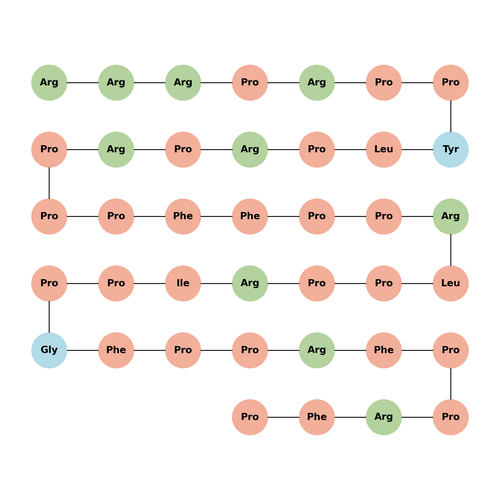
| Sequence | Arg-Arg-Arg-Pro-Arg-Pro-Pro-Tyr-Leu-Pro-Arg-Pro-Arg-Pro-Pro-Pro-Phe-Phe-Pro-Pro-Arg-Leu-Pro-Pro-Arg-Ile-Pro-Pro-Gly-Phe-Pro-Pro-Arg-Phe-Pro-Pro-Arg-Phe-Pro |
| Sequence Short | RRRPRPPYLPRPRPPPFFPPRLPPRIPPGFPPRFPPRFP |
| Storage | Keep away from moisture Powder: -20°C for 3 years | In solvent: -80°C for 1 year Shipping with blue ice/Shipping at ambient temperature. |
 For example, if the intended dosage is 10 mg/kg for animals weighing 20 g , with a dosing volume of 100 μL per animal, and a total of 10 animals are to be administered, using a formulation of
  10% DMSO+ 40% PEG300+ 5% Tween 80+ 45% Saline/PBS/ddH2O , the resulting working solution concentration would be 2 mg/mL.
Dissolve 2 mg of the compound in 100 μL DMSO to obtain a stock solution at a concentration of 20 mg/mL . If the required concentration exceeds the compound's known solubility, please contact us for technical support before proceeding.
1) Add 100 μL of the DMSO stock solution to 400 µL PEG300 and mix thoroughly until the solution becomes clear.
2) Add 50 µL Tween 80 and mix well until fully clarified.
3) Add 450 µL Saline,PBS or ddH2O and mix thoroughly until a homogeneous solution is obtained.
| Size | Quantity | Unit Price | Amount | Operation |
|---|
 Feedback
 Hello! How can I help you today?
Copyright © 2015-2026 TargetMol Chemicals Inc. All Rights Reserved.
