


Shopping Cart
Remove All Your shopping cart is currently empty

Synonyms: MRS-2179, MRS 2179
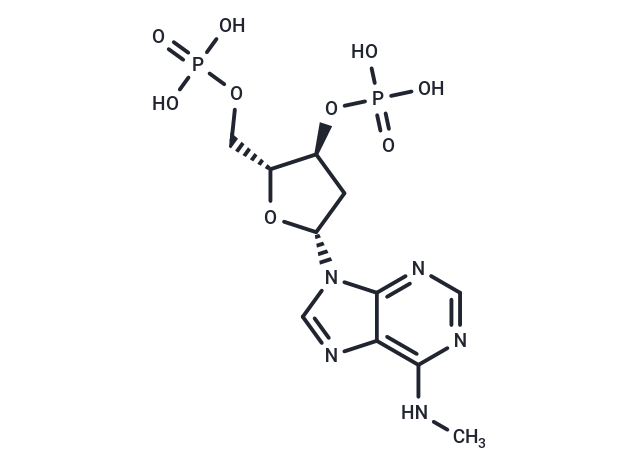
| Pack Size | Price | USA Stock | Global Stock | Quantity |
|---|---|---|---|---|
| 25 mg | $1,520 | - | In Stock | |
| 50 mg | $1,980 | - | In Stock | |
| 100 mg | $2,500 | - | In Stock |
| Description | MRS2179 is a competitive P2Y1 receptor antagonist with a Kb value of 100 nM and exhibits no appreciable activity at P2Y2, P2Y4, or P2Y6 receptors at concentrations up to 30 µM, nor at P2Y12 and P2Y13 receptors. MRS2179 inhibits ADP-induced platelet shape change and platelet aggregation in vitro, with a pA2 value of 6.55, and prolongs bleeding time in rats and mice relative to control groups. The receptor selectivity profile of MRS2179 supports its application in research focused on purinergic signaling, platelet biology, thrombosis-related mechanisms, and P2Y1 receptor-mediated cellular responses. |
| In vitro | Method: MRS2179, was tested in suspensions of washed human platelets. ADP-induced shape change, aggregation, intracellular Ca2+ elevation and inhibition of adenylyl cyclase were assessed. Direct receptor binding was measured using radiolabelled [33P]MRS2179.[1] Rresult: MRS2179 inhibited ADP-induced platelet shape change, aggregation and Ca2+ elevation but did not inhibit the ADP-mediated decrease in adenylyl-cyclase activity. Washed human platelets displayed 134±8 binding sites per platelet, with a [33P]MRS2179 binding Kd of 109±18 nM.[1] Method: Thoracic aortic rings isolated from female guinea pigs were precontracted with 300 nM norepinephrine and exposed to MRS2179 at approximately 0.3-3 μM before stimulation with 2-methylthio-ATP, ADP, ATP or UTP. Primary guinea-pig aortic endothelial cells loaded with Fura-2 were used to measure nucleotide-induced intracellular Ca2+ responses. Rresult: MRS2179 concentration-dependently inhibited 2-methylthio-ATP-, ADP- and ATP-mediated aortic relaxation, with near-complete inhibition at 3 μM and apparent functional IC50 values of 109-303 nM. It blocked 2-methylthio-ATP-induced endothelial Ca2+ mobilization but did not inhibit UTP-mediated relaxation or Ca2+ mobilization, supporting functional selectivity for P2Y1 over the UTP-responsive receptor.[2] Method: PPACK-anticoagulated human whole blood from 10 subjects was treated ex vivo with 10 μM MRS2179 and perfused over collagen for 300 s in a microfluidic flow chamber at a wall shear rate of 200 s−1. Platelet deposition and secondary aggregation were quantified. MRS2179 was also combined with 100 μM 2MeSAMP. Rresult: MRS2179 reduced total platelet accumulation by 77.7% (p<0.01) and inhibited both early primary platelet deposition and later secondary aggregation. Combined MRS2179 and 2MeSAMP reduced total platelet accumulation by 87.9%.[3] |
| In vivo | Method: MRS2179 was administered intravenously to rats and mice, and ADP-induced platelet aggregation and bleeding time were assessed. Rresult: Intravenous MRS2179 inhibited ADP-induced rat platelet aggregation ex vivo and prolonged bleeding time in both rats and mice compared with controls.[1] Method: Localized arterial thrombosis was induced by FeCl3 treatment of a mouse mesenteric arteriole, and venous thrombosis was examined using a Wessler model adapted to rats. MRS2179-treated animals were compared with controls; P2Y1-deficient mice and combined P2Y1/P2Y12 inhibition were also examined. Rresult: MRS2179 significantly reduced localized arterial thrombosis in mice. Combining P2Y1 deficiency with P2Y12 inhibition produced an additive antithrombotic effect. MRS2179 also caused a small but statistically significant reduction in venous thrombosis in rats.[4] Method: Cerebral contusion injury was induced in rats. MRS2179 or artificial cerebrospinal fluid was delivered locally into the center of the contused cerebral tissue through a subcutaneously implanted osmotic pump. Galectin-3, microglial activation and inflammatory cytokines were assessed on days 1, 3 and 7, and behavioral outcomes were followed for up to 28 days. Rresult: MRS2179 significantly suppressed Galectin-3-positive microglial activation in cortical regions adjacent to and distant from the contusion cavity on days 1 and 3 (p<0.05). It did not significantly improve beam-walking, neurological-response or plus-maze behavioral outcomes.[5] |
| Synonyms | MRS-2179, MRS 2179 |
| Molecular Weight | 425.23 |
| Formula | C11H17N5O9P2 |
| Cas No. | 101204-49-3 |
| Smiles | N(C)C1=C2C(N(C=N2)[C@@H]3O[C@H](COP(=O)(O)O)[C@@H](OP(=O)(O)O)C3)=NC=N1 |
| Relative Density. | 2.15 g/cm3 (Predicted) |
| Storage | Powder: -20°C for 3 years | In solvent: -80°C for 1 year Shipping with blue ice/Shipping at ambient temperature. |
 For example, if the intended dosage is 10 mg/kg for animals weighing 20 g , with a dosing volume of 100 μL per animal, and a total of 10 animals are to be administered, using a formulation of
  10% DMSO+ 40% PEG300+ 5% Tween 80+ 45% Saline/PBS/ddH2O , the resulting working solution concentration would be 2 mg/mL.
Dissolve 2 mg of the compound in 100 μL DMSO to obtain a stock solution at a concentration of 20 mg/mL . If the required concentration exceeds the compound's known solubility, please contact us for technical support before proceeding.
1) Add 100 μL of the DMSO stock solution to 400 µL PEG300 and mix thoroughly until the solution becomes clear.
2) Add 50 µL Tween 80 and mix well until fully clarified.
3) Add 450 µL Saline,PBS or ddH2O and mix thoroughly until a homogeneous solution is obtained.
| Size | Quantity | Unit Price | Amount | Operation |
|---|
 Feedback
 Hello! How can I help you today?
Copyright © 2015-2026 TargetMol Chemicals Inc. All Rights Reserved.
