


Shopping Cart
Remove All Your shopping cart is currently empty

Synonyms: Glucagon
| Pack Size | Price | USA Stock | Global Stock | Quantity |
|---|---|---|---|---|
| 5 mg | $663 | 7-10 days | 7-10 days |
| Description | Glucagon (1-29), bovine, human, porcine is a hormone produced by pancreatic α-cells with glucagon activity, which promotes glycogenolysis and gluconeogenesis, and is used in the study of obesity and diabetes. |
| In vitro | Glucagon (1-29), bovine, human, porcine binds to its receptor Gcgr and activates the cAMP-PKA signaling pathway, which in turn promotes hepatic gluconeogenesis and triggers hyperglycemia. In addition, Glucagon (1-29), bovine, human, porcine stimulates hepatic production of kisspeptin1 and gluconeogenesis. [1] Glucagon (1-29), bovine, human, porcine inhibits the expression of CYP7A1 mRNA in human primary hepatocytes at a concentration of 100 nM and increases the phosphorylation of HNF4α. increased the phosphorylation level of HNF4α. [3] |
| In vivo | A low dose of 20 μg/kg Glucagon (1-29), bovine, human, porcine increased blood glucose but did not stimulate insulin secretion in mice fed in a normal environment. A high dose of 1 mg/kg Glucagon (1-29), bovine, human, porcine lowered blood glucose and stimulated insulin secretion in mice fed in a normal environment compared to the PBS control. [4] |
| Synonyms | Glucagon |
| Molecular Weight | 3482.75 |
| Formula | C153H225N43O49S |
| Cas No. | 16941-32-5 |
| Smiles | C([C@H](NC([C@@H](NC([C@@H](NC([C@H](CC1=CC=CC=C1)NC([C@@H](NC([C@@H](NC([C@@H](NC([C@@H](NC([C@@H](NC([C@@H](NC([C@@H](NC([C@@H](NC([C@H](CC2=CC=C(O)C=C2)NC([C@@H](NC([C@@H](NC([C@H](CC3=CC=C(O)C=C3)NC([C@@H](NC([C@@H](NC([C@@H](NC([C@H](CC4=CC=CC=C4)NC([C@@H](NC(CNC([C@@H](NC([C@@H](NC([C@H](CC5=CN=CN5)N)=O)CO)=O)CCC(N)=O)=O)=O)[C@@H](C)O)=O)=O)[C@@H](C)O)=O)CO)=O)CC(O)=O)=O)=O)CO)=O)CCCCN)=O)=O)CC(C)C)=O)CC(O)=O)=O)CO)=O)CCCNC(=N)N)=O)CCCNC(=N)N)=O)C)=O)CCC(N)=O)=O)CC(O)=O)=O)=O)[C@H](C)C)=O)CCC(N)=O)=O)C(N[C@H](C(N[C@H](C(N[C@H](C(N[C@@H]([C@@H](C)O)C(O)=O)=O)CC(N)=O)=O)CCSC)=O)CC(C)C)=O)C=6C=7C(NC6)=CC=CC7 |
| Relative Density. | 1.31g/cm3 |
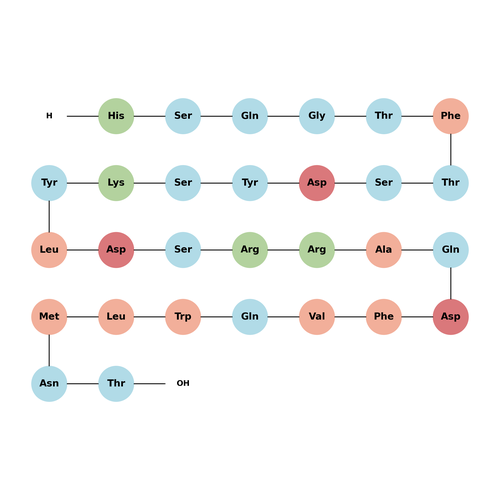
| Sequence | H-His-Ser-Gln-Gly-Thr-Phe-Thr-Ser-Asp-Tyr-Ser-Lys-Tyr-Leu-Asp-Ser-Arg-Arg-Ala-Gln-Asp-Phe-Val-Gln-Trp-Leu-Met-Asn-Thr-OH |
| Sequence Short | HSQGTFTSDYSKYLDSRRAQDFVQWLMNT |
| Storage | Keep away from moisture,Keep away from direct sunlight,Store at low temperature Powder: -20°C for 3 years | In solvent: -80°C for 1 year Shipping with blue ice/Shipping at ambient temperature. |
| Solubility Information | DMSO: 1 mg/mL (0.29 mM), Sonication is recommended. H2O: 4 mg/mL (1.15 mM), when pH is adjusted to 2 with HCl. Sonication is recommmended. |
 For example, if the intended dosage is 10 mg/kg for animals weighing 20 g , with a dosing volume of 100 μL per animal, and a total of 10 animals are to be administered, using a formulation of
  10% DMSO+ 40% PEG300+ 5% Tween 80+ 45% Saline/PBS/ddH2O , the resulting working solution concentration would be 2 mg/mL.
Dissolve 2 mg of the compound in 100 μL DMSO to obtain a stock solution at a concentration of 20 mg/mL . If the required concentration exceeds the compound's known solubility, please contact us for technical support before proceeding.
1) Add 100 μL of the DMSO stock solution to 400 µL PEG300 and mix thoroughly until the solution becomes clear.
2) Add 50 µL Tween 80 and mix well until fully clarified.
3) Add 450 µL Saline,PBS or ddH2O and mix thoroughly until a homogeneous solution is obtained.
| Size | Quantity | Unit Price | Amount | Operation |
|---|
 Feedback
 Hello! How can I help you today?
Copyright © 2015-2026 TargetMol Chemicals Inc. All Rights Reserved.
