


Shopping Cart
Remove All Your shopping cart is currently empty

Synonyms:
| Pack Size | Price | USA Stock | Global Stock | Quantity |
|---|---|---|---|---|
| 10 mg | Inquiry | 10-14 weeks | 10-14 weeks | |
| 50 mg | Inquiry | 10-14 weeks | 10-14 weeks |
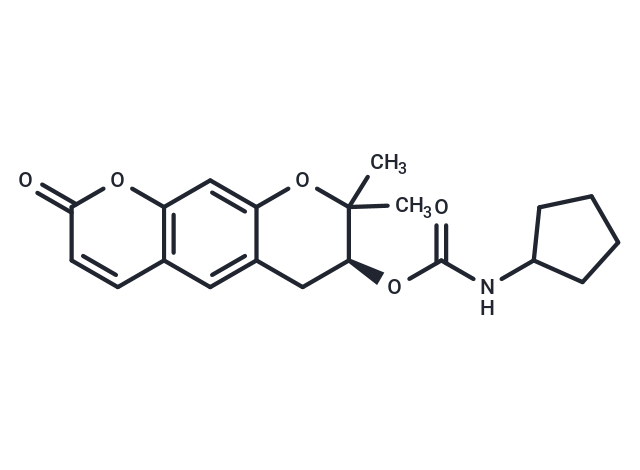
| Description | CKG012 is an inhibitor of the Wnt/β-catenin signaling pathway that inhibits the release of HMGB1 and the transcription of β-catenin. It exhibits attenuating activities against cecal ligation and puncture (CLP)-induced sepsis and multiple myeloma cancer [1] [2]. |
| In vitro | CGK012 (0-20 μM) reduces excessive vascular permeability in HUVECs by inhibiting LPS-induced acetylation of HMGB1 and expression of SIRT1, thereby suppressing the release of HMGB1 and the expression of pathogen-associated molecules such as TLR2/4, without affecting cell viability [1]. It improves inflammatory responses by decreasing adhesion and migration of inflammatory immune cells, and by inhibiting the production of pro-inflammatory cytokines IL-6, TNF-α, and transcription factors NF-kB and ERK1/2 [1]. Moreover, CGK012 (0-20 μM) promotes β-catenin phosphorylation and degradation, suppressing β-catenin-dependent gene expression, and inhibiting the proliferation of multiple myeloma cells RPMI-8226 with an IC50 of 5.08 μM [2]. In cell viability assays [1] using HUVECs at concentrations of 5-100 μM over 48 hours, CGK012 showed no impact on cell viability. Western blot analysis [1] in HUVECs, HEK293-FL reporter, and RPMI-8226 cells at 0-20 μM for 12 hours demonstrated reduced levels of SIRT1 and acetylated HMGB1, as well as decreased β-catenin in HEK293-FL reporter and RPMI-8226. Cell migration assays [1] with HUVECs at 0-20 μM for 6 hours showed inhibition of neutrophil migration through HUVEC monolayers. |
| In vivo | CGK012 (0.05-0.53 mg/kg, intravenously, double dose) suppresses HMGB1 release and immune cell migration, thereby enhancing vascular cell stability and survival rates in C57BL/6 mice with sepsis induced by cecal ligation and puncture [1]. Animal Model: CLP-induced sepsis in C57BL/6 mice [1]. Dosage: 0.26-0.53 mg/kg. Administration: double doses, 12 or 50 hours post-surgery. Result: Decreased HMGB1 expression and increased survival rate. |
| Molecular Weight | 357.40 |
| Formula | C20H23NO5 |
| Cas No. | 2044497-76-7 |
| Smiles | O(C(NC1CCCC1)=O)[C@H]2CC=3C(=CC4=C(C3)C=CC(=O)O4)OC2(C)C |
| Storage | Powder: -20°C for 3 years | In solvent: -80°C for 1 year Shipping with blue ice/Shipping at ambient temperature. |
 For example, if the intended dosage is 10 mg/kg for animals weighing 20 g , with a dosing volume of 100 μL per animal, and a total of 10 animals are to be administered, using a formulation of
  10% DMSO+ 40% PEG300+ 5% Tween 80+ 45% Saline/PBS/ddH2O , the resulting working solution concentration would be 2 mg/mL.
Dissolve 2 mg of the compound in 100 μL DMSO to obtain a stock solution at a concentration of 20 mg/mL . If the required concentration exceeds the compound's known solubility, please contact us for technical support before proceeding.
1) Add 100 μL of the DMSO stock solution to 400 µL PEG300 and mix thoroughly until the solution becomes clear.
2) Add 50 µL Tween 80 and mix well until fully clarified.
3) Add 450 µL Saline,PBS or ddH2O and mix thoroughly until a homogeneous solution is obtained.
| Size | Quantity | Unit Price | Amount | Operation |
|---|
 Feedback
 Hello! How can I help you today?
Copyright © 2015-2026 TargetMol Chemicals Inc. All Rights Reserved.
