


Shopping Cart
Remove All Your shopping cart is currently empty

Synonyms:
| Pack Size | Price | USA Stock | Global Stock | Quantity |
|---|---|---|---|---|
| 1 mg | $85 | - | In Stock | |
| 5 mg | $198 | - | In Stock | |
| 10 mg | $339 | - | In Stock | |
| 25 mg | $569 | - | In Stock | |
| 50 mg | $793 | - | In Stock | |
| 100 mg | $1,090 | - | In Stock |
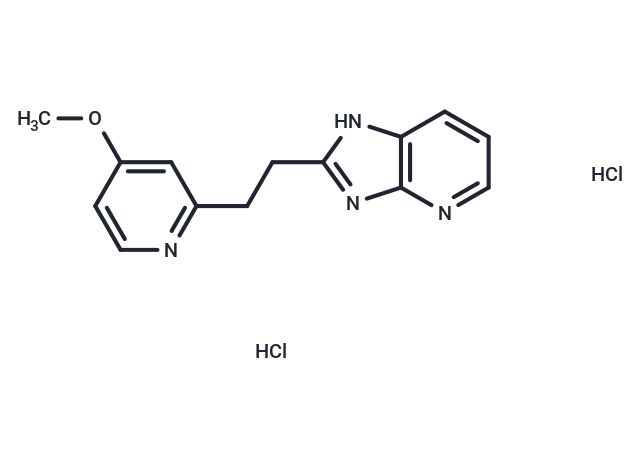
| Description | BYK 191023 dihydrochloride is a highly selective inhibitor of inducible nitric-oxide synthase (iNOS). It exerts its function by interacting directly with the catalytic center of the enzyme. Biochemical analyses have characterized BYK 191023 dihydrochloride as an NADPH- and time-dependent irreversible inhibitor. This compound is extensively utilized as a chemical tool to investigate the physiological and pathological effects mediated by iNOS in both in vitro and in vivo models, particularly concerning inflammatory responses and oxidative stress. |
| In vitro | BYK 191023 dihydrochloride is an NADPH-dependent, irreversible iNOS inhibitor. It selectively targets the iNOS active site, potently blocks LPS- or cytokine-induced NO production, and exhibits high selectivity for iNOS over eNOS and nNOS [1]. |
| In vivo | In vivo, BYK 191023 dihydrochloride has been employed to evaluate the role of iNOS in models of septic shock, autoimmune diseases, and neuroinflammation. Its irreversible mode of inhibition results in long-lasting pharmacological activity, demonstrating significant efficacy in reducing tissue damage and vascular dysfunction caused by excessive iNOS activation [1]. |
| Molecular Weight | 327.21 |
| Formula | C14H16Cl2N4O |
| Cas No. | 1216722-25-6 |
| Smiles | COC1=CC(CCC2=NC3=C(N2)C=CC=N3)=NC=C1.Cl.Cl |
| Relative Density. | no data available |
| Storage | Keep away from moisture Powder: -20°C for 3 years | In solvent: -80°C for 1 year Shipping with blue ice/Shipping at ambient temperature. | |||||||||||||||||||||||||||||||||||
| Solubility Information | DMSO: 200 mg/mL (611.23 mM), Sonication is recommended. | |||||||||||||||||||||||||||||||||||
Solution Preparation Table | ||||||||||||||||||||||||||||||||||||
DMSO
Note : The dilution table applies only to solid products. For liquid products, please calculate the stock solution based on the stated concentration and/or density. | ||||||||||||||||||||||||||||||||||||
 For example, if the intended dosage is 10 mg/kg for animals weighing 20 g , with a dosing volume of 100 μL per animal, and a total of 10 animals are to be administered, using a formulation of
  10% DMSO+ 40% PEG300+ 5% Tween 80+ 45% Saline/PBS/ddH2O , the resulting working solution concentration would be 2 mg/mL.
Dissolve 2 mg of the compound in 100 μL DMSO to obtain a stock solution at a concentration of 20 mg/mL . If the required concentration exceeds the compound's known solubility, please contact us for technical support before proceeding.
1) Add 100 μL of the DMSO stock solution to 400 µL PEG300 and mix thoroughly until the solution becomes clear.
2) Add 50 µL Tween 80 and mix well until fully clarified.
3) Add 450 µL Saline,PBS or ddH2O and mix thoroughly until a homogeneous solution is obtained.
| Size | Quantity | Unit Price | Amount | Operation |
|---|
 Feedback
 Hello! How can I help you today?
Copyright © 2015-2026 TargetMol Chemicals Inc. All Rights Reserved.
