


Shopping Cart
Remove All Your shopping cart is currently empty

Synonyms: GRI-918013, GRI 918013

| Pack Size | Price | USA Stock | Global Stock | Quantity |
|---|---|---|---|---|
| 1 mg | $42 | - | In Stock | |
| 5 mg | $98 | - | In Stock | |
| 10 mg | $157 | - | In Stock | |
| 25 mg | $278 | - | In Stock | |
| 50 mg | $448 | - | In Stock | |
| 100 mg | $722 | - | In Stock |
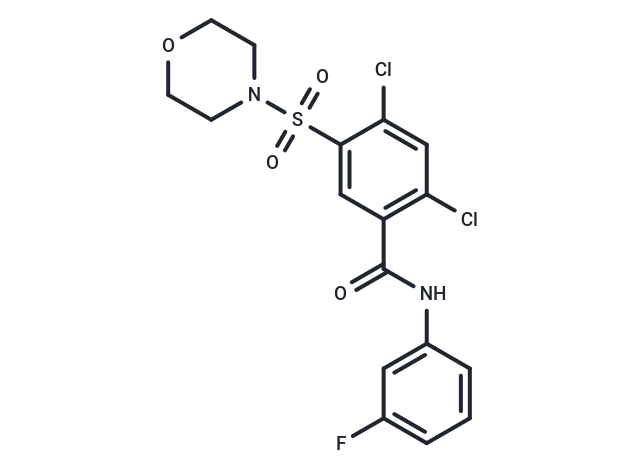
| Description | GRI918013 is a compound that selectively and competitively inhibits the autocrine motility factor (ATX/NPP2), thereby suppressing tumor cell invasion and metastasis. GRI918013 binds competitively to the active site of ATX, preventing the entry of lipid substrates such as lysophosphatidylcholine (LPC). This reduces the ATX-catalyzed hydrolysis of LPC to form lysophosphatidic acid (LPA), thereby inhibiting cell invasion and metastasis associated with the ATX-LPA axis. GRI918013 exhibits an inhibitory effect on the ATX-catalyzed hydrolysis of the LPL substrate FS-3, with an IC50 of 31.42 nM and a Ki of 12.98 nM. GRI918013 can serve as a tool for studying invasion and metastasis in cancers such as melanoma, and is also suitable for research on ATX-LPA axis-related diseases, including fibrotic diseases, neuropathic pain, and cholestatic pruritus. |
| Targets & IC50 | ATX:31.42 nM |
| In vitro | Methods: Human melanoma A2058 cells were co-incubated with GRI918013, ATX, and LPC, then seeded into the upper chamber of a Transwell device. Chemotactic agents were added to the lower chamber, and the cells were incubated for 16 hours. The fluorescence intensity of cells that had invaded the lower chamber was then measured. Results: GRI918013 significantly inhibited A2058 cell invasion, with an IC₅₀ value of 118.79 ± 62.9 nM [1]. |
| In vivo | Methods: To evaluate the antitumor metastasis effects of GRI918013, an experimental lung metastasis model using B16-F10 mouse melanoma cells was established. C57BL/6 mice were injected with B16-F10 cells via the tail vein. Starting on day 1 post-tumor cell inoculation, GRI918013 (30 μg/mouse) was administered intraperitoneally once daily for 10 consecutive days. On day 21 post-inoculation, the mice were euthanized, their lungs were harvested, and the number of metastatic nodules on the lung surface was counted. Results: Treatment with GRI918013 significantly reduced the number of pulmonary metastatic nodules.[1] |
| Synonyms | GRI-918013, GRI 918013 |
| Molecular Weight | 433.28 |
| Formula | C17H15Cl2FN2O4S |
| Cas No. | 313685-55-1 |
| Smiles | O=C(NC=1C=CC=C(F)C1)C=2C=C(C(Cl)=CC2Cl)S(=O)(=O)N3CCOCC3 |
| Relative Density. | no data available |
| Storage | Powder: -20°C for 3 years | In solvent: -80°C for 1 year Shipping with blue ice/Shipping at ambient temperature. |
 For example, if the intended dosage is 10 mg/kg for animals weighing 20 g , with a dosing volume of 100 μL per animal, and a total of 10 animals are to be administered, using a formulation of
  10% DMSO+ 40% PEG300+ 5% Tween 80+ 45% Saline/PBS/ddH2O , the resulting working solution concentration would be 2 mg/mL.
Dissolve 2 mg of the compound in 100 μL DMSO to obtain a stock solution at a concentration of 20 mg/mL . If the required concentration exceeds the compound's known solubility, please contact us for technical support before proceeding.
1) Add 100 μL of the DMSO stock solution to 400 µL PEG300 and mix thoroughly until the solution becomes clear.
2) Add 50 µL Tween 80 and mix well until fully clarified.
3) Add 450 µL Saline,PBS or ddH2O and mix thoroughly until a homogeneous solution is obtained.
| Size | Quantity | Unit Price | Amount | Operation |
|---|
 Feedback
 Hello! How can I help you today?
Copyright © 2015-2026 TargetMol Chemicals Inc. All Rights Reserved.
