


Shopping Cart
Remove All Your shopping cart is currently empty

Synonyms: TST-002, TST002, LY-2541546, LY2541546

| Pack Size | Price | USA Stock | Global Stock | Quantity |
|---|---|---|---|---|
| 1 mg | $182 | - | In Stock | |
| 5 mg | $503 | - | In Stock | |
| 10 mg | $793 | - | In Stock | |
| 25 mg | $1,170 | - | In Stock | |
| 50 mg | Preferential | - | In Stock |
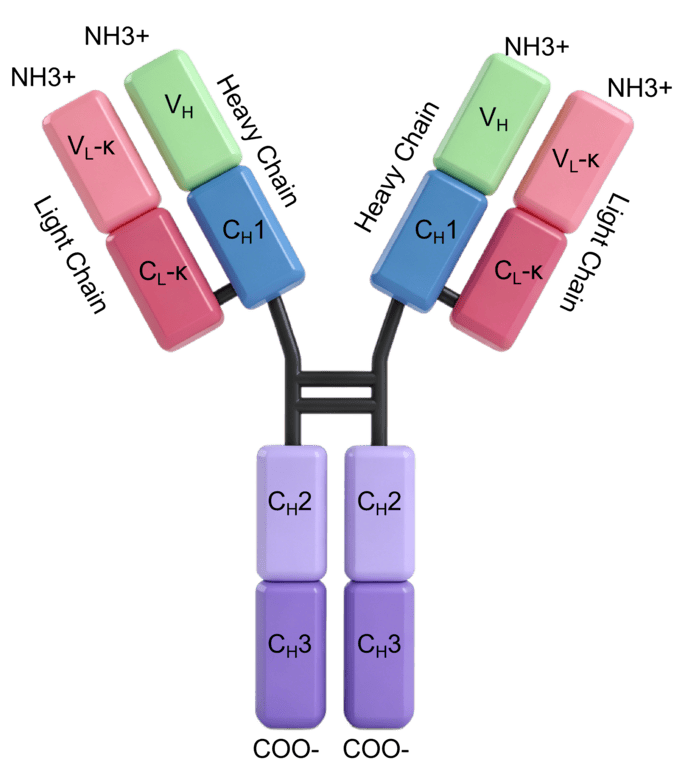
| Description | Blosozumab (LY2541546) is a humanized monoclonal antibody targeting sclerostin, promoting bone formation and inhibiting bone resorption, used in osteoporosis research. Blosozumab increases bone mass by neutralizing the negative effects of sclerostin on the Wnt signaling pathway. |
| In vivo | Blosozumab is a humanized monoclonal antibody (IgG4) optimized for neutralizing activity against sclerotin. In 5-week and 6-month nonclinical safety studies in rats, blosozumab caused a dose-dependent, reversible decrease in platelet count, accompanied by accelerated thrombopoiesis, increased megakaryocytes, and megakaryocyte morphological changes. In rhesus monkeys treated with blosozumab, there were no changes in platelet counts or megakaryocytes.[1] Methods: A mouse tibial fracture model was established. One week after fracture, anti-sclerostin monoclonal antibody (blosozumab, 100 mg/kg) was administered intravenously weekly. A SOST gene knockout group and a saline control group were established, with intervention continuing for 5 weeks; micro-CT was used to measure callus volume, and a three-point bending test was employed to evaluate the biomechanical properties of fracture healing. Results: Blosozumab significantly increased the callus volume fraction and biomechanical strength 2 weeks post-fracture and effectively promoted fracture healing. It demonstrated good safety, and increasing the dose may further enhance efficacy. [2] Methods: SD rats and crab-eating macaques were used for repeated-dose toxicity studies. Rats received intravenous injections of Blosozumab: the 5-week group received 1, 10, or 100 mg/kg every 3 days, and the 6-month group received 1, 10, or 100 mg/kg once weekly; Crab-eating macaques received intravenous injections of Blosozumab: the 5-week group received 1, 10, or 100 mg/kg every 5 days, and the 9-month group received 3, 30, or 100 mg/kg once weekly. Results: Blosozumab caused dose-dependent, reversible thrombocytopenia in rats, accompanied by bleeding, megakaryocytosis, and extramedullary hematopoiesis, without bone marrow suppression or disseminated intravascular coagulation; no abnormalities in platelets, megakaryocytes, or bleeding were observed in crab-eating macaques. [3] |
| Synonyms | TST-002, TST002, LY-2541546, LY2541546 |
| Reactivity | Human |
| Application | Functional assay |
| Antibody Type | Monoclonal |
| Formulation | Supplied as a sterile solution in a buffered formulation system (e.g., phosphate-, citrate-, or amino acid-based). Please refer to the CoA for lot-specific composition. |
| Endotoxin | <1.0 EU/mg |
| Conjucates | Unconjugated |
| Gene ID | |
| Uniprot ID | |
| Target | SOST/Sclerostin |
| Molecular Weight | 144.88 kDa |
| Cas No. | 1132758-87-2 |
| Isotype | Human IgG4SP kappa |
| Recommended Isotype Control |
| Storage | Store at low temperature -20°C for 1 year Shipping with blue ice/Shipping at ambient temperature. |
| Size | Quantity | Unit Price | Amount | Operation |
|---|
 Feedback
 Hello! How can I help you today?
Copyright © 2015-2026 TargetMol Chemicals Inc. All Rights Reserved.
