


Shopping Cart
Remove All Your shopping cart is currently empty


Synonyms:
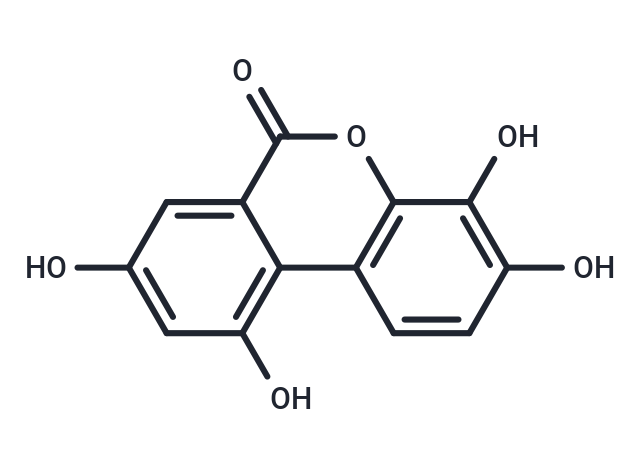

| Description | Urolithin E is a secondary metabolite produced by the gut microbiota from ellagitannins and ellagic acid. As a member of the urolithin family, it features a polyhydroxylated dibenzopyran-6-one skeleton. Research indicates that Urolithin E possesses significant antioxidant and anti-inflammatory activities, capable of scavenging free radicals and inhibiting oxidative stress-induced cellular damage. Furthermore, as a bioactive metabolite, it has demonstrated potential biological functions in modulating apoptosis and inhibiting the proliferation of specific cancer cell lines. |
| In vitro | In antioxidant assays, Urolithin E demonstrated potent radical scavenging activity (e.g., DPPH and ABTS assays), exhibiting a higher antioxidant capacity compared to its less hydroxylated counterparts like Urolithin A and B. It effectively reduced intracellular reactive oxygen species (ROS) levels in challenged cell models [1]. |
| In vivo | Upon oral administration of ellagitannin-rich foods, Urolithin E can be detected in biological fluids (plasma and urine) as a phase II metabolite (glucuronide or sulfate conjugate), reflecting its bioavailability and systemic distribution after gut microbial transformation [2]. |
| Molecular Weight | 260.2 |
| Formula | C13H8O6 |
| Cas No. | 1453297-45-4 |
| Smiles | O=C1OC=2C(O)=C(O)C=CC2C3=C(O)C=C(O)C=C13 |
| Relative Density. | no data available |
| Storage | Store at low temperature,Keep away from direct sunlight Powder: -20°C for 3 years | In solvent: -80°C for 1 year Shipping with blue ice/Shipping at ambient temperature. |
 For example, if the intended dosage is 10 mg/kg for animals weighing 20 g , with a dosing volume of 100 μL per animal, and a total of 10 animals are to be administered, using a formulation of
  10% DMSO+ 40% PEG300+ 5% Tween 80+ 45% Saline/PBS/ddH2O , the resulting working solution concentration would be 2 mg/mL.
Dissolve 2 mg of the compound in 100 μL DMSO to obtain a stock solution at a concentration of 20 mg/mL . If the required concentration exceeds the compound's known solubility, please contact us for technical support before proceeding.
1) Add 100 μL of the DMSO stock solution to 400 µL PEG300 and mix thoroughly until the solution becomes clear.
2) Add 50 µL Tween 80 and mix well until fully clarified.
3) Add 450 µL Saline,PBS or ddH2O and mix thoroughly until a homogeneous solution is obtained.
| Size | Quantity | Unit Price | Amount | Operation |
|---|
 Feedback
 Hello! How can I help you today?
Copyright © 2015-2026 TargetMol Chemicals Inc. All Rights Reserved.
