


Shopping Cart
Remove All Your shopping cart is currently empty

Synonyms:
| Pack Size | Price | USA Stock | Global Stock | Quantity |
|---|---|---|---|---|
| 10 mg | Inquiry | 10-14 weeks | 10-14 weeks | |
| 50 mg | Inquiry | 10-14 weeks | 10-14 weeks |
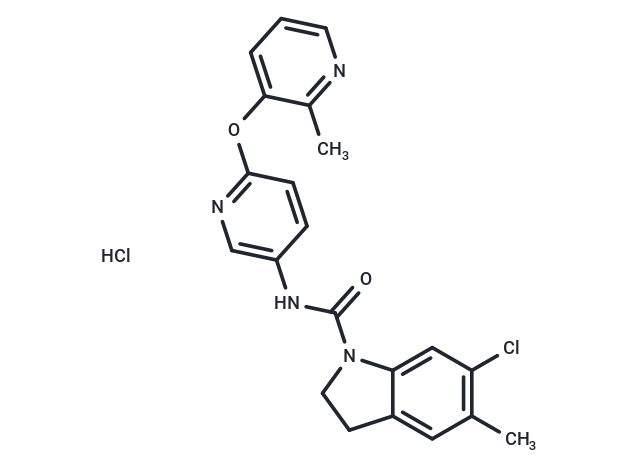
| Description | SB 242084 monohydrochloride is a selective, competitive, and high-affinity 5-HT2C receptor antagonist (pKi=9.0) that can cross the blood-brain barrier. This compound enhances the basal activity of dopaminergic neurons in the ventral tegmental area (VTA) and increases dopamine release in the nucleus accumbens. Additionally, SB 242084 monohydrochloride boosts the expression of mitochondrial genes and oxidative metabolism via the 5-HT2A receptor. Its potential for research in anxiety, depression, negative symptoms of schizophrenia, and acute organ damage is significant. |
| In vitro | SB 242084 monohydrochloride, at a concentration of 100 nM for 45 minutes, antagonizes the increase in serotonin-induced phosphoinositide hydrolysis in human 5-HT 2C receptors within SH-SY5Y cells. Additionally, when administered at concentrations ranging from 1-100 nM over 24 hours, it enhances respiration in RPTC cells and increases the expression of PGC-1α mRNA. |
| In vivo | SB 242084 monohydrochloride administered intraperitoneally at doses of 0.1-1 mg/kg, with a single administration and a 20-minute pre-test, enhances the behavior of rats in social interaction tests. At a dosage of 5 mg/kg delivered intraperitoneally with a single dose and a 20-minute pre-test, it attenuates mCPP-induced deficits in rat swallowing behavior. Furthermore, when administered intraperitoneally at doses of 5 and 10 mg/kg in a single administration, SB 242084 monohydrochloride increases the levels of dopamine (DA) and dihydroxyphenylacetic acid (DOPAC) in the rat nucleus accumbens basal dialysate. At doses ranging from 160-640 μg/kg, delivered via intravenous injection in a single dose, the compound significantly enhances the basal firing rate of dopaminergic neurons in the VTA (ventral tegmental area) in a dose-dependent manner, while also intensifying burst activity in the same region in vivo. |
| Molecular Weight | 431.32 |
| Formula | C21H20Cl2N4O2 |
| Cas No. | 1260505-34-7 |
| Smiles | Cl.O=C(NC1=CN=C(OC2=CC=CN=C2C)C=C1)N3C4=CC(Cl)=C(C=C4CC3)C |
| Storage | Powder: -20°C for 3 years | In solvent: -80°C for 1 year Shipping with blue ice/Shipping at ambient temperature. |
 For example, if the intended dosage is 10 mg/kg for animals weighing 20 g , with a dosing volume of 100 μL per animal, and a total of 10 animals are to be administered, using a formulation of
  10% DMSO+ 40% PEG300+ 5% Tween 80+ 45% Saline/PBS/ddH2O , the resulting working solution concentration would be 2 mg/mL.
Dissolve 2 mg of the compound in 100 μL DMSO to obtain a stock solution at a concentration of 20 mg/mL . If the required concentration exceeds the compound's known solubility, please contact us for technical support before proceeding.
1) Add 100 μL of the DMSO stock solution to 400 µL PEG300 and mix thoroughly until the solution becomes clear.
2) Add 50 µL Tween 80 and mix well until fully clarified.
3) Add 450 µL Saline,PBS or ddH2O and mix thoroughly until a homogeneous solution is obtained.
| Size | Quantity | Unit Price | Amount | Operation |
|---|
 Feedback
 Hello! How can I help you today?
Copyright © 2015-2026 TargetMol Chemicals Inc. All Rights Reserved.
