


Shopping Cart
Remove All Your shopping cart is currently empty

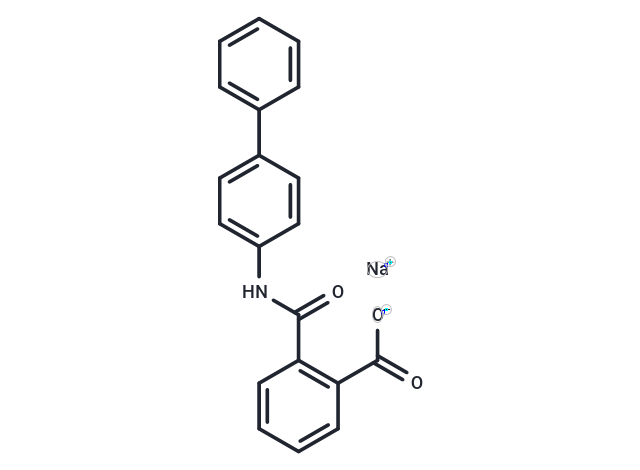
Synonyms: KGN sodium
| Pack Size | Price | USA Stock | Global Stock | Quantity |
|---|---|---|---|---|
| 10 mg | Inquiry | 10-14 weeks | 10-14 weeks | |
| 50 mg | Inquiry | 10-14 weeks | 10-14 weeks |
| Description | Kartogenin (KGN) sodium acts as an inducer of chondrogenic tissue formation (EC 50: 100 nM). It promotes chondrogenesis by binding to fibrin A, disrupting its interaction with the transcription factor core binding factor beta subunit (CBFβ), and modulating the CBFβ-RUNX1 transcriptional program. Additionally, Kartogenin sodium aids tendon-bone junction (TBJ) wound healing by stimulating collagen synthesis. It is extensively utilized in cell-free therapies for cartilage regeneration and protection, tendon-bone healing, wound healing, and limb development. The compound is also vital for cartilage repair, coordinating limb development, and osteoarthritis (OA) research [1] [2] [3] [4]. |
| In vitro | Kartogenin sodium (100 nM; 72 h) induces the formation of chondrocyte aggregates in primary hMSCs [1]. At concentrations ranging from 10 nM to 10 μM over 72 hours, it increases the expression of chondrocyte-specific genes in hMSCs [1]. Kartogenin sodium (0.12-10 μM; 48 h) inhibits cytokine-induced nitric oxide (NO) and glycosaminoglycan (GAG) release in primary bovine articular chondrocytes [1]. Additionally, concentrations of 50 to 5000 nM over a period of 2 weeks induce chondrogenic differentiation in BMSCs in a dose-dependent manner [2]. |
| In vivo | Kartogenin sodium (10 μM, dissolved in 4 μL saline; administered on day 7 and day 21) enhances cartilage repair in a collagenase VII-induced mouse model of osteoarthritis [1]. |
| Synonyms | KGN sodium |
| Molecular Weight | 339.32 |
| Formula | C20H14NNaO3 |
| Cas No. | 1401168-39-5 |
| Smiles | O=C(C1=C(C=CC=C1)C([O-])=O)NC2=CC=C(C3=CC=CC=C3)C=C2.[Na+] |
| Storage | Powder: -20°C for 3 years | In solvent: -80°C for 1 year Shipping with blue ice/Shipping at ambient temperature. |
 For example, if the intended dosage is 10 mg/kg for animals weighing 20 g , with a dosing volume of 100 μL per animal, and a total of 10 animals are to be administered, using a formulation of
  10% DMSO+ 40% PEG300+ 5% Tween 80+ 45% Saline/PBS/ddH2O , the resulting working solution concentration would be 2 mg/mL.
Dissolve 2 mg of the compound in 100 μL DMSO to obtain a stock solution at a concentration of 20 mg/mL . If the required concentration exceeds the compound's known solubility, please contact us for technical support before proceeding.
1) Add 100 μL of the DMSO stock solution to 400 µL PEG300 and mix thoroughly until the solution becomes clear.
2) Add 50 µL Tween 80 and mix well until fully clarified.
3) Add 450 µL Saline,PBS or ddH2O and mix thoroughly until a homogeneous solution is obtained.
| Size | Quantity | Unit Price | Amount | Operation |
|---|
 Feedback
 Hello! How can I help you today?
Copyright © 2015-2026 TargetMol Chemicals Inc. All Rights Reserved.
