


Shopping Cart
Remove All Your shopping cart is currently empty

Synonyms: KP1 (56-87) (human) TFA
| Pack Size | Price | USA Stock | Global Stock | Quantity |
|---|---|---|---|---|
| 500 µg | $97 | - | In Stock | |
| 1 mg | $185 | - | In Stock | |
| 5 mg | $580 | - | In Stock | |
| 10 mg | $964 | - | In Stock |
| Description | Klotho-derived Peptide 1 (56-87) (human) TFA, a peptide derived from the human Klotho protein, disrupts TGF-β signaling through binding interactions with TGF-β receptor type 1 (TGFBR1) and TGF-β receptor type 2 (TGFBR2), with Kd values of 1.41 and 14.6 µM, respectively. Preincubation with Klotho-derived Peptide 1 (56-87) (human) TFA at 10 µg/mL inhibits TGF-β-induced increases in fibronectin and α-smooth muscle actin (α-SMA) expression in NRK-49F rat fibroblasts. In vivo investigations demonstrate that Klotho-derived Peptide 1 (56-87) (human) TFA, administered at 1 mg/kg per day, preferentially accumulates in damaged kidneys and significantly reduces serum creatinine and blood urea nitrogen levels while decreasing renal fibrosis in mouse models of unilateral ureteral obstruction (UUO) and unilateral ischemia-reperfusion injury-induced renal fibrosis. Klotho-derived Peptide 1 (56-87) (human) TFA is therefore valuable for investigations involving renal fibrosis, TGF-β signaling modulation, and kidney injury-associated molecular pathways. |
| In vitro | Klotho-derived Peptide 1 (56-87) (human) TFA (3μM, 24 h) blocks TGF-β1-induced α-SMA and fibronectin expression at protein levels by western blot analyses[1]. Klotho-derived Peptide 1 (56-87) (human) TFA (3μM, 24 h) concurrently suppresses the ERK1/2, JNK, and p38 MAPK activation induced by TGF-β1 in LX-2 cells[1]. |
| In vivo | Klotho-derived Peptide 1 (56-87) (human) TFA (1 mg/kg/d) normalizes serum ALT and AST levels ALB and TP levels and inhibits hepatic mRNA expression of numerous fibrosis-related genes such as α-smooth muscle actin (Acta2), Fn1, Col1a1, Col3a1, tissue Inhibitor of metalloproteinase 2 (Timp2), and matrix metalloproteinase-9 (Mmp9) in kl/kl mice[1]. Klotho-derived Peptide 1 (56-87) (human) TFA (1 mg/kg/d; 4weeks) reduces pseudolobule formation, hepatocyte ballooning, and inflammatory infiltration and attenuats collagens deposition in the liver of CCl4 treated mice[1]. Klotho-derived Peptide 1 (56-87) (human) TFA (1 mg/kg/d; i.v.; 1weeks) reduced serum ALT and AST levels after bile duct ligation (BDL) surgery and mitigates hepatic damage and inflammatory infiltration in BDL liver[1]. |
| Synonyms | KP1 (56-87) (human) TFA |
| Molecular Weight | 3228.44 (free base) |
| Formula | C149H203N39O43.xCF3COOH |
| Smiles | [H]N[C@H](C(N[C@@H](CCC(N)=O)C(NCC(N[C@]([C@@H](C)O)([H])C(N[C@H](C(N1CCC[C@H]1C(N[C@H](C(NCC(N[C@H](C(N[C@@H](CC(C)C)C(N[C@H](C(N[C@H](C(N[C@@H](C(C)C)C(NCC(N[C@@H](CO)C(N[C@H](C(N[C@H](C(N[C@H](C(N[C@@H](CCC(N)=O)C(N[C@]([C@@H](C)O)([H])C(N[C@@H](CCC(O)=O)C(NCC(NCC(N[C@H](C(N[C@@H](CCC(N)=O)C(N[C@@H](CCC(N)=O)C(N[C@H](C(NCC(N[C@@H](CCCCN)C(NCC(O)=O)=O)=O)=O)CC2=CN=CN2)=O)=O)=O)CC3=CNC4=C3C=CC=C4)=O)=O)=O)=O)=O)=O)CC5=CC=C(O)C=C5)=O)C)=O)C)=O)=O)=O)=O)C)=O)CC6=CNC7=C6C=CC=C7)=O)=O)CC8=CC=CC=C8)=O)=O)CC(O)=O)=O)=O)CC9=CC=CC=C9)=O)=O)=O)=O)CC%10=CC=CC=C%10.FC(F)(C(O)=O)F |
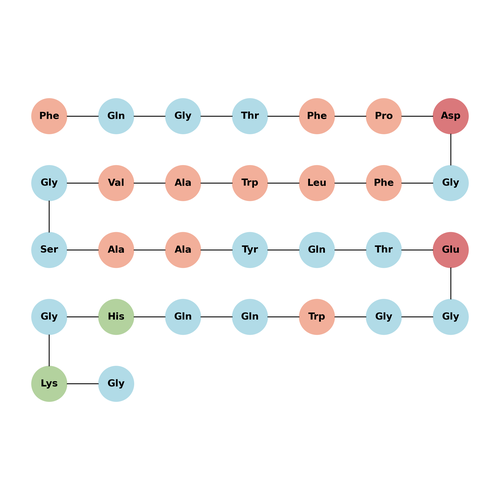
| Sequence | Phe-Gln-Gly-Thr-Phe-Pro-Asp-Gly-Phe-Leu-Trp-Ala-Val-Gly-Ser-Ala-Ala-Tyr-Gln-Thr-Glu-Gly-Gly-Trp-Gln-Gln-His-Gly-Lys-Gly |
| Sequence Short | FQGTFPDGFLWAVGSAAYQTEGGWQQHGKG |
| Storage | Keep away from moisture, Powder: -20°C for 3 years | In solvent: -80°C for 1 year Shipping with blue ice/Shipping at ambient temperature. |
| Solubility Information | H2O: Soluble |
 For example, if the intended dosage is 10 mg/kg for animals weighing 20 g , with a dosing volume of 100 μL per animal, and a total of 10 animals are to be administered, using a formulation of
  10% DMSO+ 40% PEG300+ 5% Tween 80+ 45% Saline/PBS/ddH2O , the resulting working solution concentration would be 2 mg/mL.
Dissolve 2 mg of the compound in 100 μL DMSO to obtain a stock solution at a concentration of 20 mg/mL . If the required concentration exceeds the compound's known solubility, please contact us for technical support before proceeding.
1) Add 100 μL of the DMSO stock solution to 400 µL PEG300 and mix thoroughly until the solution becomes clear.
2) Add 50 µL Tween 80 and mix well until fully clarified.
3) Add 450 µL Saline,PBS or ddH2O and mix thoroughly until a homogeneous solution is obtained.
| Size | Quantity | Unit Price | Amount | Operation |
|---|
 Feedback
 Hello! How can I help you today?
Copyright © 2015-2026 TargetMol Chemicals Inc. All Rights Reserved.
