


Shopping Cart
Remove All Your shopping cart is currently empty
Synonyms: P-cell-stimulating factor, Multipotential colony-stimulating factor, MCGF, Mast cell growth factor, Interleukin-3, IL-3, Il3, Hematopoietic growth factor
| Pack Size | Price | USA Stock | Global Stock | Quantity |
|---|---|---|---|---|
| 5 µg | $74 | 7-10 days | 7-10 days | |
| 10 µg | $118 | - | In Stock | |
| 20 µg | $187 | 7-10 days | 7-10 days | |
| 50 µg | $350 | 7-10 days | 7-10 days | |
| 100 µg | $519 | 7-10 days | 7-10 days | |
| 200 µg | $779 | 7-10 days | 7-10 days | |
| 500 µg | $1,330 | 7-10 days | 7-10 days |
| Bioactivity | Measured in a cell proliferation assay using NFS‑60 mouse myelogenous leukemia lymphoblast cells. The ED50 for this effect is 582 pg/ml. (Regularly tested) |
| Description | Interleukin 3 is a pleiotropic factor produced primarily by activated T cells that can stimulate the proliferation and differentiation of pluripotent hematopoietic stem cells as well as various lineage committed progenitors. In addition, IL-3 also affects the functional activity of mature mast cells, basophils, eosinophils and macrophages.Because of its multiple functions and targets, it was originally studied under different names, including mast cell growth factor P-cell stimulating factor, burst promoting activity, multi-colony stimulating factor, thy-1 inducing factor and WEHI-3 growth factor. In addition to activated T cells, other cell types such as human thymic epithelial cells, activated mouse mast cells, mouse keratinocytes and neurons/astrocytes can also produce IL-3. IL-3 exerts its biological activities through binding to specific cell surface receptors. The high affinity receptor responsible for IL-3. signaling is composed of α and βsubunits. IL-3 is capable of supporting the proliferation of abroad range of hematopoietic cell types. It is involved in avariety of cell activities such as cell growth, differentiation and apoptosis. IL-3 has been shown to also possess neurotrophic activity, and it may be associated with neurologic disorders. |
| Species | Mouse |
| Expression System | HEK293 Cells |
| Tag | C-6xHis |
| Accession Number | P01586 |
| Amino Acid | Ala27-Cys166 |
| Construction | Ala27-Cys166 |
| Protein Purity | Greater than 95% as determined by reducing SDS-PAGE. Greater than 95% as determined by SEC-HPLC. 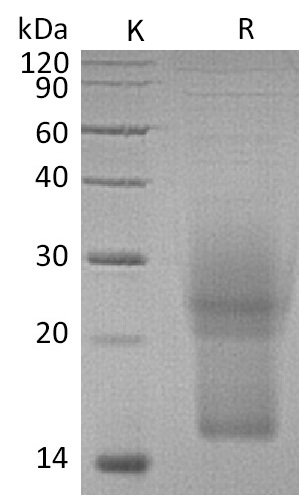 , ,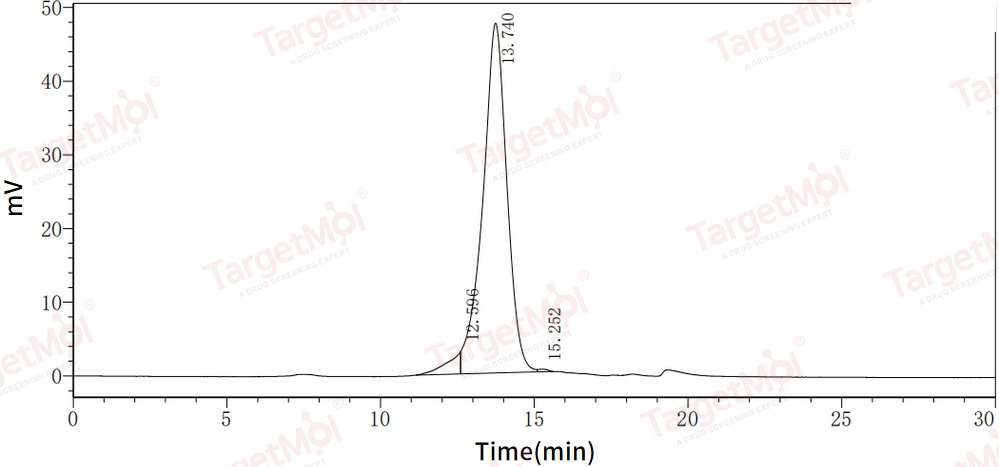 |
| Endotoxin | < 0.001 ng/µg (0.01 EU/µg) as determined by LAL test. |
| Formulation | Lyophilized from a solution filtered through a 0.22 μm filter, containing PBS, pH 7.4. |
| Reconstitution | Reconstitute the lyophilized protein in distilled water. The product concentration should not be less than 100 μg/ml. Before opening, centrifuge the tube to collect powder at the bottom. After adding the reconstitution buffer, avoid vortexing or pipetting for mixing. |
| Synonyms | P-cell-stimulating factor, Multipotential colony-stimulating factor, MCGF, Mast cell growth factor, Interleukin-3, IL-3, Il3, Hematopoietic growth factor |
| Research Background | Interleukin 3 is a pleiotropic factor produced primarily by activated T cells that can stimulate the proliferation and differentiation of pluripotent hematopoietic stem cells as well as various lineage committed progenitors. In addition, IL-3 also affects the functional activity of mature mast cells, basophils, eosinophils and macrophages.Because of its multiple functions and targets, it was originally studied under different names, including mast cell growth factor P-cell stimulating factor, burst promoting activity, multi-colony stimulating factor, thy-1 inducing factor and WEHI-3 growth factor. In addition to activated T cells, other cell types such as human thymic epithelial cells, activated mouse mast cells, mouse keratinocytes and neurons/astrocytes can also produce IL-3. IL-3 exerts its biological activities through binding to specific cell surface receptors. The high affinity receptor responsible for IL-3. signaling is composed of α and βsubunits. IL-3 is capable of supporting the proliferation of abroad range of hematopoietic cell types. It is involved in avariety of cell activities such as cell growth, differentiation and apoptosis. IL-3 has been shown to also possess neurotrophic activity, and it may be associated with neurologic disorders. |
| Molecular Weight | 15-32 KDa (reducing condition) |
| Shipping | In general, lyophilized powders are shipped with blue ice, while solutions are shipped with dry ice. |
| Storage | Lyophilized powders can be stably stored for over 12 months, while liquid products can be stored for 6-12 months at -80°C. For reconstituted protein solutions, the solution can be stored at -20°C to -80°C for at least 3 months. Please avoid multiple freeze-thaw cycles and store products in aliquots. |
| Size | Quantity | Unit Price | Amount | Operation |
|---|
 Feedback
 Hello! How can I help you today?
Copyright © 2015-2026 TargetMol Chemicals Inc. All Rights Reserved.
