


Shopping Cart
Remove All Your shopping cart is currently empty

CD64 Protein, Human, Recombinant (His) is expressed in HEK293 mammalian cells with His tag. The predicted molecular weight is 32 kDa and the accession number is P12314-1.
| Pack Size | Price | USA Stock | Global Stock | Quantity |
|---|---|---|---|---|
| 5 μg | $37 | - | In Stock | |
| 10 μg | $57 | - | In Stock | |
| 20 μg | $89 | 7-10 days | 7-10 days | |
| 50 μg | $168 | 7-10 days | 7-10 days | |
| 100 μg | $282 | - | In Stock | |
| 200 μg | $497 | 7-10 days | 7-10 days | |
| 500 μg | $1,060 | 7-10 days | 7-10 days |
| Biological Activity | 1. Immobilized Anti-CD20(Ro) Antibody (Rituximab) at 1 μg/mL (100 μL/well) can bind Recombinant Human CD64/FCGR1A Protein (His Tag), the EC50 is 0.6-2.0 ng/mL. 2. Captured Human FcγRI/CD64 recombinant protein on Anti-His Chip can bind Bevacizumab (IgG1) with an affinity constant of 5.5 nM as determined in an SPR assay. 3. Captured Human FcγRI/CD64 recombinant protein on Anti-His Chip can bind Nivolumab (IgG4) with an affinity constant of 13.6 nM as determined in an SPR assay. 4. Loaded Human FcγRI / CD64 recombinant protein on His1K Biosensor, can bind Nivolumab (IgG4) with an affinity constant of 8.5 nM as determined in a BLI assay. 5. Loaded Human FcγRI / CD64 recombinant protein on His1K Biosensor, can bind Bevacizumab (IgG1) with an affinity constant of 4.7 nM as determined in a BLI assay. 6. Loaded Rituximab (IgG1) on ProA Biosensor, can bind Human FcγRI/CD64 recombinant protein with an affinity constant of 0.38 nM as determined in a BLI assay. 7. The purity of Human CD64/FCGR1A Protein (His Tag) is more than 95% and the molecular weight of this protein is around 38-52 kDa verified by SEC-MALS. 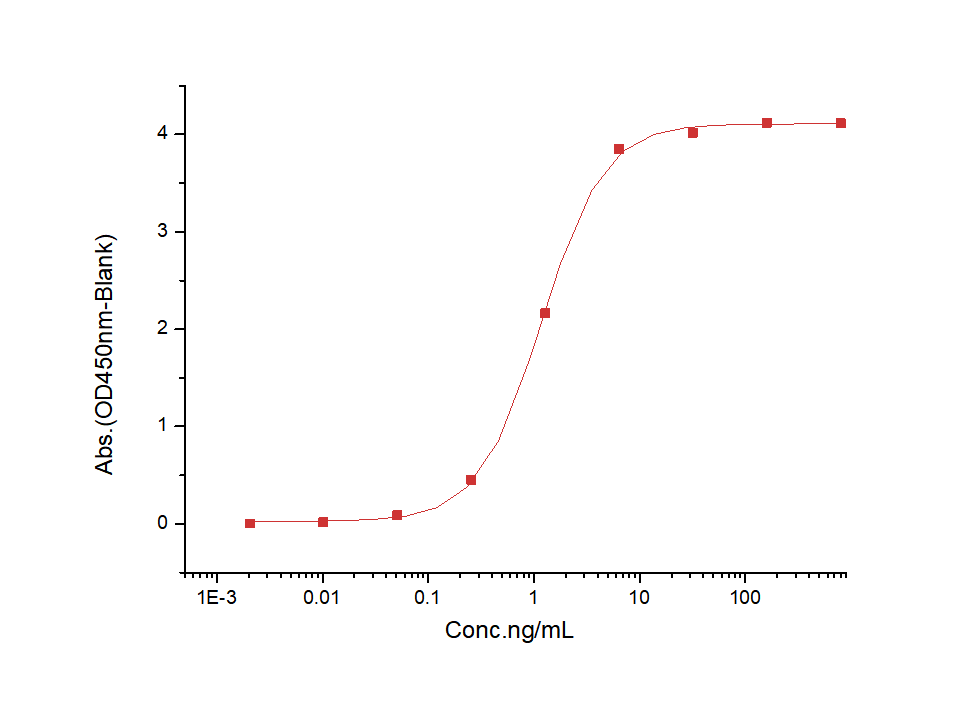 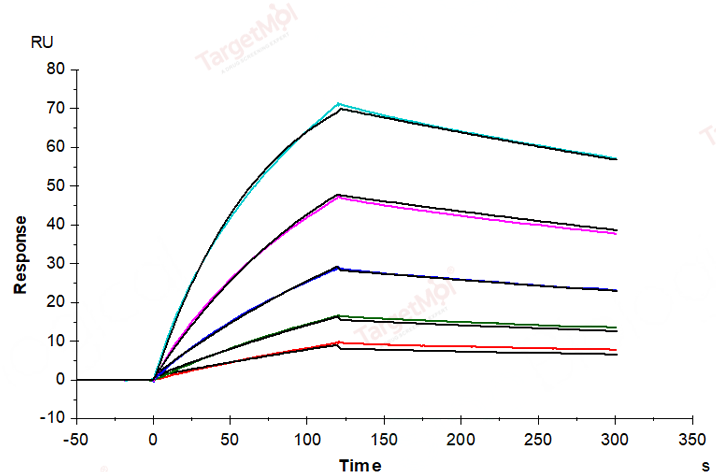 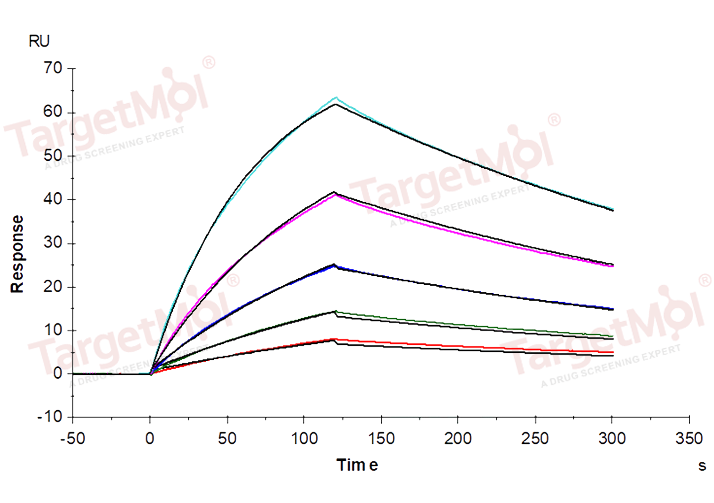 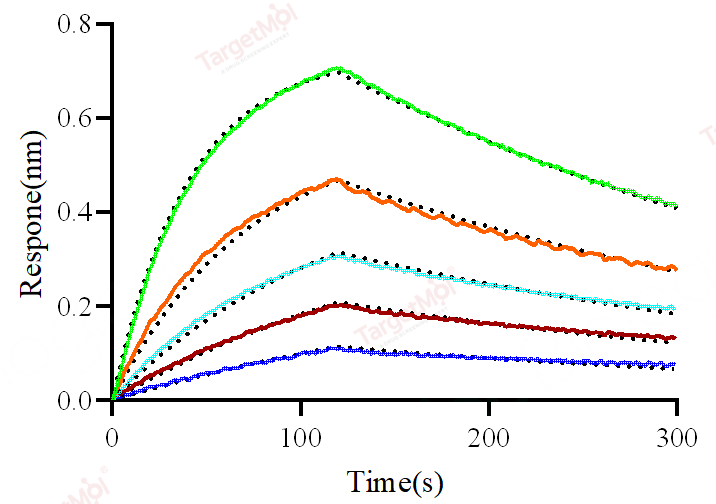 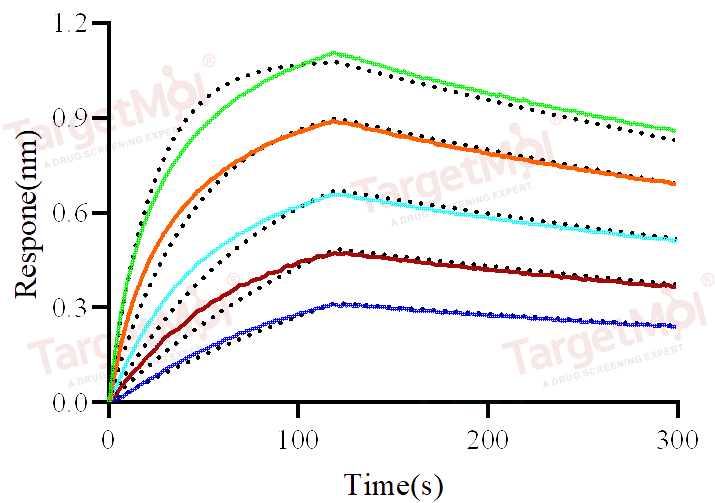 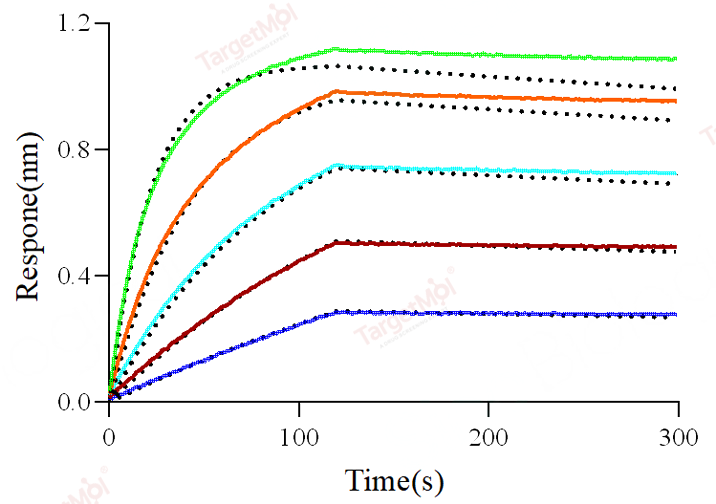 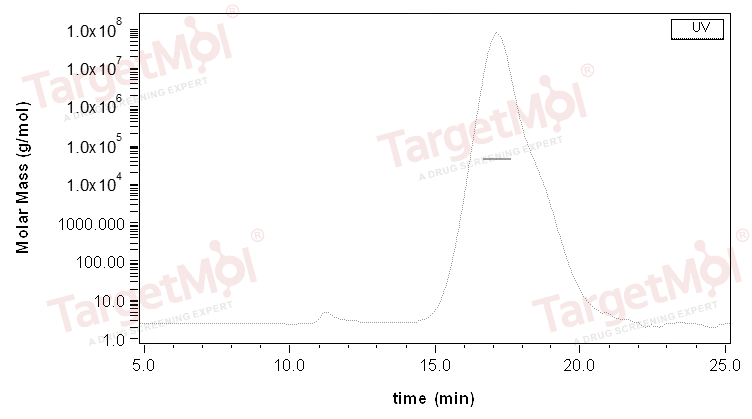 |
| Description | CD64 Protein, Human, Recombinant (His) is expressed in HEK293 mammalian cells with His tag. The predicted molecular weight is 32 kDa and the accession number is P12314-1. |
| Species | Human |
| Expression System | HEK293 Cells |
| Tag | C-His |
| Accession Number | P12314-1 |
| Synonyms | Fc γ RI,Fc receptor, IgG, high affinity I,Fc gamma RI,CD64 |
| Construction | A DNA sequence encoding the extracellular domain of human CD64A (NP_000557.1) (Met 1-Pro 288) was expressed, fused with a polyhistidine tag at the C-terminus. Predicted N terminal: Gln 16 |
| Protein Purity | > 95 % as determined by SDS-PAGE. > 90 % as determined by SEC-HPLC 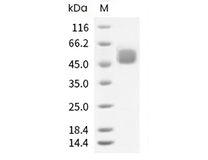 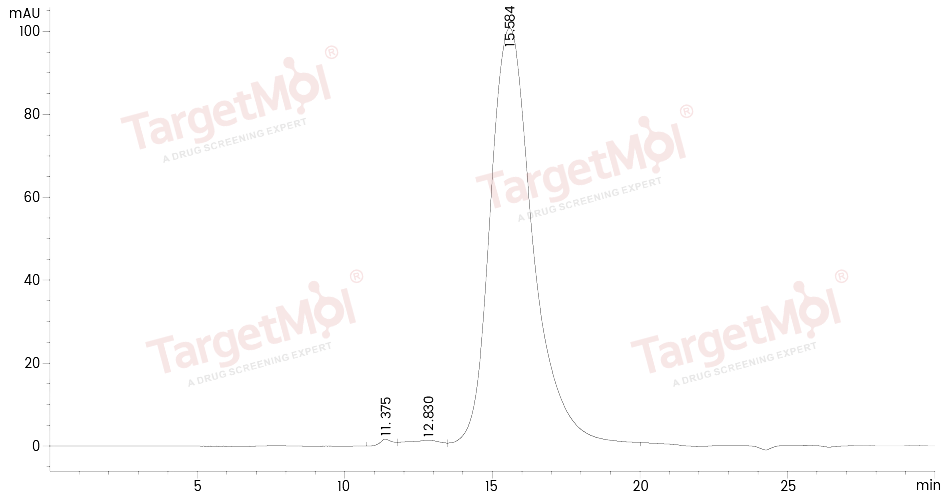 |
| Molecular Weight | 32 kDa (predicted); 45-60 kDa (reducing condition, due to glycosylation) |
| Endotoxin | < 1.0 EU/μg of the protein as determined by the LAL method. |
| Formulation | Lyophilized from a solution filtered through a 0.22 μm filter, containing PBS, pH 7.4. Typically, a mixture containing 5% to 8% trehalose, mannitol, and 0.01% Tween 80 is incorporated as a protective agent before lyophilization. |
| Reconstitution | Reconstituted with sterile deionized water to 0.25 mg/mL. Reconstitution conditions may vary depending on the lot. |
| Stability & Storage | It is recommended to store recombinant proteins at -20°C to -80°C for future use. Lyophilized powders can be stably stored for over 12 months, while liquid products can be stored for 6-12 months at -80°C. For reconstituted protein solutions, the solution can be stored at -20°C to -80°C for at least 3 months. Please avoid multiple freeze-thaw cycles and store products in aliquots. |
| Shipping | In general, lyophilized powders are shipped with blue ice, while solutions are shipped with dry ice. |
| Research Background | High affinity immunoglobulin gamma Fc receptor I, also known as FCGR1 and CD64, is an integral membraneglycoprotein and a member of the immunoglobulin superfamily. CD64 is a high affinity receptor for the Fc region of IgG gamma and functions in both innate and adaptive immune responses. Receptors that recognize the Fc portion of IgG function in the regulation of immune response and are divided into three classes designated CD64, CD32, and CD16. CD64 is structurally composed of asignal peptidethat allows its transport to the surface of a cell, threeextracellularimmunoglobulin domainsof the C2-type that it uses to bind antibody, a hydrophobictransmembrane domain, and a short cytoplasmic tail. CD64 isconstitutivelyfound on only macrophages and monocytes, but treatment of polymorphonuclear leukocyteswith cytokines likeIFNγandG-CSFcan induce CD64 expression on these cells. The inactivation of the mouse CD64 resulted in a wide range of defects in antibody Fc-dependent functions. Mouse CD64 is an early participant in Fc-dependent cell activation and in the development of immune responses. |
| Size | Quantity | Unit Price | Amount | Operation |
|---|
 Feedback
 Hello! How can I help you today?
Copyright © 2015-2026 TargetMol Chemicals Inc. All Rights Reserved.