


Shopping Cart
Remove All Your shopping cart is currently empty

Synonyms: Protein A/G Agarose resin, Protein A/G Agarose gel, Protein A/G Agarose beads
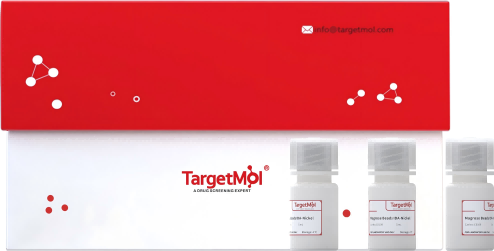
| Pack Size | Price | USA Stock | Global Stock | Quantity |
|---|---|---|---|---|
| 5 mL | $98 | - | In Stock |
 Related Products Product Features
Good physicochemical stability
Low ligand leakage
High durability
Easy to use
Product ApplicationsImmunoprecipitation (IP), co-immunoprecipitation (Co-IP), chromatin immunoprecipitation (ChIP), and RNA immunoprecipitation (RIP) of proteins and protein complexes.
Antibody purification
Product Information| Protein A/G Agarose | Specification |
|---|---|
| Matrix | Highly cross-linked 4% agarose beads |
| Particle Size | 30-100 μm |
| Ligand | Recombinant Protein A/G protein |
| Binding Capacity | ≥ 25 mg hIgG/mL resin |
| Concentration | 25%(v/v) |
InstructionsI. Buffer Preparation
The following are commonly used buffer compositions. It is recommended to filter them with a 0.22 μm or 0.45 μm membrane filter before use:
Equilibration/Wash buffer: 0.15 M NaCl, 20 mM Na2HPO4, pH7.0
Acidic elution buffer: 0.1 M glycine, pH3.0
Neutralization buffer: 1 M Tris-HCl, pH8.0
II. Protein purification
1. Antibody Binding
1)Add an appropriate amount of Protein A/G Agarose to a 2 mL centrifuge tube, centrifuge at 1000 rpm for 5 min, and discard the supernatant.
2)Add 0.5 mL of equilibration buffer to resuspend the resin (ensure the resin and target protein are in the same buffer system to protect the protein), centrifuge at 1000 rpm for 5 min, and discard the supernatant. Repeat this step twice.
3)Add the antibody solution to the equilibrated resin, mix by gentle inversion or on a rotator at room temperature for 30 min. Centrifuge at 1000 rpm for 5 min and collect the supernatant for later analysis.
4)Add 0.5 mL of wash buffer to resuspend and wash the resin to remove nonspecifically bound proteins. Centrifuge at 1000 rpm for 5 min and discard the supernatant. Repeat this step twice.
2. Antibody Crosslinking (Optional)
If co-elution of the antibody and antigen complex is desired, this step can be skipped and proceed directly to the next step. For 50 μL to 1 mL of resin, the volume of crosslinking buffer does not need to be increased.
1)Add 1 mL of crosslinking buffer (0.2 M triethanolamine, pH 8.2) to the washed resin, centrifuge at 1000 rpm for 5 min, and discard the supernatant.
2)Add 1 mL of freshly prepared crosslinking buffer containing 20 mM DMP (dimethyl pimelimidate dihydrochloride), resuspend the resin, and gently mix by inversion at room temperature for 30 min. Centrifuge at 1000 rpm for 5 min and discard the supernatant.
3)Add 1 mL of quenching buffer (50 mM Tris, pH 7.5), resuspend the resin, and gently mix by inversion at room temperature for 15 min. Centrifuge at 1000 rpm for 5 min and discard the supernatant to terminate the crosslinking reaction.
4)Add 0.5 mL of wash buffer, resuspend and wash the resin, centrifuge at 1000 rpm for 5 min, and discard the supernatant. Repeat this step twice.
3. Antigen Precipitation Reaction
1)Antigen Binding: Add the antigen-containing sample to the antibody–resin complex and gently mix with a pipette. Incubate with gentle inversion at room temperature for 10 min to allow sufficient binding between antigen and antibody. For weaker interactions, extend incubation to 1 hour at room temperature or overnight at 4 °C.
2)Washing: Centrifuge at 1000 rpm for 5 min and collect the supernatant for analysis, keeping it on ice. Add 1 mL of wash buffer, gently resuspend, and centrifuge again at 1000 rpm for 5 min. Discard the supernatant. Repeat the wash step twice. Finally, transfer the antibody–antigen–resin complex to a new 1.5 mL centrifuge tube, centrifuge at 1000 rpm for 5 min, and discard the supernatant.
3)Antigen Elution: Two elution methods are provided, choose the appropriate one based on the downstream analysis.
A.Denaturing Elution: Suitable for SDS-PAGE analysis. Add 25 μL of 1× SDS-PAGE loading buffer, mix well, and heat at 95 °C for 5 min. Centrifuge at 1000 rpm for 5 min and collect the supernatant for SDS-PAGE and subsequent Western blot analysis.
B.Native Elution: Preserves antigen bioactivity and is suitable for functional assays. Add 5 column volumes of acidic elution buffer, gently pipette up and down 5 times to mix. Incubate with gentle inversion at room temperature for 10 min, centrifuge at 1000 rpm for 5 min, and collect the supernatant containing the target antigen. Transfer the eluate to a new tube and immediately add one-tenth volume of neutralization buffer to adjust the pH to 7.0–8.0 for downstream applications.
III. Immunoprecipitation
1. Antigen–Antibody Binding
Mix the antibody with the lysate containing the target protein and incubate with gentle shaking at room temperature for 30–60 minutes, or overnight at 2–8 °C. The incubation conditions should be optimized based on the binding efficiency of the antigen–antibody pair and the stability of the antigen, to promote the formation of a stable antigen–antibody complex.
Note: The amount of antibody used should be adjusted according to the volume of resin. Excess antibody may interfere with the binding of the complex to the resin. It is recommended that the amount of antibody not exceed 80% of the resin's maximum binding capacity.
2. Resin Preparation
1)Add an appropriate amount of Protein A/G Agarose to a 2 mL centrifuge tube, centrifuge at 1000 rpm for 5 min, and discard the supernatant.
2)Add 0.5 mL of equilibration buffer to resuspend the resin (ensuring that the resin and target protein are in the same buffer system to protect protein integrity), centrifuge at 1000 rpm for 5 min, and discard the supernatant. Repeat this step twice.
3. Binding of Antigen–Antibody Complex to Resin
Add the antigen–antibody complex prepared in Step 1 to the pre-equilibrated resin. Gently mix and incubate with rotation at room temperature for about 30 minutes to ensure sufficient contact and binding. Centrifuge at 1000 rpm for 5 minutes and collect the supernatant for subsequent analysis.
4. Washing
Add 0.5 mL of wash buffer and gently resuspend the resin to remove nonspecifically bound proteins. Centrifuge at 1000 rpm for 5 minutes and discard the supernatant. Repeat this step twice.
5. Antigen Elution
Two elution methods are provided, choose the appropriate one based on the downstream application.
1)Denaturing Elution: Suitable for SDS-PAGE analysis. Add 25 μL of 1× SDS-PAGE loading buffer, mix well, and heat at 95 °C for 5 minutes. Centrifuge at 1000 rpm for 5 minutes and collect the supernatant for SDS-PAGE and subsequent Western blot analysis.
2)Native Elution: Preserves the biological activity of the antigen, suitable for functional analysis. Add 5 column volumes of acidic elution buffer, gently pipette up and down 5 times to mix. Incubate with rotation at room temperature for 10 minutes, then centrifuge at 1000 rpm for 5 minutes. Collect the supernatant containing the target antigen, transfer it to a new tube, and immediately add one-tenth volume of neutralization buffer to adjust the pH to 7.0–8.0 for downstream applications.
StorageStore at 4℃ for 2 years
Precautions1.The gel should be stored in storage solution to prevent drying.
2.Before removing agarose gel from the storage tube, vortex thoroughly to ensure homogeneous suspension. Avoid bubble formation during operation.
3.To ensure optimal experimental performance, choose antibodies with high specificity for immunoprecipitation reactions.
4.In IP experiments, binding affinity between different antibodies and antigens may vary. If the buffer system provided in this kit does not yield satisfactory results, users are encouraged to optimize or formulate alternative buffers.
5.The product is for R&D use only, not for diagnostic procedures, food, drug, household or other uses.
6.Please wear a lab coat and disposable gloves.
Instruction Manual| Size | Quantity | Unit Price | Amount | Operation |
|---|
 Feedback
 Hello! How can I help you today?
Copyright © 2015-2026 TargetMol Chemicals Inc. All Rights Reserved.
