


Shopping Cart
Remove All Your shopping cart is currently empty

Synonyms:
| Pack Size | Price | USA Stock | Global Stock | Quantity |
|---|---|---|---|---|
| 200 mg | $29 | - | In Stock | |
| 1 mL x 10 mM (in DMSO) | $29 | - | In Stock |
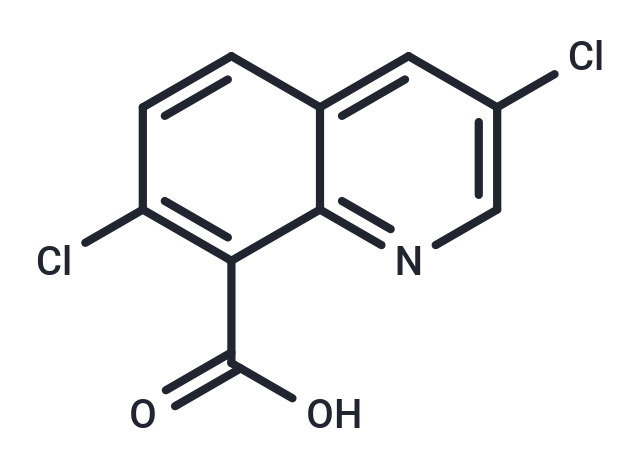
| Description | Quinclorac is a quinolinecarboxylic acid herbicide widely applied in agriculture, particularly for weed control in rice fields. It functions as an auxin-type herbicide, interfering with normal plant growth and development. Research indicates that Quinclorac induces oxidative stress in non-target organisms by generating free radicals and altering the antioxidant defense system. |
| In vitro | In biochemical and cellular models, Quinclorac exposure leads to a significant accumulation of intracellular reactive oxygen species (ROS). This increased oxidative pressure further induces lipid peroxidation (e.g., elevated MDA levels) and disrupts the activity balance of key antioxidant enzymes, such as SOD and CAT, resulting in cellular damage [1]. |
| In vivo | In ecotoxicological studies using carp (Cyprinus carpio), exposure to Quinclorac (e.g., Facet® formulation) triggers significant changes in oxidative stress biomarkers across various fish tissues. Research has demonstrated that antioxidant supplementation, such as with diphenyl diselenide, can effectively mitigate Quinclorac-induced oxidative damage, enhancing survival and restoring the function of the defense system [1]. |
| Molecular Weight | 242.06 |
| Formula | C10H5Cl2NO2 |
| Cas No. | 84087-01-4 |
| Smiles | O=C(O)C1=C(Cl)C=CC2=CC(Cl)=CN=C21 |
| Storage | Powder: -20°C for 3 years | In solvent: -80°C for 1 year Shipping with blue ice/Shipping at ambient temperature. | |||||||||||||||||||||||||||||||||||
| Solubility Information | DMSO: 100 mg/mL (413.12 mM), Sonication is recommended. | |||||||||||||||||||||||||||||||||||
Solution Preparation Table | ||||||||||||||||||||||||||||||||||||
DMSO
Note : The dilution table applies only to solid products. For liquid products, please calculate the stock solution based on the stated concentration and/or density. | ||||||||||||||||||||||||||||||||||||
 For example, if the intended dosage is 10 mg/kg for animals weighing 20 g , with a dosing volume of 100 μL per animal, and a total of 10 animals are to be administered, using a formulation of
  10% DMSO+ 40% PEG300+ 5% Tween 80+ 45% Saline/PBS/ddH2O , the resulting working solution concentration would be 2 mg/mL.
Dissolve 2 mg of the compound in 100 μL DMSO to obtain a stock solution at a concentration of 20 mg/mL . If the required concentration exceeds the compound's known solubility, please contact us for technical support before proceeding.
1) Add 100 μL of the DMSO stock solution to 400 µL PEG300 and mix thoroughly until the solution becomes clear.
2) Add 50 µL Tween 80 and mix well until fully clarified.
3) Add 450 µL Saline,PBS or ddH2O and mix thoroughly until a homogeneous solution is obtained.
| Size | Quantity | Unit Price | Amount | Operation |
|---|
 Feedback
 Hello! How can I help you today?
Copyright © 2015-2026 TargetMol Chemicals Inc. All Rights Reserved.
