Shopping Cart
Remove All
  • TargetMol
    Your shopping cart is currently empty

PLP (190-209)

Copy Product Info
😃Good
Catalog No. TP2616Cas No. 165549-59-7

PLP (190-209) is a peptide derived from proteolipid protein (PLP) and is widely used to induce experimental autoimmune encephalomyelitis (EAE) animal models.

PLP (190-209)

PLP (190-209)

Copy Product Info
😃Good
Catalog No. TP2616Cas No. 165549-59-7
PLP (190-209) is a peptide derived from proteolipid protein (PLP) and is widely used to induce experimental autoimmune encephalomyelitis (EAE) animal models.
Pack SizePriceUSA WarehouseGlobal WarehouseQuantity
10 mgInquiryInquiryInquiry
50 mgInquiryInquiryInquiry
Add to Quotation
In Stock Estimated shipping dateUSA Warehouse[1-2 days] Global Warehouse[5-7 days]
All TargetMol products are for research purposes only and cannot be used for human consumption. We do not provide products or services to individuals. Please comply with the intended use and do not use TargetMol products for any other purpose.
Questions
TargetMol
View More

Resource Download

Product Introduction

Bioactivity
Description
PLP (190-209) is a peptide derived from proteolipid protein (PLP) and is widely used to induce experimental autoimmune encephalomyelitis (EAE) animal models.
Disease Modeling Protocol
Experimental autoimmune encephalomyelitis (EAE) model
  • Modeling Mechanism:

    As a core myelin autoantigen, PLP(190-209) exerts its modeling mechanism as follows: ① Binds to MHC class II molecules (H-2k) of C3H/HeJ mice, activating myelin-specific CD4⁺ T cells that escape peripheral immune tolerance, leading to increased expression of activation markers (elevated CD25⁺, decreased CD62L⁺); ② Activated autoreactive T cells cross the blood-brain barrier, infiltrate the central nervous system (CNS), mainly accumulate in the spinal cord (predominantly lumbosacral segments), and secrete pro-inflammatory cytokines such as IFN-γ and IL-17; ③ Recruits immune cells such as macrophages (CD11b⁺ cells) to form inflammatory foci, triggering demyelination and axonal damage in the spinal cord white matter, ultimately leading to ascending paralysis, which mimics the core pathological process of human multiple sclerosis (MS).

  • Related Products:

    PLP (190-209) (TP2616)

  • Modeling Method:

    Experimental Subject:

    Mice, C3H/HeJ, Female, 10-12 weeks old, SPF-grade feeding (ad libitum access to food and water, standard environmental conditions)

    Dosage and Administration Route:

    ① Core modeling: PLP(190-209) 100 μg/mouse+Mycobacterium tuberculosis 400 μg/mouse, emulsified in Complete Freund's Adjuvant (CFA), subcutaneous injection in the back; ② Adjunctive modeling: Pertussis Toxin (PTX) 400 ng/mouse, intraperitoneal injection, once on the day of modeling and once on day 2 post-modeling; ③ Control treatment: Subcutaneous injection of CFA+physiological saline emulsion+intraperitoneal injection of equal volume of PTX;

    Dosing Frequency and Duration Model:

    Single subcutaneous injection of PLP(190-209)+two intraperitoneal injections of PTX

  • Validation:

    1. Behavioral indicators (core validation): - Clinical scoring: Using a 0-10 point scoring system, the average score reaches 4.8±1.0 on day 35 post-modeling, manifested as ascending paralysis (limp tail → hindlimb weakness → paraplegia, some progressing to quadriplegia), with a disease incidence of approximately 60%; - Body weight change: Body weight starts to decrease on day 22.8±0.3, with a maximum weight loss of 14% at the peak; 2. Immune indicators: - Peripheral immunity: Splenic lymphocytes show significantly increased proliferative activity after in vitro stimulation with PLP(190-209) (strongest proliferation at 100 μg/mL concentration), with increased secretion of IFN-γ and IL-17; - CNS immune infiltration: Increased infiltration of CD4⁺ T cells, CD8⁺ T cells, and CD11b⁺ macrophages in spinal cord tissue; 3. Pathological indicators: - Inflammatory foci: The area affected by inflammation in the lumbosacral segment of the spinal cord reaches 39.26±2.64%, 8.37±2.36% in the thoracic segment, and mild inflammation in the brain parenchyma; - Demyelination: Luxol Fast Blue (LFB) staining shows demyelination in the spinal cord white matter, consistent with the distribution of inflammatory foci; 4. Molecular indicators: Increased expression of T cell activation marker CD25⁺ and decreased expression of CD62L⁺ (p<0.001).

*Precautions:

*References:Göbel K,et,al. Active immunization with proteolipid protein (190-209) induces ascending paralysing experimental autoimmune encephalomyelitis in C3H/HeJ mice. J Immunol Methods. 2011 Mar 31;367(1-2):27-32.

Chemical Properties
Molecular Weight2030.33
FormulaC85H144N24O29S2
Cas No.165549-59-7
Smiles[C@@H](CC1=CC=C(O)C=C1)(NC([C@@H](NC([C@@H](NC([C@@H](NC([C@@H](NC([C@@H](NC([C@@H](NC([C@@H](NC([C@@H](NC(CNC([C@@H](NC([C@@H](NC([C@@H](NC([C@@H](NC([C@@H](NC([C@@H](NC([C@H](CO)N)=O)CCCCN)=O)[C@@H](C)O)=O)CO)=O)C)=O)CO)=O)[C@H](CC)C)=O)=O)CO)=O)CC(C)C)=O)CS)=O)C)=O)CC(O)=O)=O)C)=O)CCCNC(=N)N)=O)CCSC)=O)C(NCC(N[C@H](C(N[C@@H](CC(C)C)C(O)=O)=O)C(C)C)=O)=O
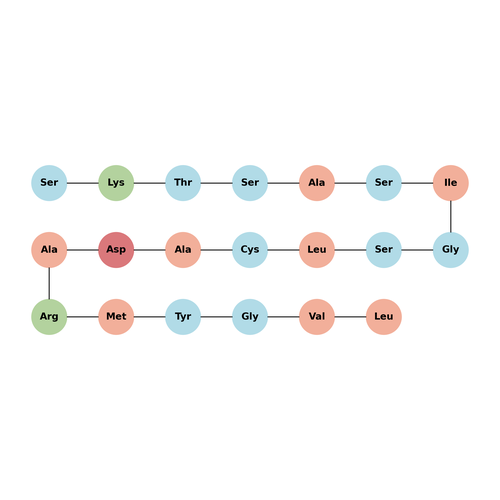
SequenceSer-Lys-Thr-Ser-Ala-Ser-Ile-Gly-Ser-Leu-Cys-Ala-Asp-Ala-Arg-Met-Tyr-Gly-Val-Leu
Sequence ShortSKTSASIGSLCADARMYGVL
Storage & Solubility Information
StoragePowder: -20°C for 3 years | In solvent: -80°C for 1 year | Shipping with blue ice.

Calculator

  • Molarity Calculator
  • Dilution Calculator
  • Reconstitution Calculator
  • Molecular Weight Calculator

In Vivo Formulation Calculator (Clear solution)

Please enter your animal experiment information in the following box and click Calculate to obtain the stock solution preparation method and in vivo formula preparation method:
TargetMol | Animal experiments For example, if the intended dosage is 10 mg/kg for animals weighing 20 g , with a dosing volume of 100 μL per animal, TargetMol | Animal experiments and a total of 10 animals are to be administered, using a formulation of TargetMol | reagent 10% DMSO+ 40% PEG300+ 5% Tween 80+ 45% Saline/PBS/ddH2O , the resulting working solution concentration would be 2 mg/mL.

Stock Solution Preparation:

Dissolve 2 mg of the compound in 100 μL DMSOTargetMol | reagent to obtain a stock solution at a concentration of 20 mg/mL . If the required concentration exceeds the compound's known solubility, please contact us for technical support before proceeding.

Preparation of the In Vivo Formulation:

1) Add 100 μL of the DMSOTargetMol | reagent stock solution to 400 μL PEG300TargetMol | reagent and mix thoroughly until the solution becomes clear.

2) Add 50 μL Tween 80 and mix well until fully clarified.

3) Add 450 μL Saline,PBS or ddH2OTargetMol | reagent and mix thoroughly until a homogeneous solution is obtained.

This example is provided solely to demonstrate the use of the In Vivo Formulation Calculator and does not constitute a recommended formulation for any specific compound. Please select an appropriate dissolution and formulation strategy based on your experimental model and route of administration.
All co-solvents required for this protocol, includingDMSO, PEG300/PEG400, Tween 80, SBE-β-CD, and Corn oil, are available for purchase on the TargetMol website.
1 Enter information below:
mg/kg
g
μL
2 Enter the in vivo formulation:
% DMSO
%
% Tween 80
% Saline/PBS/ddH2O

Dose Conversion

You can also refer to dose conversion for different animals. More Dose Conversion

Tech Support

Please see Inhibitor Handling Instructions for more frequently ask questions. Topics include: how to prepare stock solutions, how to store products, and cautions on cell-based assays & animal experiments, etc
Related Tags: buy PLP (190-209) | purchase PLP (190-209) | PLP (190-209) cost | order PLP (190-209) | PLP (190-209) chemical structure | PLP (190-209) formula | PLP (190-209) molecular weight