


Shopping Cart
Remove All Your shopping cart is currently empty

Synonyms:
| Pack Size | Price | USA Stock | Global Stock | Quantity |
|---|---|---|---|---|
| 10 mg | Inquiry | Inquiry | Inquiry | |
| 50 mg | Inquiry | Inquiry | Inquiry |
| Description | plCSA-BP is a placental CSA-binding peptide that specifically binds to trophoblastic cells without interacting with other cell types in the placenta or with CSA-expressing cells in other tissues. It can direct nanoparticles to deliver payloads, such as Indocyanine green (ICG) and Methotrexate (MTX), for targeted placental drug delivery, highlighting its potential in placenta-specific drug delivery research. |
| In vivo | plCSA-BP (50 ng/mL) is co-localized with trophoblast cells in mouse placenta at E6.5, E8.5, E10.5, and E12.5, but it does not bind to the embryo, junctional zone, or decidua; similar effects are observed in human placenta. It specifically binds to placental CSA expressed in murine labyrinth and human syncytiotrophoblasts. When plCSA-BP (5 mg/kg, intravenously injected at E12.5 or E15.5) is conjugated to nanoparticles, it specifically delivers ICG to trophoblast cells in pregnant mice at stages E12.5 or E15.5. Additionally, plCSA-BP (5 mg/kg, intravenously injected every other day from E6.5 to E14.5) linked to nanoparticles efficiently targets MTX to placental cells, severely impairing placental and fetal development by targeting placental trophoblast cells. |
| Molecular Weight | 3186.61 |
| Formula | C142H221N35O44S2 |
| Cas No. | 2294870-89-4 |
| Smiles | [C@@H](CC1=CN=CN1)(NC([C@H](CC2=CC=CC=C2)NC([C@@H](NC([C@@H](NC([C@@H](NC([C@@H](NC([C@@H](NC(CNC([C@@H](NC([C@@H](NC([C@H](CC3=CC=CC=C3)NC([C@@H](NC([C@@H](NC([C@@H](NC([C@@H](NC([C@@H](NC([C@H](CC4=CC=CC=C4)NC([C@@H](NC([C@@H](NC([C@@H](NC([C@@H](NC([C@@H](NC([C@@H](NC([C@H](CCC(O)=O)N)=O)CC(O)=O)=O)[C@@H](C)C)=O)CCCCN)=O)CC(O)=O)=O)[C@H](CC)C)=O)CC(N)=O)=O)=O)CC(O)=O)=O)[C@@H](C)O)=O)CCCCN)=O)CCC(O)=O)=O)CCCCN)=O)=O)CC(C)C)=O)C)=O)=O)CS)=O)CC(C)C)=O)[C@H](CC)C)=O)C(C)C)=O)CO)=O)=O)C(N[C@H](C(NCC(N[C@H](C(N[C@H](C(O)=O)CS)=O)CCCCN)=O)=O)CCC(O)=O)=O |
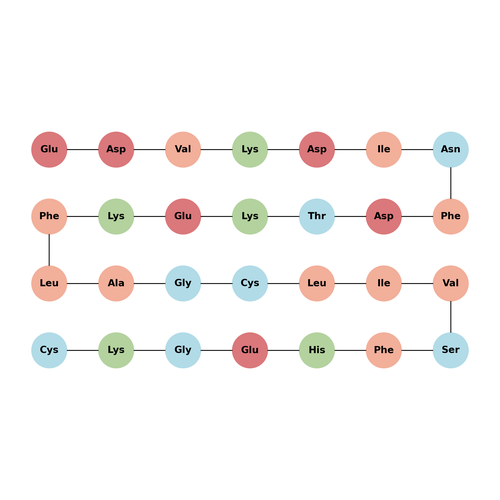
| Sequence | Glu-Asp-Val-Lys-Asp-Ile-Asn-Phe-Asp-Thr-Lys-Glu-Lys-Phe-Leu-Ala-Gly-Cys-Leu-Ile-Val-Ser-Phe-His-Glu-Gly-Lys-Cys |
| Sequence Short | EDVKDINFDTKEKFLAGCLIVSFHEGKC |
| Storage | Keep away from moisture Powder: -20°C for 3 years | In solvent: -80°C for 1 year Shipping with blue ice/Shipping at ambient temperature. |
 For example, if the intended dosage is 10 mg/kg for animals weighing 20 g , with a dosing volume of 100 μL per animal, and a total of 10 animals are to be administered, using a formulation of
  10% DMSO+ 40% PEG300+ 5% Tween 80+ 45% Saline/PBS/ddH2O , the resulting working solution concentration would be 2 mg/mL.
Dissolve 2 mg of the compound in 100 μL DMSO to obtain a stock solution at a concentration of 20 mg/mL . If the required concentration exceeds the compound's known solubility, please contact us for technical support before proceeding.
1) Add 100 μL of the DMSO stock solution to 400 µL PEG300 and mix thoroughly until the solution becomes clear.
2) Add 50 µL Tween 80 and mix well until fully clarified.
3) Add 450 µL Saline,PBS or ddH2O and mix thoroughly until a homogeneous solution is obtained.
| Size | Quantity | Unit Price | Amount | Operation |
|---|
 Feedback
 Hello! How can I help you today?
Copyright © 2015-2026 TargetMol Chemicals Inc. All Rights Reserved.
