Shopping Cart
Remove All
  • TargetMol
    Your shopping cart is currently empty

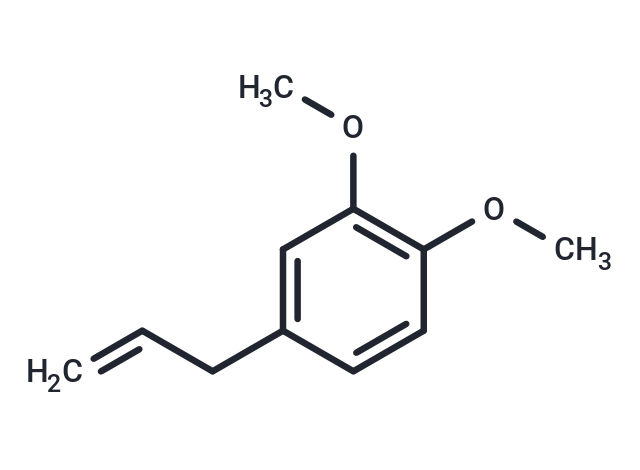
Methyl eugenol (Standard)

😃Good
Catalog No. TMSM-2063Cas No. 93-15-2
Alias Methyleugenol (Standard)

Methyl eugenol (Standard) is a reference standard for research and analysis in studies involving Methyl eugenol. 1. Methyl eugenol (4-allylveratrole) is a natural constituent of the essential oils of a number of plants widely used in foodstuffs as flavouring agents, in view of the carcinogenic potential of ME, the need to check its presence in food products with effective analytical methods. 2. Methyleugenol has insecticidal properties. 3. Methyleugenol can inhibit the production of nitric oxide and decreased the protein expression of inducible nitric oxide synthase, it down-regulates the production of pro-inflammatory cytokines in the ischemic brain as well as in immunostimulated mixed glial cells; indicates that methyleugenol could be useful for the treatment of ischemia/inflammation-related diseases. 4. Methyleugenol has cytotoxicity and genotoxicity. 5. Intravenous (i.v.) treatment with methyleugenol (ME) in either anesthetized or conscious rats elicits hypotension, an effect that seems related to an active vascular relaxation rather than withdrawal of sympathetic tone. 6. Methyleugenol has antinociceptive effect on the second phase of formalin-induced pain, may be due to the inhibition of N-methyl-d-aspartic acid (NMDA) receptor-mediated hyperalgesia via GABA(A) receptors. 7. Methyleugenol has elaxant and antispasmodic actions on guinea-pig isolated ileum.

Methyl eugenol (Standard)

Methyl eugenol (Standard)

😃Good
Catalog No. TMSM-2063Alias Methyleugenol (Standard)Cas No. 93-15-2
Methyl eugenol (Standard) is a reference standard for research and analysis in studies involving Methyl eugenol. 1. Methyl eugenol (4-allylveratrole) is a natural constituent of the essential oils of a number of plants widely used in foodstuffs as flavouring agents, in view of the carcinogenic potential of ME, the need to check its presence in food products with effective analytical methods. 2. Methyleugenol has insecticidal properties. 3. Methyleugenol can inhibit the production of nitric oxide and decreased the protein expression of inducible nitric oxide synthase, it down-regulates the production of pro-inflammatory cytokines in the ischemic brain as well as in immunostimulated mixed glial cells; indicates that methyleugenol could be useful for the treatment of ischemia/inflammation-related diseases. 4. Methyleugenol has cytotoxicity and genotoxicity. 5. Intravenous (i.v.) treatment with methyleugenol (ME) in either anesthetized or conscious rats elicits hypotension, an effect that seems related to an active vascular relaxation rather than withdrawal of sympathetic tone. 6. Methyleugenol has antinociceptive effect on the second phase of formalin-induced pain, may be due to the inhibition of N-methyl-d-aspartic acid (NMDA) receptor-mediated hyperalgesia via GABA(A) receptors. 7. Methyleugenol has elaxant and antispasmodic actions on guinea-pig isolated ileum.
Pack SizePriceUSA WarehouseGlobal WarehouseQuantity
20 mgInquiry7-10 days7-10 days
Add to Quotation
In Stock Estimated shipping dateUSA Warehouse[1-2 days] Global Warehouse[5-7 days]
All TargetMol products are for research purposes only and cannot be used for human consumption. We do not provide products or services to individuals. Please comply with the intended use and do not use TargetMol products for any other purpose.
Questions
TargetMol
View More

Resource Download

Product Introduction

Bioactivity
Description
Methyl eugenol (Standard) is a reference standard for research and analysis in studies involving Methyl eugenol. 1. Methyl eugenol (4-allylveratrole) is a natural constituent of the essential oils of a number of plants widely used in foodstuffs as flavouring agents, in view of the carcinogenic potential of ME, the need to check its presence in food products with effective analytical methods. 2. Methyleugenol has insecticidal properties. 3. Methyleugenol can inhibit the production of nitric oxide and decreased the protein expression of inducible nitric oxide synthase, it down-regulates the production of pro-inflammatory cytokines in the ischemic brain as well as in immunostimulated mixed glial cells; indicates that methyleugenol could be useful for the treatment of ischemia/inflammation-related diseases. 4. Methyleugenol has cytotoxicity and genotoxicity. 5. Intravenous (i.v.) treatment with methyleugenol (ME) in either anesthetized or conscious rats elicits hypotension, an effect that seems related to an active vascular relaxation rather than withdrawal of sympathetic tone. 6. Methyleugenol has antinociceptive effect on the second phase of formalin-induced pain, may be due to the inhibition of N-methyl-d-aspartic acid (NMDA) receptor-mediated hyperalgesia via GABA(A) receptors. 7. Methyleugenol has elaxant and antispasmodic actions on guinea-pig isolated ileum.
SynonymsMethyleugenol (Standard)
Chemical Properties
Molecular Weight178.23
FormulaC11H14O2
Cas No.93-15-2
SmilesO(C)C1=C(OC)C=CC(CC=C)=C1
Relative Density.1.032 - 1.036 g/cm3. Temperature:25 °C.
Storage & Solubility Information
Storagestore at -80°C

Calculator

  • Molarity Calculator
  • Dilution Calculator
  • Reconstitution Calculator
  • Molecular Weight Calculator

In Vivo Formulation Calculator (Clear solution)

Please enter your animal experiment information in the following box and click Calculate to obtain the mother liquor preparation method and in vivo formula preparation method:
TargetMol | Animal experimentsFor example, your dosage is 10 mg/kg Each animal weighs 20 g, and the dosage volume is 100 μL . TargetMol | Animal experiments A total of 10 animals were administered, and the formula you used is 5% TargetMol | reagent DMSO+30% PEG300+5% Tween 80+60% Saline/PBS/ddH2O. So your working solution concentration is 2 mg/mL。
Mother liquor preparation method: 2 mg of drug dissolved in 50 μL DMSOTargetMol | reagent (mother liquor concentration of 40 mg/mL), if you need to configure a concentration that exceeds the solubility of the product, please contact us first.
Preparation method for in vivo formula: Take 50 μL DMSOTargetMol | reagent main solution, add 300 μLPEG300TargetMol | reagent mix well and clarify, then add 50 more μL Tween 80, mix well and clarify, then add 600 more μLSaline/PBS/ddH2OTargetMol | reagent mix well and clarify
For Reference Only. Please develop an appropriate dissolution method based on your laboratory animals and route of administration.
All types of co-solvents required for the protocol, such asDMSO, PEG300/ PEG400, Tween 80, SBE-β-CD, corn oil are available for purchase on the TargetMol website with a simple click.
1 Enter information below:
mg/kg
g
μL
2 Enter the in vivo formulation:
% DMSO
%
% Tween 80
% Saline/PBS/ddH2O

Dose Conversion

You can also refer to dose conversion for different animals. More Dose Conversion

Tech Support

Please see Inhibitor Handling Instructions for more frequently ask questions. Topics include: how to prepare stock solutions, how to store products, and cautions on cell-based assays & animal experiments, etc
Related Tags: buy Methyl eugenol (Standard) | purchase Methyl eugenol (Standard) | Methyl eugenol (Standard) cost | order Methyl eugenol (Standard) | Methyl eugenol (Standard) chemical structure | Methyl eugenol (Standard) formula | Methyl eugenol (Standard) molecular weight