


Shopping Cart
Remove All Your shopping cart is currently empty

Synonyms: C.I. Acid Green 5, C.I. 42095, Acid Green 5
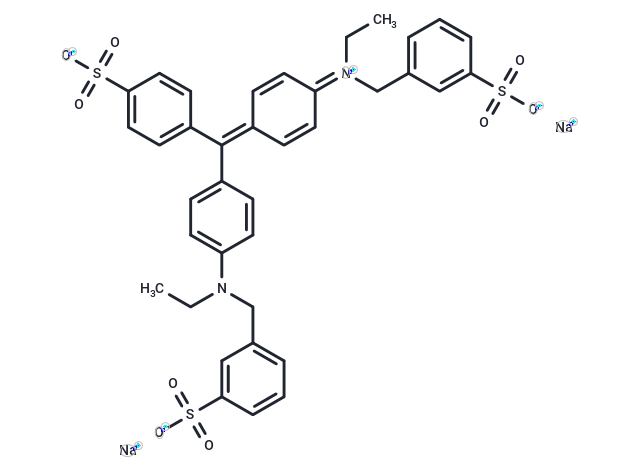
| Pack Size | Price | USA Stock | Global Stock | Quantity |
|---|---|---|---|---|
| 1 g | $29 | 7-10 days | 7-10 days |
| Description | Light Green SF Yellowish (Acid Green 5) is an alkaline stain used for staining animal tissues and for cytoplasmic and fiber staining in plant histology. |
| Synonyms | C.I. Acid Green 5, C.I. 42095, Acid Green 5 |
| Cell Research | 1. Masson trichrome staining method Used to distinguish muscle fibers, collagen fibers and fibrin in tissue sections. Experimental steps: 1. Fixation: Fix tissue samples with Bouin solution to enhance staining effect. 2. Staining: 1) Use Weigert iron hematoxylin to stain nuclei. 2) Use Biebrich Scarlet-Acid Fuchsin to stain cytoplasm and muscle fibers. 3) Use phosphomolybdic acid-phosphotungstic acid for differentiation. 4) Use Light Green SF Yellowish to stain collagen fibers. 4) Dehydration and sealing: Dehydrate through gradient alcohol, make xylene transparent, and finally seal with resin medium. 3. Staining results: 1) Collagen fibers: green 2) Muscle fibers: red 30 Cell nuclei: black 2. Papanicolaou staining method Used to distinguish cells in cytological samples in order to detect abnormalities. Experimental steps: 1. Fixation: Fix the smear with 95% ethanol. 2. Staining: Use Harris hematoxylin to stain cell nuclei; use OG-6 (Orange G) to stain keratinocytes; use EA solution (including Eosin Y, Light Green SF Yellowish and Bismarck Brown) to stain cytoplasm. 3. Dehydration and mounting: Dehydrate and transparently mount the slides for microscopic observation. 4. Staining results: 1) Surface cells: stained green or blue-green by Light Green SF Yellowish. 2) Intermediate and parabasal cells: stained pink to red. 3) Cell nuclei: blue. The above information is based on published literature. Experimental procedures should be appropriately modified to meet specific research demands. |
| Molecular Weight | 792.85 |
| Formula | C37H34N2Na2O9S3 |
| Cas No. | 5141-20-8 |
| Smiles | [Na+].[Na+].CCN(Cc1cccc(c1)S([O-])(=O)=O)c1ccc(cc1)C(=C1C=CC(C=C1)=[N+](CC)Cc1cccc(c1)S([O-])(=O)=O)c1ccc(cc1)S([O-])(=O)=O |
| Relative Density. | no data available |
| Storage | Keep away from direct sunlight Powder: -20°C for 3 years | In solvent: -80°C for 1 year Shipping with blue ice/Shipping at ambient temperature. | |||||||||||||||||||||||||
| Solubility Information | Ethanol: Insoluble  H2O: 1 mg/mL (1.26 mM), Sonication is recommended. DMSO: 11.9 mg/mL (15.01 mM), Sonication is recommended. | |||||||||||||||||||||||||
Solution Preparation Table | ||||||||||||||||||||||||||
H2O/DMSO
DMSO
Note : The dilution table applies only to solid products. For liquid products, please calculate the stock solution based on the stated concentration and/or density. | ||||||||||||||||||||||||||
 For example, if the intended dosage is 10 mg/kg for animals weighing 20 g , with a dosing volume of 100 μL per animal, and a total of 10 animals are to be administered, using a formulation of
  10% DMSO+ 40% PEG300+ 5% Tween 80+ 45% Saline/PBS/ddH2O , the resulting working solution concentration would be 2 mg/mL.
Dissolve 2 mg of the compound in 100 μL DMSO to obtain a stock solution at a concentration of 20 mg/mL . If the required concentration exceeds the compound's known solubility, please contact us for technical support before proceeding.
1) Add 100 μL of the DMSO stock solution to 400 µL PEG300 and mix thoroughly until the solution becomes clear.
2) Add 50 µL Tween 80 and mix well until fully clarified.
3) Add 450 µL Saline,PBS or ddH2O and mix thoroughly until a homogeneous solution is obtained.
| Size | Quantity | Unit Price | Amount | Operation |
|---|
 Feedback
 Hello! How can I help you today?
Copyright © 2015-2026 TargetMol Chemicals Inc. All Rights Reserved.
