


Shopping Cart
Remove All Your shopping cart is currently empty


Synonyms: PDN 21 acetate
| Pack Size | Price | USA Stock | Global Stock | Quantity |
|---|---|---|---|---|
| 1 mg | $88 | In Stock | In Stock | |
| 5 mg | $220 | In Stock | In Stock | |
| 10 mg | $313 | In Stock | In Stock | |
| 25 mg | $475 | In Stock | In Stock | |
| 50 mg | $636 | In Stock | In Stock | |
| 100 mg | $852 | In Stock | In Stock |
| Description | Katacalcin acetate(85916-47-8 free base) (PDN 21 acetate) is a potent plasma calcium-lowering peptide. |
| In vitro | Katacalcin is a potent plasma calcium lowering peptide. Katacalcin belongs to the calcitonin family, that causes a rapid but short-lived drop in the level of calcium and phosphate in blood by promoting the incorporation of these ions in the bones[1]. Katacalcin (KC) belongs to a small family of polypeptides that are encoded by the calc-1 gene and also include calcitonin (CT) and procalcitonin NH2-terminal cleavage peptide (N-ProCT). Katacalcin pretreatment leads to a concentration-dependent decrease at concentrations between 1 amol/liter and 10 fmol/liter and is a more potent inhibitor of fMLP-induced chemotaxis than CT or procalcitonin (PCT). Katacalcin deactivates CD14+ peripheral blood mononuclear cell (PBMC) chemotaxis not only toward N-formyl-Met-Leu-Phe (fMLP) but also toward other attractants of the chemokine family (heterologous deactivation) as well as toward PCT and CT. Pretreatment of CD14+ PBMCs with Katacalcin also deactivates subsequent chemotaxis toward Katacalcin itself. Katacalcin elicites concentration-dependent migration of CD14+ PBMC at concentrations from the atomolar to the micromolar range and deactivates attractant-induced chemotaxis. Katacalcin regulates human CD14+ PBMC migration via signaling events involving protein kinase A-dependent cAMP pathways[2]. |
| Synonyms | PDN 21 acetate |
| Molecular Weight | 2496.65 |
| Formula | C99H158N34O38S2 |
| Smiles | OC(C[C@H](N)C(N[C@@H](CCSC)C(N[C@@H](CO)C(N[C@@H](CO)C(N[C@@H](CC(O)=O)C(N[C@@H](CC(C)C)C(N[C@@H](CCC(O)=O)C(N[C@@H](CCCNC(N)=N)C(N[C@@H](CC(O)=O)C(N[C@@H](CC1=CN=CN1)C(N[C@@H](CCCNC(N)=N)C(N2[C@@H](CCC2)C(N[C@H](C(N[C@@H](C(C)C)C(N[C@@H](CO)C(N[C@@H](CCSC)C(N3[C@@H](CCC3)C(N[C@@H](CCC(N)=O)C(N[C@@H](CC(N)=O)C(N[C@@H](C)C(N[C@H](C(O)=O)CC(N)=O)=O)=O)=O)=O)=O)=O)=O)=O)CC4=CN=CN4)=O)=O)=O)=O)=O)=O)=O)=O)=O)=O)=O)=O)=O.CC(O)=O |
| Relative Density. | no data available |
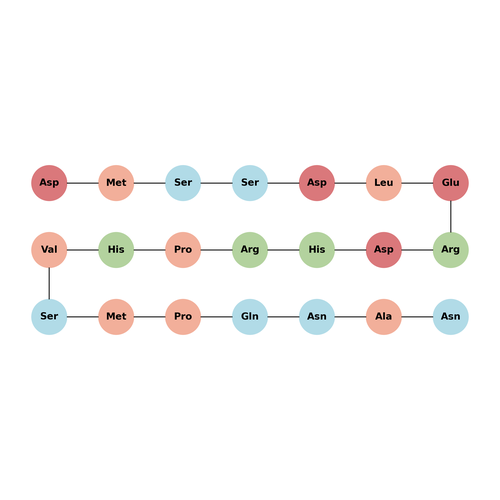
| Sequence | Asp-Met-Ser-Ser-Asp-Leu-Glu-Arg-Asp-His-Arg-Pro-His-Val-Ser-Met-Pro-Gln-Asn-Ala-Asn |
| Sequence Short | DMSSDLERDHRPHVSMPQNAN |
| Storage | Keep away from moisture Powder: -20°C for 3 years | In solvent: -80°C for 1 year Shipping with blue ice/Shipping at ambient temperature. | ||||||||||||||||||||
| Solubility Information | DMSO: 10 mM, Sonication is recommended. | ||||||||||||||||||||
Solution Preparation Table | |||||||||||||||||||||
DMSO
Note : The dilution table applies only to solid products. For liquid products, please calculate the stock solution based on the stated concentration and/or density. | |||||||||||||||||||||
 For example, if the intended dosage is 10 mg/kg for animals weighing 20 g , with a dosing volume of 100 μL per animal, and a total of 10 animals are to be administered, using a formulation of
  10% DMSO+ 40% PEG300+ 5% Tween 80+ 45% Saline/PBS/ddH2O , the resulting working solution concentration would be 2 mg/mL.
Dissolve 2 mg of the compound in 100 μL DMSO to obtain a stock solution at a concentration of 20 mg/mL . If the required concentration exceeds the compound's known solubility, please contact us for technical support before proceeding.
1) Add 100 μL of the DMSO stock solution to 400 µL PEG300 and mix thoroughly until the solution becomes clear.
2) Add 50 µL Tween 80 and mix well until fully clarified.
3) Add 450 µL Saline,PBS or ddH2O and mix thoroughly until a homogeneous solution is obtained.
| Size | Quantity | Unit Price | Amount | Operation |
|---|
 Feedback
 Hello! How can I help you today?
Copyright © 2015-2026 TargetMol Chemicals Inc. All Rights Reserved.
