Shopping Cart
Remove All
  • TargetMol
    Your shopping cart is currently empty
TargetMol | Compound Library

FDA-Approved & Pharmacopeia Drug Library

Catalog No. L1010

Traditional de novo drug discovery and development involves an HTS campaign for de novo candidate hits and requires highly specialized screening facilities and compound libraries containing several million compounds. It is a time consuming and expensive process. As the regulation for drug safety and efficacy is increasingly getting complex, the cost of developing new drugs is keeping skyrocket. Drug repositioning, also known as old drugs for new uses, is an effective strategy to find new indications for existing drugs and has recently drawn attention and has led to several blockbuster drugs because of its high efficiency and low-cost. High-content screens, new biomarkers, noninvasive imaging techniques, and advanced in bioinformatics have created new opportunities for pursuing novel indications for approved compounds.

Approved drugs all have known and well-characterized bioactivities, safety and bioavailability – properties which could dramatically accelerate drug development and optimization. Hits from this set will provide a significant head start in any drug optimization program. In addition, a growing number of compounds have been identified from this library that can functionally replace reprogramming transcription factors, enhance efficiency of iPSC generation and accelerate the reprogramming process by single use or a combination of several molecules.

TargetMol's FDA-Approved & Pharmacopeia Drug Library collects 3500 compounds from approved institutions such as FDA, EMA, PMDA, NMPA, etc. or pharmacopoeia such as USP, BP, JP, etc., which can be used for drug repositioning and cell induction.

All products from TargetMol are for Research Use Only. Not for Human or Veterinary or Therapeutic Use.

Resource Download
Library compound info
Excel
SDF
Contact us for more batch information

Catalog No. L1010

FDA-Approved & Pharmacopeia Drug Library

sizeIn stock

  • 1 mg
  • 30 μL x 10 mM (in DMSO)
  • 50 μL x 10 mM (in DMSO)
  • 100 μL x 10 mM (in DMSO)
  • 250 μL x 10 mM (in DMSO)
Inquiry & Custom

Top Publication Citing
Use of TargetMol Products

Cite scientific literature on TargetMol products

View More

Product Description Product Description

  • 3500 compounds from marketed drugs for high throughput screening (HTS) and high content screening (HCS);
  • All compounds collected in this library are drugs approved by FDA, EMA, PMDA, NMPA, etc. or included in pharmacopoeia such as USP, BP, JP, etc.;
  • An effective tool for discovering new with old drugs and new drug target identification;
  • Covers various research areas, such as Cancer, Cardiovascular disease, Neuroscience, Immunology/Inflammation, respiratory system disease, etc.
  • More detailed compound information with structure, target, activity, IC50 value, and brief introduction;
  • Structurally diverse, medicinally active, and cell permeable;
  • NMR and HPLC validated to ensure high purity and quality.

Advantages Introduction Advantages Introduction

High-Standard Entry Criteria

TargetMol’s FDA-Approved & Pharmacopoeia Drug Library is built under strict inclusion criteria to ensure that every compound in the collection possesses well-defined structures and exceptional purity, verified through multiple analytical techniques such as NMR, HPLC, and LC-MS. Through a multi-layer screening mechanism, we have excluded mixtures, polymers, and other compounds with ambiguous structures, as well as inactive substances such as sunscreen agents, contrast agents, and inorganic compounds. This library includes drugs approved by major regulatory authorities such as the FDA, PMDA, EMA, and NMPA, as well as those listed in various pharmacopoeias.

If you are interested in drugs approved by other organizations, please refer to the following resources: L9200 Drug Repurposing Compound Library; L1000 Approved Drug Library; L1020 EMA Approved Drug Library.

Significant Structural Diversity

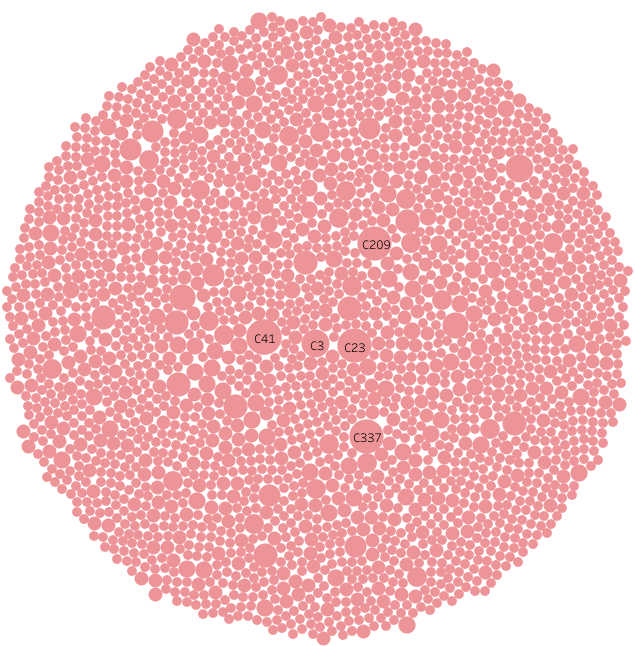
The TargetMol FDA-Approved and Pharmacopoeia Drug Library exhibits remarkable structural diversity, offering significant advantages in drug discovery. An analysis of the library based on 85% MACCS fingerprint similarity classifies it into 2,487 categories, covering a broad chemical space. The library contains a wide range of compounds, from simple to complex chemical structures. This diversity provides extensive possibilities for identifying lead compounds with high affinity and specificity for target proteins, greatly facilitating drug innovation. Whether targeting traditional drug targets or emerging, more challenging ones, the FDA-Approved and Pharmacopoeia Drug Library offers abundant candidate compounds, accelerating the drug development process.
 FDA-Approved & Pharmacopeia Drug Library
Analysis on Compound Diversity

Diverse Compound Selection

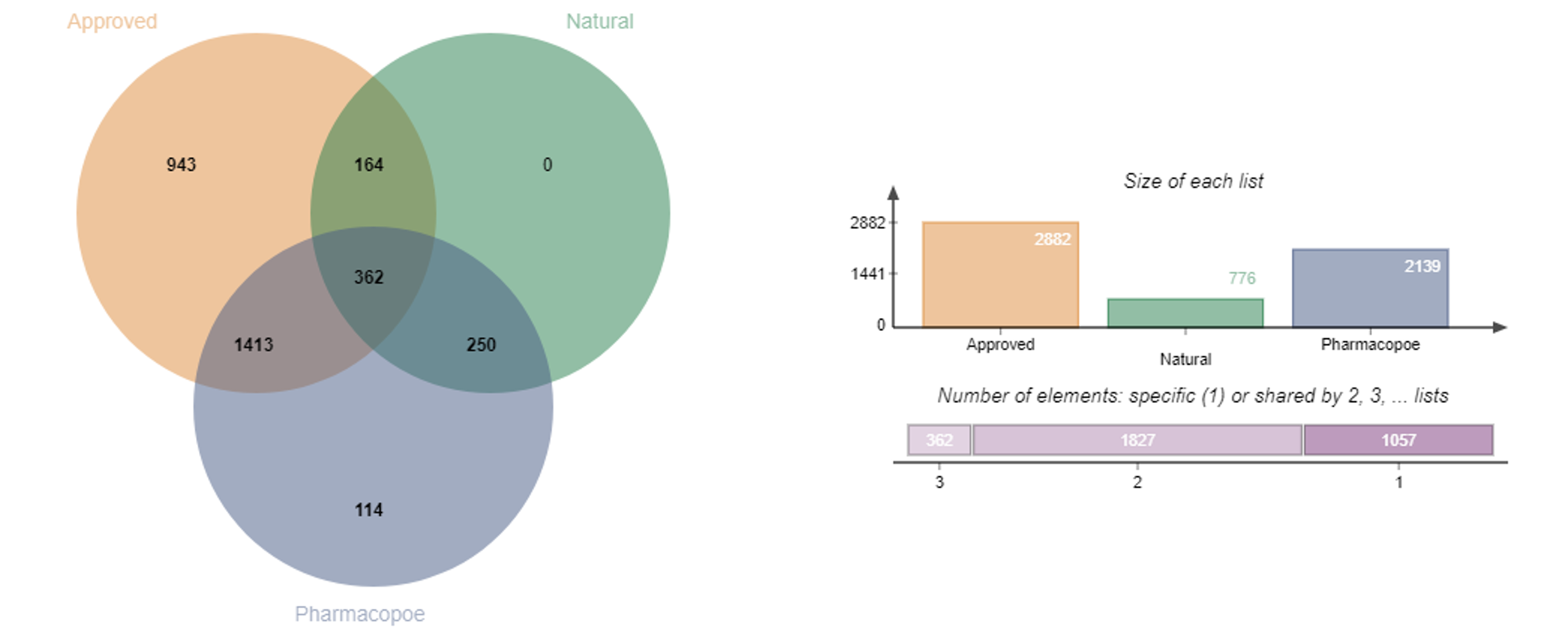
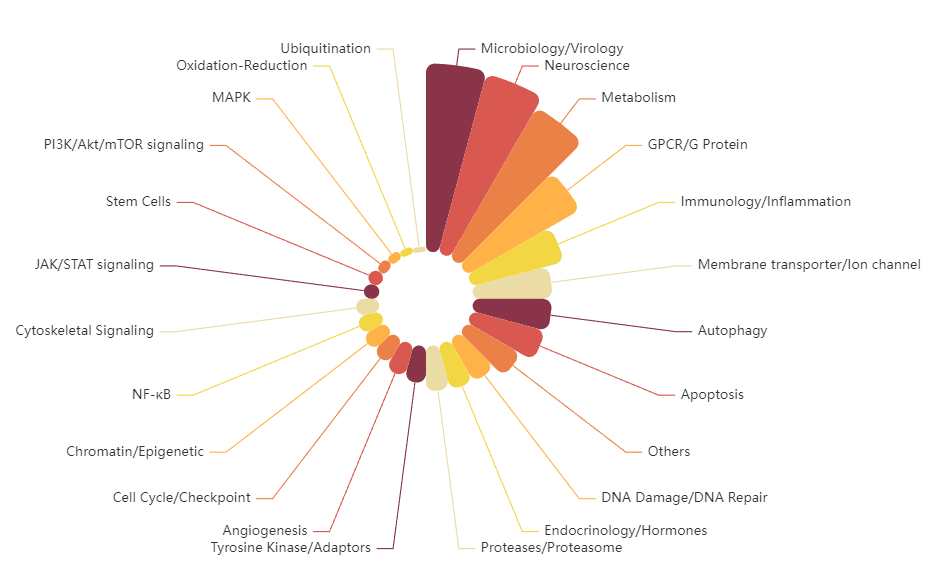
The TargetMol FDA-Approved & Pharmacopeia Drug Library not only exhibits high chemical diversity but also demonstrates broad representation in biological functions. The library contains compounds targeting various key signaling pathways, including kinases, G protein-coupled receptors (GPCRs), ion channels, and epigenetic regulators, comprehensively covering disease areas such as cancer, immune disorders, neurological diseases, metabolic disorders, and infectious diseases. Approximately 27% of the compounds are natural products, including monomeric compounds isolated and identified from plants, animals, and microorganisms. The FDA-Approved & Pharmacopeia Drug Library is an ideal resource for drug repurposing, lead optimization, and the development of new therapeutic approaches, facilitating the entire process from basic research to translational medicine and accelerating the efficient development of innovative drugs.
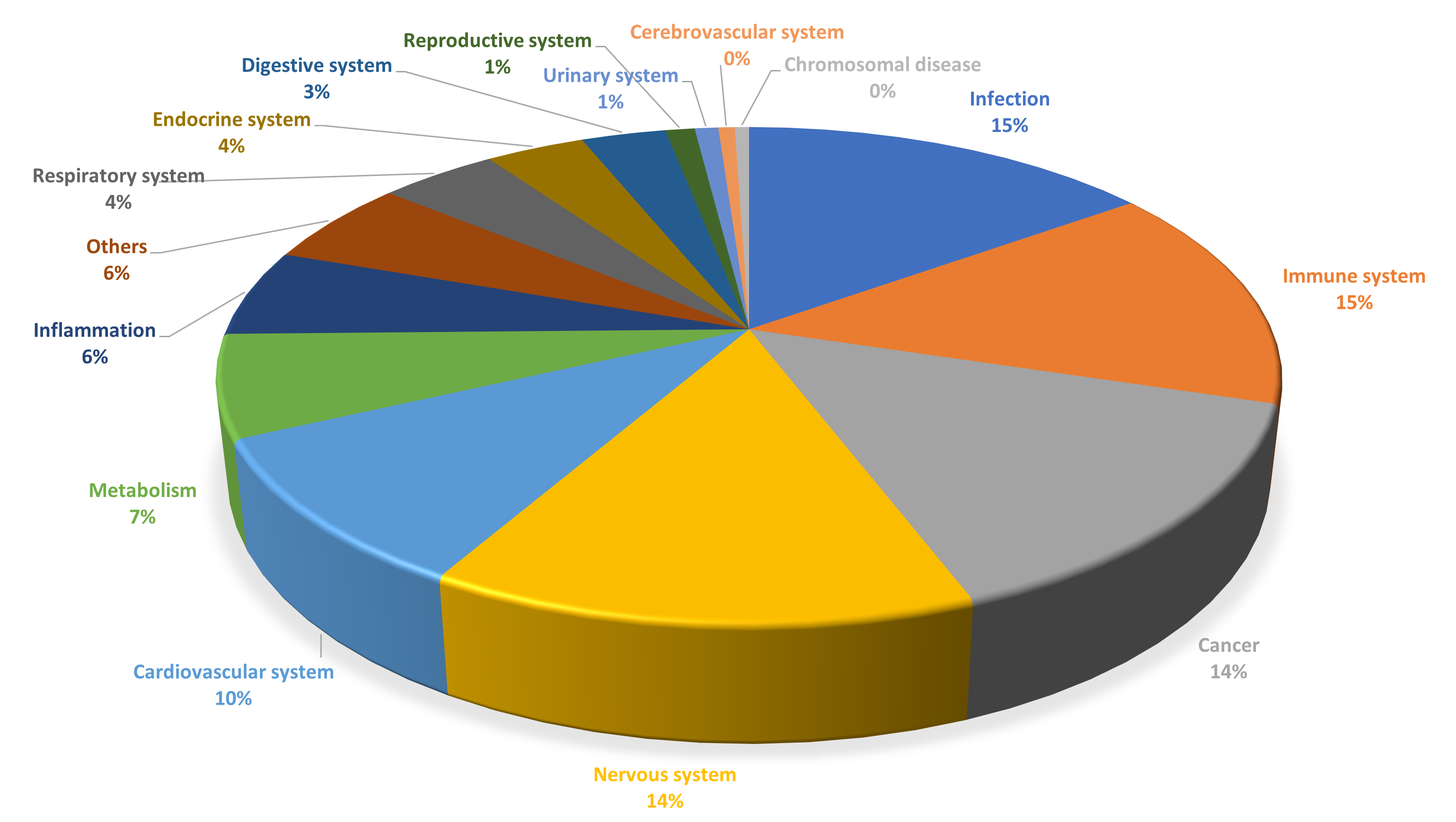
 FDA-Approved & Pharmacopeia Drug Library
Signaling Pathways in Library
 FDA-Approved & Pharmacopeia Drug Library
Classified by Disease type
 FDA-Approved & Pharmacopeia Drug Library
Compounds in Library

Regular Updates to Compound Libraries

TargetMol ensures compound libraries stay at the forefront of science by regularly updating our database to include the latest approved and marketed drugs.

Flexible Packaging Options

TargetMol provides a variety of standard packaging sizes (such as 30 μL, 50 μL, 100 μL, 250 μL, and 1 mg), and offer customized packaging solutions tailored to specific needs.

Personalized Custom Services

TargetMol offers fully customized screening services, including the design and synthesis of compound libraries. Our highly flexible service is designed to efficiently meet the unique needs of scientists and researchers.

Packaging And Storage Packaging And Storage

  • Powder or pre-dissolved DMSO solutions in 96/384 well plate with optional 2D barcode
  • Shipped with blue ice
  • This compound library is provided at a concentration of 10 mM in DMSO. A small number of compounds may be provided in different solvents or concentrations due to solubility or stability requirements. Please refer to the specific product information for details.

Library Customization | TargetMol Library Customization

Compound Library | TargetMol
Targetmol Compound Libraries
can be highly customized!
Inquiry & Custom

Library Customization | TargetMol Library Composition

Antibacterial
Apoptosis
Antibiotic
Endogenous Metabolite
Autophagy
Adrenergic Receptor
5-HT Receptor
Parasite
AChR
COX
Dopamine Receptor
Antifungal
Histamine Receptor
ROS
DNA/RNA Synthesis
NF-κB
Potassium Channel
Calcium Channel
Sodium Channel
HIV Protease
Reactive Oxygen Species
Cytochromes P450
Glucocorticoid Receptor
SARS-CoV
Virus Protease
Topoisomerase
Influenza Virus
Estrogen/progestogen Receptor
Ferroptosis
Interleukin
GABA Receptor
PDE
Akt
TNF
Estrogen Receptor/ERR
EGFR
RAAS
VEGFR
ERK
p38 MAPK
Dehydrogenase
HSV
iGluR
Serotonin Transporter
Cholinesterase (ChE)
Mitophagy
Caspase
Microtubule Associated
Prostaglandin Receptor
PPAR
HCV Protease
MMP
c-Kit
NO Synthase
Nucleoside Antimetabolite/Analog
PDGFR
Reverse Transcriptase
PI3K
Proteasome
Antioxidant
HBV
Progesterone Receptor
ribosome
MAO
Norepinephrine
Drug Metabolite
TRP/TRPV Channel
Monoamine Oxidase
Carbonic Anhydrase
HDAC
Opioid Receptor
STAT
ATPase
TLR
Nrf2
JAK
Androgen Receptor
FGFR
Beta Amyloid
c-Met/HGFR
Bcl-2 Family
Angiotensin-converting Enzyme (ACE)
Antifection
JNK
Mitochondrial Metabolism
Wnt/beta-catenin
DNA Alkylator/Crosslinker
Phosphatase
CDK
Proton pump
AMPK
Anti-infection
Tyrosinase
DPP-4
Bcr-Abl
PKC
Thrombin
Adenosine Receptor
P-gp
Amino Acids and Derivatives
IL Receptor
Ras
HIF/HIF Prolyl-Hydroxylase
Transferase
FLT
Tyrosine Kinases
mTOR
PARP
NMDAR
HMG-CoA Reductase
MEK
Src
MRP
Antiviral
GluR
Antifolate
Raf
Lipoxygenase
ALK
HSP
Thyroid hormone receptor(THR)
Serine Protease
Sigma receptor
GNRH Receptor
ROS Kinase
Retinoid Receptor
DHFR
Reductase
GSK-3
Phospholipase
CFTR
Chloride channel
DNA Alkylation
c-RET
Trk receptor
SGLT
PKA
Endothelin Receptor
IκB/IKK
CaMK
ADC Cytotoxin
ABC Transporter
HER
Factor Xa
MDM-2/p53
Glutathione Peroxidase
DNA gyrase
Histone Methyltransferase
P2X Receptor
ROCK
NOD-like Receptor (NLR)
Kras
HIF
TGF-beta/Smad
Neurokinin receptor
P2Y Receptor
S1P Receptor
NADPH
Monoamine Transporter
IGF-1R
Hydroxylase
GPCR
Aromatase
Cysteine Protease
FXR
Leukotriene Receptor
Guanylate cyclase
Integrin
Hedgehog/Smoothened
GPCR19
Complement System
LPL Receptor
PGE Synthase
FAK
Necroptosis
Na-K-Cl cotransporter
DNA Methyltransferase
Vitamin
glycosidase
DNA
Isocitrate Dehydrogenase (IDH)
Vasopressin Receptor
Melanocortin Receptor
Melatonin Receptor
Serine/threonin kinase
Xanthine Oxidase
TAM Receptor
Gamma-secretase
MAPK
Fatty Acid Synthase
Histone Demethylase
Sirtuin
CaSR
NOS
Aryl Hydrocarbon Receptor
CGRP Receptor
Glucosidase
Neprilysin
OAT
c-Fms
UGT
Aurora Kinase
Annexin A
MT Receptor
Molecular Glues
PERK
Arginase
Oxytocin Receptor
Gap Junction Protein
NOD
Cannabinoid Receptor
p53
Smo
Decarboxylase
Immunology/Inflammation related
Ligands for E3 Ligase
Thrombopoietin Receptor
Aminopeptidase
Cell wall
RANKL/RANK
Telomerase
Lipid
AhR
BTK
CCR
Casein Kinase
Imidazoline Receptor
Rho
PAK
GST
Platelet aggregation
IRAK
PD-1/PD-L1
IRE1
LDL
CXCR
OXPHOS
Free radical scavengers
GluCls
FKBP
TOPK
Cholecystokinin Receptor
Epigenetic Reader Domain
FOXO
Adenosine Deaminase
MicroRNA
Lipase
Hexokinase
Syk
ASBT
Somatostatin
Mucin
Cuproptosis
YAP
IFNAR
transporter
MTP
IKZF
LTR
ATG
NR4A
Adiponectin Receptor
PROTAC Linker
FAAH
ATP Citrate Lyase
Na+/Ca2+ Exchanger
DYRK
Photosensitizer
Liver X Receptor
Ephrin Receptor
GHSR
Monocarboxylate transporter
Amylase
Prolyl Endopeptidase (PREP)
PTEN
STING
Pyroptosis
PKM
Tie-2
LDLR
CSF-1R
Integrase
Beta-Secretase
Glutathione reductase
Acyltransferase
ROR
Ligands for Target Protein for PROTAC
Cell Cycle Arrest
PAFR
DUB
RSV
PLK
CRM1
Adenylate cyclase
GlyT
PAD
Indoleamine 2,3-Dioxygenase (IDO)
BCRP
Survivin
Protease-activated Receptor
CETP
IDO
GRK
Phosphorylase
PDK
S6 Kinase
Hydrogenase
VDA
N-Acetylglucosaminyltransferase
IAP
E1/E2/E3 Enzyme
Anion Exchanger
p62
CRISPR/Cas9
Mdm2
CAT
gp120/CD4
c-Myc
HCN Channel
cAMP
Histone Acetyltransferase
CRFR
PAI-1
RAR/RXR
Bradykinin Receptor
Epoxide Hydrolase
Huntingtin
MRGPR
NADPH-oxidase
Taste receptor
NPC1L1
DNA-PK
Myosin
ATM/ATR
Dynamin
Glucokinase
MTH1
Glucagon Receptor
HCAR
Chk
MIF
Glutaminase
RIP kinase
Wee1
Urea Transporter
ASK
Aquaporin
BACE
OCT
Hck
Arp2/3 Complex
TMV
Ferroportin
PGC-1α

Keywords