


Shopping Cart
Remove All Your shopping cart is currently empty

Synonyms:
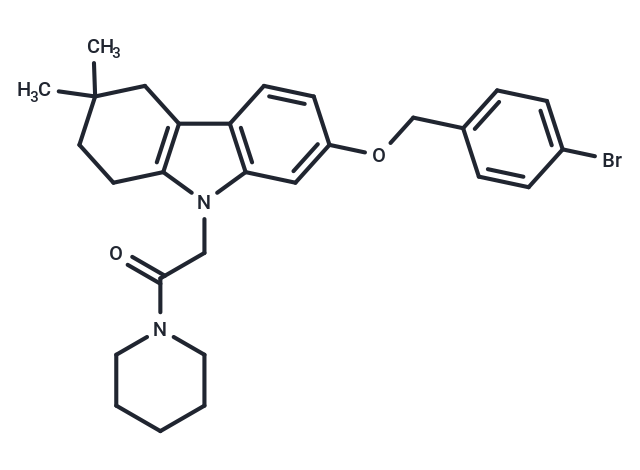

| Pack Size | Price | USA Stock | Global Stock | Quantity |
|---|---|---|---|---|
| 1 mg | $195 | - | In Stock | |
| 5 mg | $483 | - | In Stock | |
| 10 mg | $691 | - | In Stock | |
| 25 mg | $1,080 | - | In Stock | |
| 50 mg | $1,490 | - | In Stock | |
| 100 mg | $1,960 | - | In Stock |
| Description | AcrB-IN-6 is an effective inhibitor of AcrB and suppresses the function of bacterial multidrug efflux pumps. AcrB-IN-6 significantly enhances the antibacterial activity of multiple antibiotics and produces 32-fold reductions in minimum inhibitory concentration (MIC) values in wild-type Escherichia coli BW25113. AcrB-IN-6 exhibits strong synergistic antibacterial effects together with low cytotoxicity and hemolytic properties. AcrB-IN-6 is utilized in research focused on antimicrobial resistance mechanisms, bacterial efflux systems, and strategies designed to restore antibiotic susceptibility in multidrug-resistant bacterial strains. |
| In vitro | Method: The post-antibiotic effects of azithromycin and linezolid against Escherichia coli BW25113 were evaluated in the presence of AcrB-IN-6. Rresult: AcrB-IN-6 extended the post-antibiotic effects of azithromycin and linezolid by 2 h and 1.5 h, respectively.[1] Method: Hemolytic activity and mammalian-cell cytotoxicity were evaluated using murine erythrocytes and HEK293 cells exposed to AcrB-IN-6. Rresult: AcrB-IN-6 caused no appreciable hemolysis at 2–256 μg/mL and showed relatively low cytotoxicity toward HEK293 cells.[1] |
| In vivo | Method: Male SPF Kunming mice infected with Escherichia coli BW25113 received a single intraperitoneal dose of AcrB-IN-6 alone at 25 mg/kg or AcrB-IN-6 at 5 or 15 mg/kg in combination with tetracycline. Rresult: AcrB-IN-6 monotherapy reduced the bacterial burden by approximately 0.5 log10 CFU, while combination treatment produced a more pronounced, dose-dependent enhancement of tetracycline efficacy.[1] Method: The biosafety of a single hemocoel injection of AcrB-IN-6 at 250–1000 mg/kg was evaluated in Galleria mellonella larvae. Rresult: AcrB-IN-6 showed favorable biosafety in Galleria mellonella larvae even at the highest tested dose.[1] |
| Molecular Weight | 509.48 |
| Formula | C28H33BrN2O2 |
| Cas No. | 3082621-32-4 |
| Smiles | O=C(N1CCCCC1)CN2C=3C=C(OCC4=CC=C(Br)C=C4)C=CC3C5=C2CCC(C)(C)C5 |
| Relative Density. | no data available |
| Storage | Powder: -20°C for 3 years | In solvent: -80°C for 1 year Shipping with blue ice/Shipping at ambient temperature. |
 For example, if the intended dosage is 10 mg/kg for animals weighing 20 g , with a dosing volume of 100 μL per animal, and a total of 10 animals are to be administered, using a formulation of
  10% DMSO+ 40% PEG300+ 5% Tween 80+ 45% Saline/PBS/ddH2O , the resulting working solution concentration would be 2 mg/mL.
Dissolve 2 mg of the compound in 100 μL DMSO to obtain a stock solution at a concentration of 20 mg/mL . If the required concentration exceeds the compound's known solubility, please contact us for technical support before proceeding.
1) Add 100 μL of the DMSO stock solution to 400 µL PEG300 and mix thoroughly until the solution becomes clear.
2) Add 50 µL Tween 80 and mix well until fully clarified.
3) Add 450 µL Saline,PBS or ddH2O and mix thoroughly until a homogeneous solution is obtained.
| Size | Quantity | Unit Price | Amount | Operation |
|---|
 Feedback
 Hello! How can I help you today?
Copyright © 2015-2026 TargetMol Chemicals Inc. All Rights Reserved.
