


Shopping Cart
Remove All Your shopping cart is currently empty

Synonyms: Triple-HA Tag

| Pack Size | Price | USA Stock | Global Stock | Quantity |
|---|---|---|---|---|
| 1 mg | $218 | In Stock | In Stock | |
| 5 mg | $438 | In Stock | In Stock | |
| 10 mg | $619 | In Stock | In Stock | |
| 25 mg | $1,090 | - | In Stock | |
| 50 mg | $1,480 | - | In Stock |
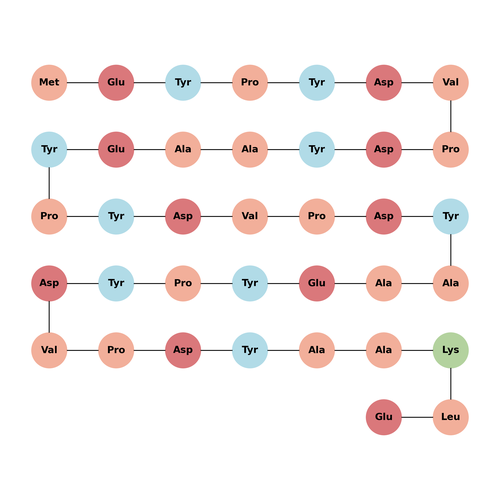
| Description | 3X HA Tag (Triple-HA Tag) is a bioactive peptide consisting of three repetitive HA tags (YPYDVPDYA) linked by peptide bonds and is mainly used for protein and peptide detection as well as facilitating functional analysis of target proteins. 3X HA Tag can be specifically recognized and conjugated to anti-HA tag antibody, and is widely used in Western blot, immunofluorescence, immunoprecipitation and other experimental techniques. |
| In vitro | Western blot and immunofluorescence detection of fusion proteins I. Inoculation of cells 1. Add a total of 1.5 × 10^4 cells to each well of a 24-well plate. 2. Move to a 37 °C incubator overnight. II. Transfection of HeLa cells using JetPrime 1. Remove the medium from each well and replace with 0.5 ml complete DMEM. 2. Add 500 ng pCDNA3-VAMP8-3xHA and adjust to a final volume of 100 μl with JetPrime buffer. 3. Incubate at room temperature for 10 -15 minutes. 4. Add 15 μl of transfection mixture to each well. 5. Incubate in a tissue culture incubator at 37 °C for 6 hours. 6. Remove the medium and replace with 1.5 ml complete DMEM. 7. Incubate overnight in a 37 °C tissue culture incubator. III. VAMP8 endocytic uptake assay 1. Wash transfected cells with 1 ml ice-cold DMEM. Repeat once more for a total of two washes. 2. Dilute rabbit anti-HA antibody in ice-cold complete DMEM to a final dilution of 1:200. Add 150 μl of diluted anti-HA antibody to each well. 3. Incubate on ice for 60 min with occasional shaking. 4. Wash cells 3 times with 1 ml ice-cold complete DMEM. 5. Wash cells twice with 1 ml pre-warmed EBSS (37 °C). 6. Add 1 ml pre-warmed EBSS to each well and incubate in a 37 °C tissue culture incubator for 15, 45, and 90 min. III. Immunofluorescence 1. At each time point, remove the appropriate coverslip and transfer to a new well of a new 24-well plate containing 1 ml 1× PBS. 2. Remove the 1× PBS and replace with 1 ml 4% paraformaldehyde solution. 3. Incubate at room temperature for 15 minutes. 4. Remove the 4% paraformaldehyde solution and wash 3 times with 1 ml 1× PBS. Incubate at room temperature for 5 minutes for each wash. 5. Remove the last wash and block in 1 ml blocking buffer for 1 hour at room temperature. 6. Dilute mouse anti-Lamp1 or mouse anti-EEA1 to a final dilution of 1:100 or 1:1,000, respectively, in antibody incubation buffer. 7. Remove the blocking buffer, replace with 100 μl of the appropriate diluted antibody, and incubate at 4 °C. 8. Remove the diluted antibody solution and wash three times with 1 ml 1× PBS. Incubate at room temperature for 5 minutes for each wash. 9. Dilute Alexa-conjugated secondary antibodies. Dilute goat anti-mouse Alexa-488 and goat anti-rabbit Alexa-546 to a final dilution of 1:250 in antibody dilution buffer. 10. Remove the wash solution, add 200 μl of the diluted secondary antibody solution, and incubate at room temperature for 1 hour in the dark to minimize photobleaching. 11. Remove the solution containing secondary antibody and wash three times with 1 ml 1× PBS. Incubate at room temperature for 5 minutes for each wash. 12. Add 200 μl of 1× PBS containing 1 μg/ml DAPI and incubate at room temperature for 5 minutes. 13. Remove the solution containing DAPI and wash twice with 1 ml 1× PBS. After each wash, incubate at room temperature for 5 minutes. 14. Pipette 10 μl of FluorSave mounting medium onto a microscope slide. 15. Image on an appropriate confocal or widefield microscope system. [2] |
| Synonyms | Triple-HA Tag |
| Molecular Weight | 4372.63 |
| Formula | C205H272N38O67S |
| Relative Density. | no data available |
| Sequence | Met-Glu-Tyr-Pro-Tyr-Asp-Val-Pro-Asp-Tyr-Ala-Ala-Glu-Tyr-Pro-Tyr-Asp-Val-Pro-Asp-Tyr-Ala-Ala-Glu-Tyr-Pro-Tyr-Asp-Val-Pro-Asp-Tyr-Ala-Ala-Lys-Leu-Glu |
| Sequence Short | MEYPYDVPDYAAEYPYDVPDYAAEYPYDVPDYAAKLE |
| Storage | Keep away from direct sunlight,Keep away from moisture Powder: -20°C for 3 years | In solvent: -80°C for 1 year Shipping with blue ice/Shipping at ambient temperature. | ||||||||||||||||||||
| Solubility Information | DMSO: 80 mg/mL (18.3 mM), Sonication is recommended. | ||||||||||||||||||||
Solution Preparation Table | |||||||||||||||||||||
DMSO
Note : The dilution table applies only to solid products. For liquid products, please calculate the stock solution based on the stated concentration and/or density. | |||||||||||||||||||||
 For example, if the intended dosage is 10 mg/kg for animals weighing 20 g , with a dosing volume of 100 μL per animal, and a total of 10 animals are to be administered, using a formulation of
  10% DMSO+ 40% PEG300+ 5% Tween 80+ 45% Saline/PBS/ddH2O , the resulting working solution concentration would be 2 mg/mL.
Dissolve 2 mg of the compound in 100 μL DMSO to obtain a stock solution at a concentration of 20 mg/mL . If the required concentration exceeds the compound's known solubility, please contact us for technical support before proceeding.
1) Add 100 μL of the DMSO stock solution to 400 µL PEG300 and mix thoroughly until the solution becomes clear.
2) Add 50 µL Tween 80 and mix well until fully clarified.
3) Add 450 µL Saline,PBS or ddH2O and mix thoroughly until a homogeneous solution is obtained.
| Size | Quantity | Unit Price | Amount | Operation |
|---|
 Feedback
 Hello! How can I help you today?
Copyright © 2015-2026 TargetMol Chemicals Inc. All Rights Reserved.
