


Shopping Cart
Remove All Your shopping cart is currently empty

Synonyms:
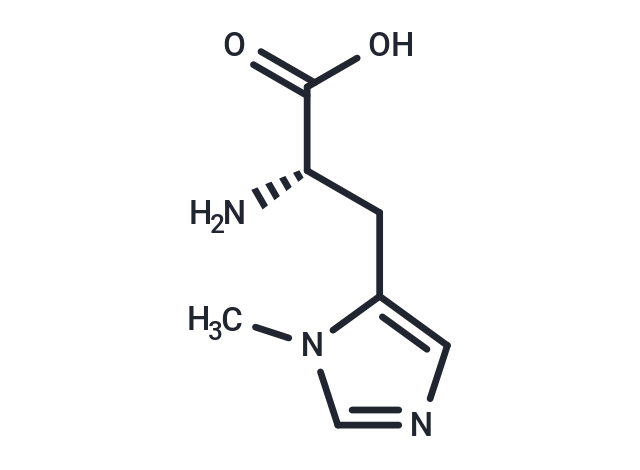
| Pack Size | Price | USA Stock | Global Stock | Quantity |
|---|---|---|---|---|
| 50 mg | $259 | 4-6 weeks | 4-6 weeks |
| Description | 3-Methyl-L-histidine (Standard) is a reference standard for research and analysis in studies involving 3-Methyl-L-histidine. 3-Methylhistidine belongs to the class of organic compounds known as histidine and derivatives. Histidine and derivatives are compounds containing cysteine or a derivative thereof resulting from reaction of cysteine at the amino group or the carboxy group, or from the replacement of any hydrogen of glycine by a heteroatom. It is also a biomarker for the consumption of soy products. 3-Methylhistidine is a very strong basic compound (based on its pKa). 3-Methylhistidine exists in all eukaryotes, ranging from yeast to humans. In humans, 3-methylhistidine is involved in methylhistidine metabolism. 3-Methylhistidine, with regard to humans, has been found to be associated with several diseases such as diabetes mellitus type 2, eosinophilic esophagitis, and kidney disease; 3-methylhistidine has also been linked to the inborn metabolic disorder propionic acidemia. The measurement of 3-methylhistidine provides an index of the rate of muscle protein breakdown. 3-Methylhistidine is a product of peptide bond synthesis and methylation of actin and myosin. 3-Methylhistidine is a biomarker for meat consumption, especially chicken.Structure |
| Molecular Weight | 169.181 |
| Formula | C7H11N3O2 |
| Cas No. | 368-16-1 |
| Smiles | O=C(O)[C@@H](N)CC1=CN=CN1C |
| Relative Density. | 1.37g/cm3 |
| Storage | Keep away from direct sunlight Powder: -20°C for 3 years | In solvent: -80°C for 1 year Shipping with blue ice/Shipping at ambient temperature. |
 For example, if the intended dosage is 10 mg/kg for animals weighing 20 g , with a dosing volume of 100 μL per animal, and a total of 10 animals are to be administered, using a formulation of
  10% DMSO+ 40% PEG300+ 5% Tween 80+ 45% Saline/PBS/ddH2O , the resulting working solution concentration would be 2 mg/mL.
Dissolve 2 mg of the compound in 100 μL DMSO to obtain a stock solution at a concentration of 20 mg/mL . If the required concentration exceeds the compound's known solubility, please contact us for technical support before proceeding.
1) Add 100 μL of the DMSO stock solution to 400 µL PEG300 and mix thoroughly until the solution becomes clear.
2) Add 50 µL Tween 80 and mix well until fully clarified.
3) Add 450 µL Saline,PBS or ddH2O and mix thoroughly until a homogeneous solution is obtained.
| Size | Quantity | Unit Price | Amount | Operation |
|---|
 Feedback
 Hello! How can I help you today?
Copyright © 2015-2026 TargetMol Chemicals Inc. All Rights Reserved.
