


Shopping Cart
Remove All Your shopping cart is currently empty

Synonyms:
| Pack Size | Price | USA Stock | Global Stock | Quantity |
|---|---|---|---|---|
| 50 T | $41 | 7-10 days | 7-10 days |
 Detection Principle
Thioredoxin reductase (TrxR) catalyzes the reduction of DTNB by NADPH to generate TNB and NADP⁺. TNB exhibits a characteristic absorption peak at 412 nm. However, reduced glutathione (GSH) can also react with DTNB to produce TNB. Therefore, 2-vinylpyridine is used to inhibit endogenous reduced glutathione in the sample. The activity of TrxR can then be calculated by measuring the rate of increase in TNB absorbance at 412 nm.
PackingTaking 50T/48S packing for example:
| Components | Packing | Storage |
|---|---|---|
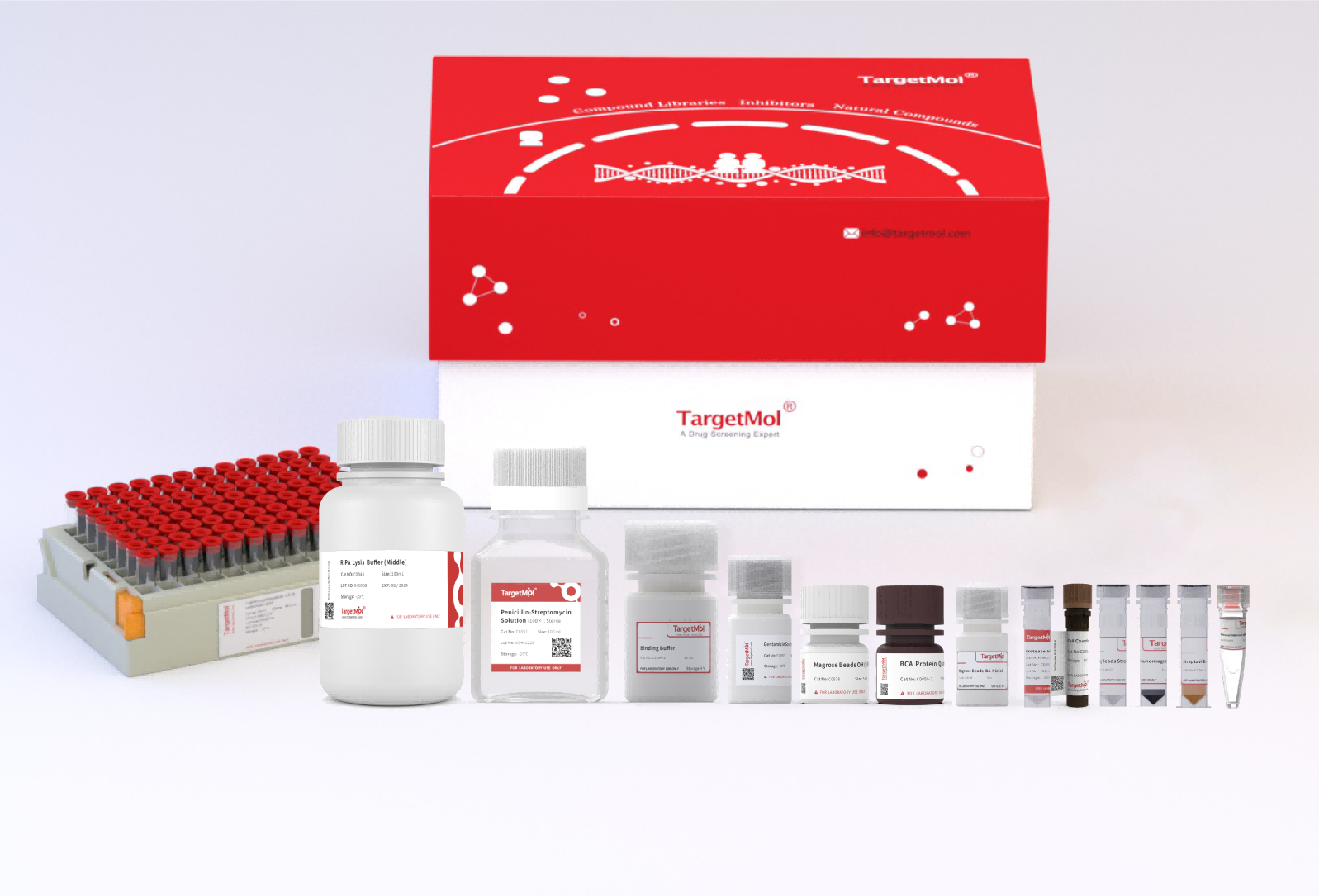
| CB0136M-A | 100 mL x 1 | 4 ℃ |
| CB0136M-B | 1 vial (powder) x 1 | Store at 4 °C protected from light; before use, dissolve by adding 5 mL of 1× PBS buffer (use within 3 days). |
| CB0136M-C | 1 vial (powder) x 1 | Store at 4 °C; before use, dissolve by adding 5 mL of distilled water (use within 3 days). |
| CB0136M-D | 30 μL×1 | Store at −20 °C; before use, dilute 10-fold with absolute ethanol according to the number of samples. |
Prior to the formal determination, a preliminary assay should be conducted using 2-3 samples with large expected differences.
InstructionsI. Preparation of Lab Instruments
Visible spectrophotometer, 1 mL glass cuvette, water bath, balance, centrifuge, adjustable pipette, mortar, distilled water, 1× PBS buffer.
II. Extraction of Crude Enzyme
1.Tissues:
Homogenize on ice at a ratio of tissue mass (g) : CB0136S-A volume (mL) = 1 : 5–10
(Recommended: weigh ~0.1 g tissue and add 1 mL CB0136S-A).
Centrifuge at 8000 × g, 4 °C for 10 min. Collect the supernatant and keep on ice for analysis.
2.Bacteria / cells:
Use a ratio of cell number (×10⁴ cells) : CB0136S-A volume (mL) = 500–1000 : 1
(Recommended: add 1 mL CB0136S-A to 5 × 10⁶ cells).
Lyse cells by ultrasonication on ice (300 W; 3 s on / 7 s off; total 3 min).
Then centrifuge at 8000 × g, 4 °C for 10 min. Collect the supernatant and keep on ice for analysis.
3.Serum and other liquid samples: Measure directly.
III. Assay Procedure
1.Preheat the spectrophotometer for 30 minutes, set the wavelength to 412 nm, and zero the instrument using distilled water.
2.Preheat CB0136S-A at 25 °C (for general species) or 37 °C (for mammals) for 30 minutes. Before measurement, mix the sample supernatant with CB0136S-D at a volume ratio of 50:1 (i.e., add 2 μL of CB0136S-D to 100 μL of supernatant). Incubate in a 37 °C water bath for 30 minutes, then place on ice.
3.Add the following reagents
| Blank Tube(μL) | Sample Tube(μL) | |
|---|---|---|
| CB0136M-B | 100 | |
| CB0136M-C | 100 | |
| CB0136M-A | 800 | |
| After rapid mixing, measure the absorbance at 412 nm at 10 s. Then incubate in a 37 °C water bath for 5 min, quickly remove and measure the absorbance at 412 nm again, recorded as A1 and A2. Calculate the blank tube ΔA as ΔA_blank = A2 − A1. | ||
| CB0136M-B | 100 | |
| CB0136M-C | 100 | |
| CB0136M-A | 700 | |
| supernatant | 100 | |
| After rapid mixing, measure the absorbance at 412 nm at 10 s. Then incubate in a 37 °C water bath for 5 min, promptly remove and measure the absorbance at 412 nm again. Record the two readings as A3 and A4, respectively. Calculate the absorbance change for the assay tube as ΔA = A4 − A3. | ||
Note: Blank tubes only need to be measured 1–2 times.
IV. Calculation of TrxR Activity
1.Based on protein concentration
At 25 °C or 37 °C, the amount of enzyme that catalyzes the reduction of 1 nmol of DTNB per minute per milligram of protein is defined as one unit of enzyme activity.
TrxR (U/mg prot) = (ΔA sample - ΔA blank)÷ε÷d×109×V1÷(Cpr×V2)÷T= 147×(ΔA sample - ΔA blank)÷Cpr
2.Based on sample mass
At 25 °C or 37 °C, one enzyme activity unit is defined as the amount of enzyme that catalyzes the reduction of 1 nmol of DTNB per minute per gram of sample.
TrxR (U/g) = (ΔA sample - ΔA blank)÷ε÷d×109×V1÷(W×V2÷V3)÷T = 147×(ΔA sample - ΔA blank)÷W
3.Based on bacterial or cell density
At 25 °C or 37 °C, one enzyme activity unit is defined as the amount of enzyme that catalyzes the reduction of 1 nmol of DTNB per minute per 10⁴ cells.
TrxR (U/104 cell) = (ΔAsample - ΔA blank)÷ε÷d×109×V1÷(cell number×V2÷V3)÷T= 147×(ΔA sample - ΔA blank)÷cell number
4.Based on Liquid Volume
At 25 °C or 37 °C, one enzyme activity unit is defined as the amount of enzyme that catalyzes the reduction of 1 nmol of DTNB per minute per milliliter of liquid.
TrxR (U/mL) = (ΔA sample - ΔA blank)÷ε÷d×109×V1÷V2÷T= 147×(ΔA sample - ΔA blank)
Note:
ε: Molar extinction coefficient of TNB at 412 nm, 1.36 × 10⁴ L/mol/cm;
d: Optical path length of the cuvette, 1 cm;
V1: Total volume of the reaction system (L), 1000 μL = 1 × 10⁻³ L;
Cpr: Protein concentration of the supernatant (mg/mL), to be determined separately;
W: Sample mass;
V2: Volume of supernatant added to the reaction system (mL), 100 μL = 0.1 mL;
V3: Volume of extraction buffer, 1 mL;
T: Reaction time (min), 5 min
Cell number: Expressed in units of 10⁴ cells (ten thousand cells);
10⁹: Unit conversion factor, 1 mol = 10⁹ nmol
Precautions1.Before formal measurement, perform a preliminary test using 1–2 samples to ensure that the absorbance shows a linear change within 5 minutes. For TrxR activity assays of mammalian tissues and blood products, samples generally need to be diluted approximately 5-fold with distilled water. All procedures during the assay should be carried out rapidly.
2.Since CB0136S-A contains a certain concentration of protein (approximately 0.1 mg/mL), the protein contributed by the extraction buffer itself must be subtracted when determining the protein concentration of the samples.
3.The product is for R&D use only, not for diagnostic procedures, food, drug, household or other uses.
4.Please wear a lab coat and disposable gloves.
Instruction Manual| Size | Quantity | Unit Price | Amount | Operation |
|---|
 Feedback
 Hello! How can I help you today?
Copyright © 2015-2026 TargetMol Chemicals Inc. All Rights Reserved.
