


Shopping Cart
Remove All Your shopping cart is currently empty

Synonyms:
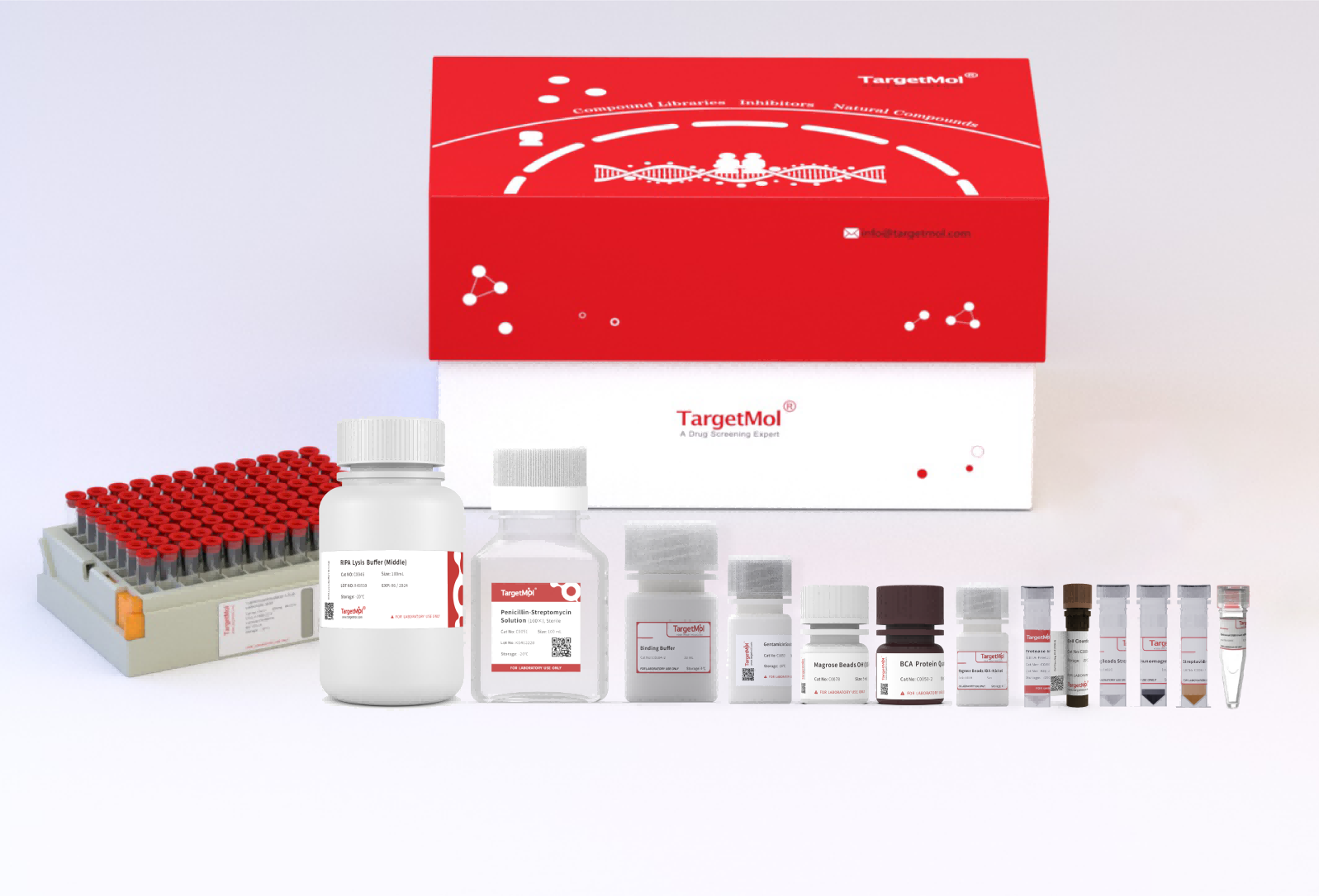
| Pack Size | Price | USA Stock | Global Stock | Quantity |
|---|---|---|---|---|
| 100 T | $67 | 7-10 days | 7-10 days | |
| 200 T | $107 | 7-10 days | 7-10 days |
 Detection Principle
Rich in surface-active functional groups: Magrose features a high density of COOH groups (~1000 μmol/g), ensuring efficient target binding and extremely low nonspecific adsorption.
Uniform magnetic bead dispersion with good operability, maintaining stable magnetic responsiveness and excellent resuspension performance.
Excellent physicochemical stability and good batch-to-batch reproducibility; the coefficient of variation (CV) of amino group content between batches is <5%, ensuring stable and reliable experimental results.
High target binding capacity with low nonspecific adsorption, specifically designed for separation and purification applications.
PackingTaking 100T/96S packing for example:
| Components | Packing | Storage |
|---|---|---|
| CB0094M-ES | 100mL×1 | 4℃ |
| CB0094M-A | 30mL×1 | 4℃ |
| Before use, check whether CB0094M-A is completely dissolved. If not fully dissolved, heat to 70 °C and vortex to facilitate dissolution. | ||
Before the formal assay, perform a pilot test using 2–3 samples with expected large differences.
Instructions1. Preparation of Lab Instruments
Visible spectrophotometer / microplate reader, micro glass cuvettes / 96-well plates, water bath, benchtop centrifuge, adjustable micropipettes, mortar, ice, and distilled water.
2. MDA Extraction Solution
1)Preparation of bacterial and cell samples:
Bacteria or cultured cells: Collect the bacteria or cells into centrifuge tubes. After centrifugation, discard the supernatant. Add CB0094M-ES according to the ratio of bacterial or cell number (10⁴ cells): CB0094M-ES volume (mL) = 500~1000 : 1 (recommended: add 1 mL of CB0094M-ES to 5 x 10⁶ bacteria or cells). Lyse the bacteria or cells by ultrasonication (on ice; 20% power or 200 W; sonicate for 3 s with 10 s intervals, repeat 30 times). Centrifuge at 8000 × g for 10 min at 4 °C. Collect the supernatant and keep it on ice for analysis.
2)Preparation of tissue samples:
Add CB0094M-ES according to the ratio of tissue weight (g): CB0094M-ES volume (mL) = 1:5~10 (recommended: weigh approximately 0.1 g of tissue and add 1 mL of CB0094M-ES), then homogenize in an ice bath. Centrifuge at 8000 × g for 10 min at 4 °C. Collect the supernatant and keep it on ice for analysis.
3)Serum (plasma) samples: Analyze directly.
3. Assay Procedure
Pipette 0.3 mL of CB0094M-A into a 1.5 mL centrifuge tube, then add 0.1 mL of the sample and mix well.
Incubate in a 95 °C water bath for 30 min (cap tightly to prevent moisture loss), cool in an ice bath, then centrifuge at 10,000 × g, 25 °C for 10 min.
Transfer 200 μL of the supernatant to a micro glass cuvette or 96-well plate, measure the absorbance at 532 nm and 600 nm, record as A532 and A600. ΔA = A532 − A600.
4. Calculation of MDA Content
a. The calculation formula for measurements using micro glass cuvettes:
1.Calculation of MDA content in serum (plasma)
MDA content (nmol/ mL) = [ ΔA×V1÷(ε×d)×109]÷V2 = 25.8×ΔA
2.Calculation of MDA Content in Bacteria, Cells, or Animal Tissues
(1) Based on protein concentration
MDAcontent (nmol/ mg prot) = [ ΔA×V1÷(ε×d)×109]÷(Cpr×V2) = 25.8× ΔA ÷Cpr
(2) Based on sample mass
MDA content (nmol/g fresh sample weight) = [ ΔA×V1÷(ε×d)×109]÷(W ×V2÷V3) = 25.8×ΔA ÷W
(3) Based on bacterial or cell density
MDA content (nmol/104) = [ ΔA×V1÷(ε×d)×109]÷(500×V2÷V3) = 0.0516×ΔA
Note:
V1:total reaction volume, 4×10⁻⁴ L;
ε:molar extinction coefficient of malondialdehyde (MDA),155×103 L/mol/cm;
d:optical path length of the cuvette,1cm;
V2:volume of sample added,0.1 mL;
V3:volume of extraction solution added,1 mL;
Cpr:sample protein concentration,mg/mL;
W:sample mass,g;
500:total number of cells or bacteria,500 million.
b. The calculation formula for measurements using a 96-well plate:
1.Calculation of MDA content in serum (plasma)
MDA content (nmol/ mL) = [ ΔA×V1÷(ε×d)×109]÷V2 = 51.6×ΔA
2.Calculation of MDA Content in Bacteria, Cells, or Animal Tissues
(1) Based on protein concentration
MDA content (nmol/ mg prot) = [ ΔA×V1÷(ε×d)×109]÷(Cpr×V2) = 51.6×ΔA÷Cpr
(2) Based on sample mass
MDA content (nmol/g fresh sample weight) = [ ΔA×V1÷(ε×d)×109]÷(W ×V2÷V3) = 51.6×ΔA ÷W
(3) Base on bacterial or cell density
MDA content (nmol/104) = [ ΔA×V1÷(ε×d)×109]÷(500×V2÷V3) = 0.1032×ΔA
Note:
V1:total reaction volume,4×10-4 L;
ε:molar extinction coefficient of malondialdehyde (MDA),155×103 L/mol/cm;
d:Optical path length of a 96-well plate,0.5cm;
V2:volume of sample added,0.1 mL;
V3:volume of extraction solution added,1 mL;
Cpr:sample protein concentration,mg/mL;
W:sample mass,g;
500:total number of cells or bacteria,500 million.
Precautions1.For protein quantification, it is recommended to use BCA Protein Quantification Kit (C0050) .
2.The product is for R&D use only, not for diagnostic procedures, food, drug, household or other uses.
3.Please wear a lab coat and disposable gloves.
| Size | Quantity | Unit Price | Amount | Operation |
|---|
 Feedback
 Hello! How can I help you today?
Copyright © 2015-2026 TargetMol Chemicals Inc. All Rights Reserved.
