


Shopping Cart
Remove All Your shopping cart is currently empty

Synonyms: Flag Tag Agarose resin, Flag Tag Agarose gel, Flag Tag Agarose beads, Anti-Flag Agarose
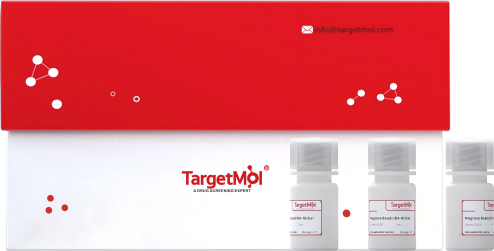
| Pack Size | Price | USA Stock | Global Stock | Quantity |
|---|---|---|---|---|
| 1 mL | $211 | In Stock | In Stock | |
| 1 mL * 5 | $831 | - | In Stock |
 Related Products Product Information
| Flag Tag Agarose | Features |
|---|---|
| Matrix | Highly cross-linked 4% agarose gel |
| Bead size | 30-100 μm |
| Ligand | Mouse anti-FLAG monoclonal antibody |
| Binding capacity | ≥1.0 mg FLAG-tagged |
| Concentration | 50% (v/v) |
Product FeaturesGood physicochemical stability;
Ligand is not easily detached;
High durability;
Easy to use.
Application1.Immunoprecipitation (IP) and co-immunoprecipitation (Co-IP) of proteins and protein complexes
2.FLAG-tagged protein purification
Prepare Reagents| Reagent | Recommended Formulations |
|---|---|
| Washing Buffer (1×) | TBST: 50 mM Tris-HCl, 150 mM NaCl, 0.1%(v/v) Tween-20, pH7.4 |
| Flag Peptide Elution Buffer | PBS,1 mg/mL 3× Flag peptide (TP1274), pH 7.4 |
| Acidity Elution Buffer | 0.1 M Glycine, 0.1% (v/v) Tween-20, pH2.5 |
| Neutralization Buffer | 1 M Tris-HCl, pH 9.0 |
Instructions1. Preparation of Cell Lysate
Select an appropriate lysis buffer to treat the cell samples. Prepare the cell lysate according to standard procedures. Keep on ice for immediate use, or store at −20 ℃ for long-term preservation.
2. Gel Pre-treatment
Vortex the agarose gel for 1 min to fully resuspend it. Transfer 25-50 µL of the gel suspension into a 1.5 mL EP tube.
Add 500 µL of Washing Buffer to the tube and gently invert several times to resuspend the gel.
Centrifuge the tube at 1,000 rpm for 5 min. After the gel has settled at the bottom, discard the supernatant. Repeat the washing step once.
3. Immunoprecipitation Procedure
Add the prepared sample containing FLAG-tagged protein into the EP tube. Place the tube on a rotator and incubate at room temperature for 1-2 h, or at 4 ℃ for 2-4 h.
After incubation, centrifuge at 1,000 rpm for 5 min. Collect the gel and discard or retain the supernatant for further analysis.
Add 1,000 µL of Washing Buffer to the tube, and gently mix for 5-10 min. Centrifuge at 1,000 rpm for 5 min, collect the gel, and discard the supernatant. Repeat the wash step two more times.
4. Antigen Elution
The following antigen elution methods are provided. Users can choose the appropriate method based on downstream applications.
A.Denaturing Elution Method:
The eluted sample is suitable for SDS-PAGE analysis. Add 100 µL of SDS-PAGE Loading Buffer (self-prepared) to the EP tube and mix thoroughly. Heat at 95 ℃ for 5 min. Then centrifuge to separate the gel, collect the supernatant, and proceed with SDS-PAGE analysis.
B.Neutral Elution Method:
Add 50 µL of Flag Peptide Elution Buffer to the EP tube. Incubate on a rotator at 37 ℃ for 5-10 min (extend incubation time if below 37 ℃). Then centrifuge to separate the gel and collect the supernatant. To improve antigen recovery, the elution step can be repeated.
C.Acidic Elution Method:
Add 100 µL of Acidity Elution Buffer to the EP tube. Incubate on a rotator at 37 ℃ for 5-10 min. Then centrifuge to separate the gel and collect the supernatant. If neutralization is required, add 50 µL of Neutralization Buffer to 100 µL of the eluate to adjust the pH to neutral.
StorageStore at 4 ℃ for 2 years.
Precautions1.The gel should be stored in the storage solution to prevent drying.
2.Before taking the agarose gel from the storage tube, mix thoroughly to ensure a uniform suspension. Avoid introducing bubbles during handling.
3.Depending on experimental needs, the operator may use the supernatants collected during the antibody-binding and antigen-binding steps to assess the binding efficiency between antibody, antigen, and gel.
4.In IP experiments, the binding affinity between different antibodies and antigens may vary. If the buffer system provided in this kit does not yield satisfactory results, the operator may optimize or prepare customized buffers as needed.
5.This product is for R&D use only, not for diagnostic procedures, food, drug, household, or other uses.
6.It’s advisable to wear a lab coat and disposable glove.
Instruction Manual| Size | Quantity | Unit Price | Amount | Operation |
|---|
 Feedback
 Hello! How can I help you today?
Copyright © 2015-2026 TargetMol Chemicals Inc. All Rights Reserved.
