


Shopping Cart
Remove All Your shopping cart is currently empty

Synonyms:
| Pack Size | Price | USA Stock | Global Stock | Quantity |
|---|---|---|---|---|
| 50 µL | $222 | 7-10 days | 7-10 days | |
| 100 µL | $373 | 7-10 days | 7-10 days |
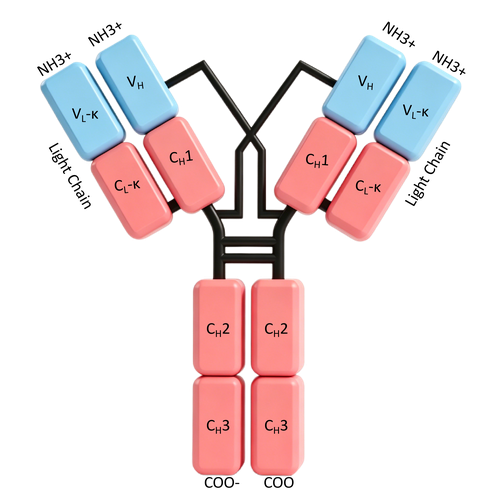
| Description | Anti-Pan Cytokeratin Antibody (9Q604) is a Mouse antibody targeting Pan Cytokeratin. Anti-Pan Cytokeratin Antibody (9Q604) can be used in WB,IHC-P,IHC-Fr,IF. |
| Ig Type | IgG2b, Kappa |
| Clone | 9Q604 |
| Reactivity | Human,Mouse,Rat |
| Verified Activity | 1. Paraformaldehyde-fixed, paraffin embedded (mouse skin); Antigen retrieval by boiling in sodium citrate buffer (pH6.0) for 15 min; Block endogenous peroxidase by 3% hydrogen peroxide for 20 minutes; Blocking buffer (normal goat serum) at 37°C for 30 min; Incubation with (Pan Cytokeratin) Monoclonal Antibody, Unconjugated (TMAB-09955) at 1: 200 overnight at 4°C, followed by operating according to SP Kit (Mouse) instructions and DAB staining. 2. Paraformaldehyde-fixed, paraffin embedded (rat skin); Antigen retrieval by boiling in sodium citrate buffer (pH6.0) for 15 min; Block endogenous peroxidase by 3% hydrogen peroxide for 20 minutes; Blocking buffer (normal goat serum) at 37°C for 30 min; Incubation with (Pan Cytokeratin) Monoclonal Antibody, Unconjugated (TMAB-09955) at 1: 200 overnight at 4°C, followed by operating according to SP Kit (Mouse) instructions and DAB staining. 3. Paraformaldehyde-fixed, paraffin embedded (mouse colon); Antigen retrieval by boiling in sodium citrate buffer (pH6.0) for 15 min; Block endogenous peroxidase by 3% hydrogen peroxide for 20 minutes; Blocking buffer (normal goat serum) at 37°C for 30 min; Incubation with (Pan Cytokeratin) Monoclonal Antibody, Unconjugated (TMAB-09955) at 1: 200 overnight at 4°C, followed by operating according to SP Kit (Mouse) instructions and DAB staining. 4. Paraformaldehyde-fixed, paraffin embedded (human Abdominal skin); Antigen retrieval by boiling in sodium citrate buffer (pH6.0) for 15 min; Block endogenous peroxidase by 3% hydrogen peroxide for 20 minutes; Blocking buffer (normal goat serum) at 37°C for 30 min; Incubation with (Pan Cytokeratin) Monoclonal Antibody, Unconjugated (TMAB-09955) at 1: 200 overnight at 4°C, followed by operating according to SP Kit (Mouse) instructions and DAB staining. 5. Paraformaldehyde-fixed, paraffin embedded (human prostate); Antigen retrieval by boiling in sodium citrate buffer (pH6.0) for 15 min; Block endogenous peroxidase by 3% hydrogen peroxide for 20 minutes; Blocking buffer (normal goat serum) at 37°C for 30 min; Incubation with (Pan Cytokeratin) Monoclonal Antibody, Unconjugated (TMAB-09955) at 1: 200 overnight at 4°C, followed by operating according to SP Kit (Mouse) instructions and DAB staining. 6. Paraformaldehyde-fixed, paraffin embedded (human endometrial carcinoma); Antigen retrieval by boiling in sodium citrate buffer (pH6.0) for 15 min; Block endogenous peroxidase by 3% hydrogen peroxide for 20 minutes; Blocking buffer (normal goat serum) at 37°C for 30 min; Incubation with (Pan Cytokeratin) Monoclonal Antibody, Unconjugated (TMAB-09955) at 1: 200 overnight at 4°C, followed by operating according to SP Kit (Mouse) instructions and DAB staining. 7. Paraformaldehyde-fixed, paraffin embedded (Human esophageal cancer); Antigen retrieval by boiling in sodium citrate buffer (pH6.0) for 15 min; Block endogenous peroxidase by 3% hydrogen peroxide for 20 minutes; Blocking buffer (normal goat serum) at 37°C for 30 min; Incubation with (Pan Cytokeratin) Monoclonal Antibody, Unconjugated (TMAB-09955) at 1:100 overnight at 4°C, followed by operating according to SP Kit (Mouse) instructions and DAB staining. 8. Paraformaldehyde-fixed, paraffin embedded (rat liver); Antigen retrieval by boiling in sodium citrate buffer (pH6.0) for 15 min; Block endogenous peroxidase by 3% hydrogen peroxide for 20 minutes; Blocking buffer (normal goat serum) at 37°C for 30 min; Incubation with (Pan Cytokeratin) Monoclonal Antibody, Unconjugated (TMAB-09955) at 1:100 overnight at 4°C, followed by operating according to SP Kit (Mouse) instructions and DAB staining. 9. Paraformaldehyde-fixed, paraffin embedded (human cervical carcinoma); Antigen retrieval by boiling in sodium citrate buffer (pH6.0) for 15 min; Block endogenous peroxidase by 3% hydrogen peroxide for 20 minutes; Blocking buffer (normal goat serum) at 37°C for 30 min; Incubation with (Pan Cytokeratin) Monoclonal Antibody, Unconjugated (TMAB-09955) at 1:100 overnight at 4°C, followed by operating according to SP Kit (Mouse) instructions and DAB staining. 10. Paraformaldehyde-fixed, paraffin embedded (human colon carcinoma); Antigen retrieval by boiling in sodium citrate buffer (pH6.0) for 15 min; Block endogenous peroxidase by 3% hydrogen peroxide for 20 minutes; Blocking buffer (normal goat serum) at 37°C for 30 min; Incubation with (Pan Cytokeratin) Monoclonal Antibody, Unconjugated (TMAB-09955) at 1:100 overnight at 4°C, followed by operating according to SP Kit (Mouse) instructions and DAB staining. 11. 25 μg total protein per lane of various lysates (see on figure) probed with Pan Cytokeratin monoclonal antibody, unconjugated (TMAB-09955) at 1:500 dilution and 4°C overnight incubation. Followed by conjugated secondary antibody incubation at r. T. for 60 min. 12. Paraformaldehyde-fixed, paraffin embedded Human Colon; Antigen retrieval by boiling in sodium citrate buffer (pH6.0) for 15 min; The section was incubated with Pan Cytokeratin Monoclonal Antibody, Unconjugated (TMAB-09955) at 1:150 overnight at 4°C, followed by conjugation to the AffiniPure Goat Anti-Mouse IgG H&L-HRP and DAB staining. 13. Paraformaldehyde-fixed, paraffin embedded Rat Skin; Antigen retrieval by boiling in sodium citrate buffer (pH6.0) for 15 min; The section was incubated with Pan Cytokeratin Monoclonal Antibody, Unconjugated (TMAB-09955) at 1:150 overnight at 4°C. Followed by conjugated Goat Anti-Mouse IgG antibody (green), DAPI (blue) was used to stain the cell nuclei. 14. Paraformaldehyde-fixed, paraffin embedded Human Colon; Antigen retrieval by boiling in sodium citrate buffer (pH6.0) for 15 min; The section was incubated with Pan Cytokeratin Monoclonal Antibody, Unconjugated (TMAB-09955) at 1:150 overnight at 4°C. Followed by conjugated Goat Anti-Mouse IgG antibody (green), DAPI (blue) was used to stain the cell nuclei. |
| Application | |
| Recommended Dose | WB: 1:500-2000; IHC-P: 1:100-500; IHC-Fr: 1:100-500; IF: 1:100-500 |
| Antibody Type | Monoclonal |
| Host Species | Mouse |
| Subcellular Localization | Cytoplasmic. |
| Tissue Specificity | epithelial cells |
| Construction | Hybridoma Monoclonal Antibody |
| Purification | Protein A purified |
| Appearance | Liquid |
| Formulation | Liquid in PBS containing 50% Glycerol, 0.5% BSA and 0.02% Proclin300. |
| Concentration | 1mg/ml |
| Research Background | Cytokeratins are proteins of keratin-containing intermediate filaments found in the intracytoplasmic cytoskeleton of epithelial tissue. The cytokeratins are encoded by a family encompassing 30 genes. Among them, 20 are epithelial genes and the remaining 10 are specific for trichocytes. In the cytoplasm, the keratin filaments conform a complex network which extends from the surface of the nucleus to the cell membrane. Numerous accessory proteins are involved in the genesis and maintenance of such structure. This association between the plasma membrane and the nuclear surface provides important implications for the organization of the cytoplasm and cellular communication mechanisms. Apart from the relatively static functions provided in terms of supporting the nucleus and providing tensile strength to the cell, the cytokeratin networks undergo rapid phosphate exchanges mediated depolymerization, with important implications in the more dynamic cellular processes such as mitosis and post-mitotic period, cell movement and differentiation. Cytokeratins interact with desmosomes and hemidesmosomes, thus collaborating to cell-cell adhesion and basal cell-underlying connective tissue connection. |
| Immunogen | KLH conjugated synthetic peptide: human Pan Cytokeratin |
| Antigen Species | Human |
| Gene Name | KRT24 |
| Gene ID | |
| Protein Name | Keratin, type I cytoskeletal 24 |
| Uniprot ID |
| Molecular Weight | Theoretical: 42-64 kDa. Actual: 60,45 kDa. |
| Stability & Storage | Store at 2°C-8°C for 1 month. Store at -20°C or -80°C for 12 months. Avoid repeated freeze-thaw cycles. |
| Transport | Shipping with blue ice. |
| Size | Quantity | Unit Price | Amount | Operation |
|---|
 Feedback
 Hello! How can I help you today?
Copyright © 2015-2026 TargetMol Chemicals Inc. All Rights Reserved.
