


Shopping Cart
Remove All Your shopping cart is currently empty

Synonyms:
| Pack Size | Price | USA Stock | Global Stock | Quantity |
|---|---|---|---|---|
| 50 T | $111 | 7-10 days | 7-10 days |
 Detection Principle
NAD⁺and NADH in the sample are extracted separately using acidic and alkaline extraction solutions. NADH reduces oxidized thiazolyl blue (MTT) to formazan via the hydrogen transfer action of PMS, and the absorbance is measured at 570 nm. NAD⁺ can be reduced to NADH by alcohol dehydrogenase, and then quantified using the MTT reduction method. The content of coenzyme I NAD(H) can thus be determined based on the change in absorbance.
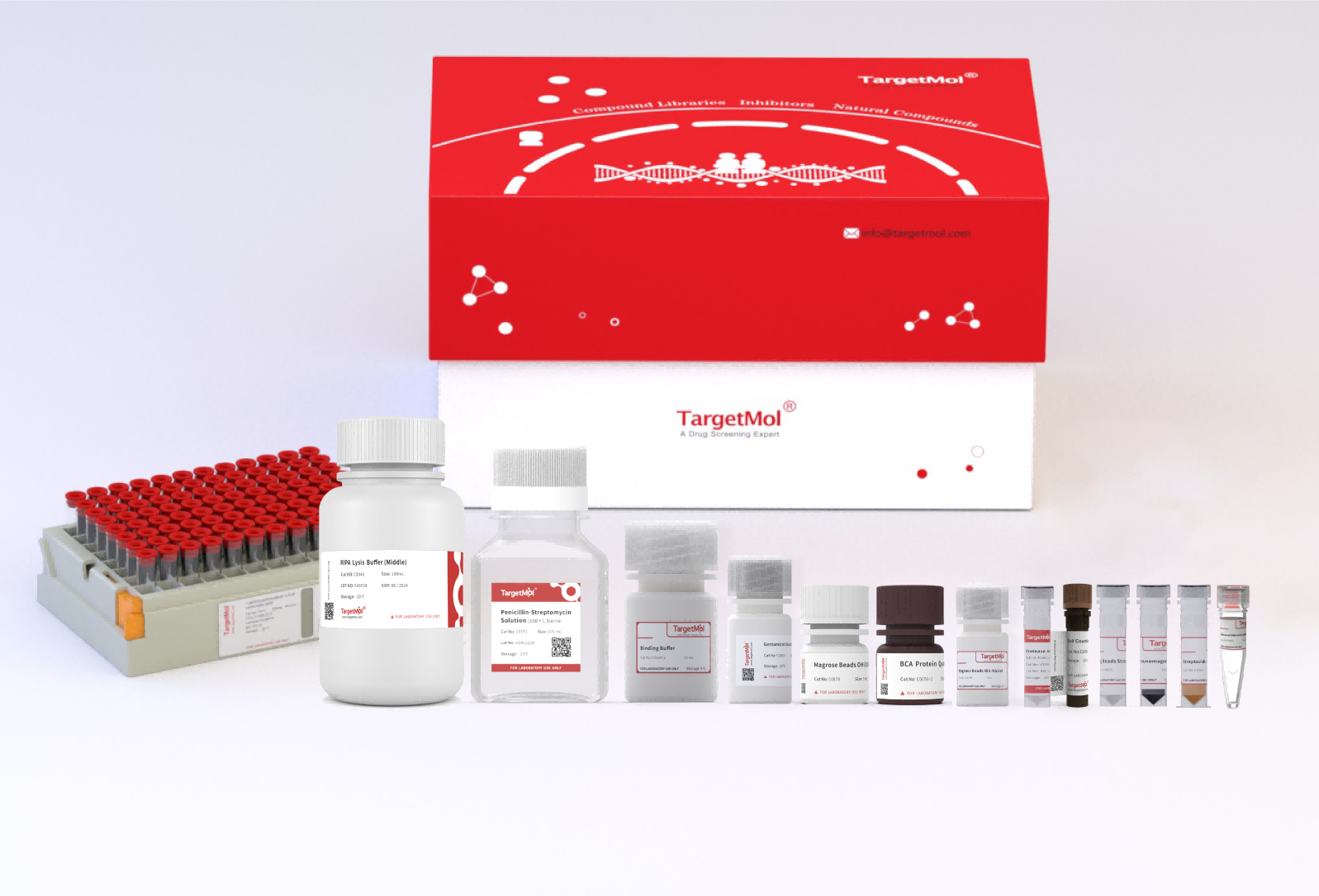
PackingTaking 50T/24S packing for example:
| Components | Packing | Storage |
|---|---|---|
| CB0098S-ES-Acidic | 25mL×1 | 4℃ |
| CB0098S-ES-Basic | 25mL×1 | 4℃ |
| CB0098S-A | 15 mL×1 | 4℃ |
| CB0098S-B | 4 mL×1 | 4℃ |
| CB0098S-C | 1 vial (powder) x 1 | Store at -20 °C. Before use, add 4 mL of distilled water and mix thoroughly. Store the remaining reagent at 4 °C for up to one week. |
| CB0098S-D | 1 vial (powder) x 1 | Store at 4 °C. Before use, add 4 mL of distilled water and mix thoroughly. Store the remaining reagent at 4 °C for up to one week. |
| CB0098S-E | 1.8 mL×1 | 4℃ |
| CB0098S-F | 30 mL×1 | 4℃ |
| CB0098S-G | 50 mL×1 | 4℃ |
| CB0098S-NAD-Standard | 1 vial (powder) x 1 | Store at −20 °C. Before use, add 1.5 mL of distilled water to prepare a 2 µmol/mL stock solution. When needed, dilute it to 1.25 nmol/mL as an NAD standard solution for use. |
| CB0098S-NADH-Standard | 1 vial (powder) x 1 | Store at −20 °C. Before use, add 1.4 mL of distilled water to prepare a 2 µmol/mL stock solution. When needed, dilute it to 1.25 nmol/mL as an NADH standard solution for use. |
Prior to the formal determination, a preliminary assay should be conducted using 2-3 samples with large expected differences.
InstructionsI. Preparation of Lab Instruments
Visible spectrophotometer, benchtop centrifuge, adjustable pipettes, 1 mL glass cuvettes, mortar and pestle, ice, and distilled water.
II. Extraction of NAD+ 和 NADH
1. Extraction of NAD⁺and NADH from serum (plasma)
(1) NAD⁺extraction:
According to the ratio of serum (plasma) volume (mL) to acidic extraction solution volume (mL) of 1:5–10
(it is recommended to take ~0.1 mL serum (plasma) and add 1 mL acidic extraction solution), incubate in a 95 °C water bath for 5 min (keep tightly closed to prevent evaporation); cool in an ice bath, then centrifuge at 10,000 g, 4 °C for 10 min; take 500 μL of the supernatant, add 500 μL alkaline extraction solution to neutralize, mix well, centrifuge at 10,000 g, 4 °C for 10 min; collect the supernatant and keep on ice for measurement.
(2) NADH extraction:
According to the ratio of serum (plasma) volume (mL) to alkaline extraction solution volume (mL) of 1:5–10
(it is recommended to take ~0.1 mL serum (plasma) and add 1 mL alkaline extraction solution), incubate in a 95 °C water bath for 5 min (keep tightly closed to prevent evaporation); cool in an ice bath, then centrifuge at 10,000 g, 4 °C for 10 min; take 500 μL of the supernatant, add 500 μL acidic extraction solution to neutralize, mix well, centrifuge at 10,000 g, 4 °C for 10 min; collect the supernatant and keep on ice for measurement.
2. Extraction of NAD⁺and NADH from tissues
(1) NAD⁺extraction:
According to the ratio of tissue weight (g) to acidic extraction solution volume (mL) of 1:5–10 (it is recommended to take ~0.1 g tissue and add 1 mL acidic extraction solution), homogenize in an ice bath, then incubate in a 95 °C water bath for 5 min (keep tightly closed); cool in an ice bath, centrifuge at 10,000 g, 4 °C for 10 min; take 500 μL of the supernatant, add 500 μL alkaline extraction solution to neutralize, mix well, centrifuge at 10,000 g, 4 °C for 10 min; collect the supernatant and keep on ice for measurement.
(2) NADH extraction:
According to the ratio of tissue weight (g) to alkaline extraction solution volume (mL) of 1:5–10 (it is recommended to take ~0.1 g tissue and add 1 mL alkaline extraction solution), homogenize in an ice bath, then incubate in a 95 °C water bath for 5 min (keep tightly closed); cool in an ice bath, centrifuge at 10,000 g, 4 °C for 10 min; take 500 μL of the supernatant, add 500 μL acidic extraction solution to neutralize, mix well, centrifuge at 10,000 g, 4 °C for 10 min; collect the supernatant and keep on ice for measurement.
3. Extraction of NAD⁺and NADH from cells or bacteria
(1) NAD⁺extraction:
Collect cells or bacteria into a centrifuge tube and discard the supernatant. According to the ratio of cell/bacterial number (10⁴ cells) to acidic extraction solution volume (mL) of 1:500–1000 (it is recommended to add 1 mL acidic extraction solution to 5 × 10⁶ cells or bacteria), perform ultrasonic disruption for 1 min (ice bath, 20% intensity or 200 W, 2 s on / 1 s off), then incubate in a 95 °C water bath for 5 min (keep tightly closed); cool in an ice bath, centrifuge at 10,000 g, 4 °C for 10 min; take 500 μL of the supernatant, add 500 μL alkaline extraction solution to neutralize, mix well, centrifuge at 10,000 g, 4 °C for 10 min; collect the supernatant and keep on ice for measurement.
(2) NADH extraction:
Collect cells or bacteria into a centrifuge tube and discard the supernatant. According to the ratio of cell/bacterial number (10⁴ cells) to alkaline extraction solution volume (mL) of 1:500–1000 (it is recommended to add 1 mL alkaline extraction solution to 5 × 10⁶ cells or bacteria), perform ultrasonic disruption for 1 min (ice bath, 20% intensity or 200 W, 2 s on / 1 s off), then incubate in a 95 °C water bath for 5 min (keep tightly closed); cool in an ice bath, centrifuge at 10,000 g, 4 °C for 10 min; take 500 μL of the supernatant, add 500 μL acidic extraction solution to neutralize, mix well, centrifuge at 10,000 g, 4 °C for 10 min; collect the supernatant and keep on ice for measurement.
III. Assay Procedure
1.Preheat the spectrophotometer for 30 minutes, set the wavelength to 412 nm, and zero the instrument using distilled water.
2.Add the following reagents
| Control Tube(μL) | Sample Tube(μL) | NAD/NADH Standard Tube(μL) | Blank Tube(μL) | |
|---|---|---|---|---|
| Sample | 50 | 50 | ||
| Standard | 50 | |||
| Distilled Water | 50 | |||
| CB0098S-A | 250 | 250 | 250 | 250 |
| CB0098S-B | 75 | 75 | 75 | 75 |
| CB0098S-C | 75 | 75 | 75 | 75 |
| CB0098S-D | 75 | 75 | 75 | 75 |
| CB0098S-E | 35 | 35 | 35 | 35 |
| CB0098S-F | 500 | Mix well and incubate at room temperature in the dark for 20 min. | ||
| CB0098S-F | 500 | 500 | 500 | |
| Mix thoroughly, let stand for 5 min, then centrifuge at 20,000 g at 25 °C for 5 min. Discard the supernatant, and add the following to the pellet: | ||||
| CB0098S-G | 1000 | 1000 | 1000 | 1000 |
| Mix thoroughly, measure absorbance at 570 nm, and record the values.
ΔA_sample = A_sample − A_control. For the NAD standard: ΔA_standard1 = A_standard1 − A_blank. For the NADH standard: ΔA_standard2 = A_standard2 − A_blank. (The blank only needs to be measured 1–2 times.) |
||||
Note:
1.Difference in procedures between control and assay tubes:
For the control tube, CB0098S-A, B, C, D, and E are added, followed immediately by CB0098S-F.
For the assay tube, after adding CB0098S-A, B, C, D, and E, incubate for 20 minutes before adding CB0098S-F.
2.Protect from light** during operation and throughout the reaction process.
3.Since each assay tube requires a corresponding control tube, this kit (50 reactions) is sufficient for testing 24 samples of NAD⁺or NADH.
4.It is recommended to use fresh samples to ensure accurate measurement of the target analyte.
IV. Calculation of NAD and NADH
a. Calculation of NAD⁺
1.Calculation of NAD⁺ content in serum (plasma):
NAD⁺ (nmol/mL) = ΔA_sample ÷ (ΔA_standard1 ÷ C) × V_extraction × 2 ÷ V_serum = 25 × ΔA_sample ÷ ΔA_standard1
2.Calculation of NAD⁺ content in tissues, bacteria, or cells
(1) Based on protein concentration:
NAD⁺ (nmol/mg prot) = ΔA_sample ÷ (ΔA_standard1 ÷ C) × V_extraction × 2 ÷ (V_extraction × C_pr) = 2.5 × ΔA_sample ÷ ΔA_standard1 ÷ C_pr
(2) Based on fresh weight of sample:
NAD⁺ (nmol/g fresh weight) = ΔA_sample ÷ (ΔA_standard1 ÷ C) × V_extraction × 2 ÷ W = 2.5 × ΔA_sample ÷ ΔA_standard1 ÷ W
(3) Based on bacterial or cell density:
NAD⁺ (nmol/10⁴ cells) = ΔA_sample ÷ (ΔA_standard1 ÷ C) × V_extraction × 2 ÷ 500 = 0.005 × ΔA_sample ÷ ΔA_standard1
b. Calculation of NADH Content
1.Calculation of NADH content in serum (plasma):
NADH (nmol/mL) = ΔA_sample ÷ (ΔA_standard2 ÷ C) × V_extraction × 2 ÷ V_serum = 25 × ΔA_sample ÷ ΔA_standard2
2.Calculation of NADH content in tissues, bacteria, or cells
(1) Based on protein concentration:
NADH (nmol/mg prot) = ΔA_sample ÷ (ΔA_standard2 ÷ C) × V_extraction × 2 ÷ (V_extraction × C_pr) = 2.5 × ΔA_sample ÷ ΔA_standard2 ÷ C_pr
(2) Based on fresh weight of sample:
NADH (nmol/g fresh weight) = ΔA_sample ÷ (ΔA_standard2 ÷ C) × V_extraction × 2 ÷ W
= 2.5 × ΔA_sample ÷ ΔA_standard2 ÷ W
Note:
C: concentration of the NAD or NADH standard solution, 1.25 nmol/mL
V_extraction: volume of extraction solution added, 1 mL
2: dilution factor of the supernatant during extraction
V_serum: volume of serum used during extraction, 0.1 mL
W: sample weight, g
C_pr: protein concentration of the sample, mg/mL
500: 5 × 10⁶ cells
Precautions1.The product is for R&D use only, not for diagnostic procedures, food, drug, household or other uses.
2.Please wear a lab coat and disposable gloves.
Instruction Manual| Size | Quantity | Unit Price | Amount | Operation |
|---|
 Feedback
 Hello! How can I help you today?
Copyright © 2015-2026 TargetMol Chemicals Inc. All Rights Reserved.
