


Shopping Cart
Remove All Your shopping cart is currently empty

Synonyms: Insulin Receptor, HHF5, CD220
| Pack Size | Price | USA Stock | Global Stock | Quantity |
|---|---|---|---|---|
| 100 µg | $445 | 7-10 days | 7-10 days |
| Description | Anti-Insulin Receptor Antibody-HRP (6W246) is a HRP-conjugated Mouse antibody targeting Insulin Receptor. Anti-Insulin Receptor Antibody-HRP (6W246) can be used in ELISA. |
| Synonyms | Insulin Receptor, HHF5, CD220 |
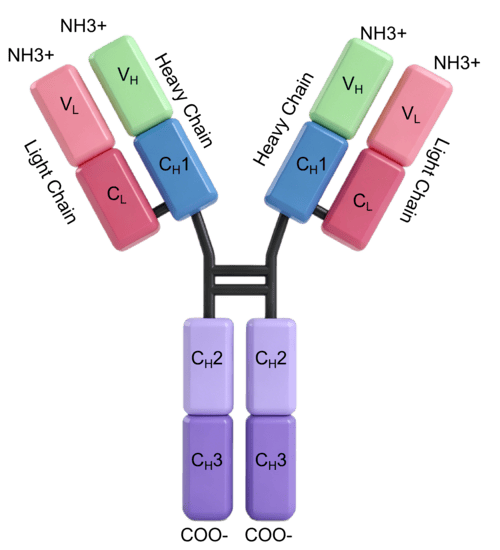
| Ig Type | Mouse IgG1 |
| Clone | 6W246 |
| Reactivity | Human |
| Specificity | Human Insulin Receptor |
| Application | |
| Recommended Dose | ELISA: 0.1-1 μg/ml |
| Antibody Type | Monoclonal |
| Host Species | Mouse |
| Construction | This antibody was produced from a hybridoma resulting from the fusion of a mouse myeloma with B cells obtained from a mouse immunized with purified, recombinant Human INSR / Insulin Receptor extracellular domain (rh INSR; TMPY-01146; NP_000199.2; Met 1-Lys 956). The IgG fraction of the cell culture supernatant was purified by Protein A affinity chromatography and conjugated with horseradish-peroxidase (HRP). |
| Purification | Protein A |
| Appearance | Liquid |
| Formulation | 0.2 μm filtered solution in PBS |
| Research Background | INSR (Insulin receptor), also known as CD220, is a transmembrane receptor that is activated by insulin. INSR belongs to the protein kinase superfamily and exists as a tetramer consisting of two alpha subunits and two beta subunits linked by disulfide bonds. The alpha and beta subunits are encoded by a single INSR gene, and the beta subunits pass through the cellular membrane. As the receptor for insulin with tyrosine-protein kinase activity, INSR associates with downstream mediators upon binding to insulin, including IRS1 (insulin receptor substrate 1) and phosphatidylinositol 3'-kinase (PI3K). IRS-1 binding and phosphorylation eventually lead to an increase in the high-affinity glucose transporter (Glut4) molecules on the outer membrane of insulin-responsive tissues. INSR isoform long and isoform short are expressed in the peripheral nerve, kidney, liver, striated muscle, fibroblasts and skin, and is found as a hybrid receptor with IGF1R which also binds IGF1 in muscle, heart, kidney, adipose tissue, skeletal muscle, hepatoma, fibroblasts, spleen, and placenta. Defects in Insulin Receptor/INSR are the cause of Rabson-Mendenhall syndrome (Mendenhall syndrome), insulin resistance (Ins resistance), leprechaunism (Donohue syndrome), and familial hyperinsulinemic hypoglycemia 5 (HHF5). It may also be associated with noninsulin-dependent diabetes mellitus (NIDDM). |
| Conjucates | HRP |
| Others Formats | Unconjugated |
| Antibody Types Available | 2 |
| Immunogen | Recombinant Protein: Human INSR protein (TMPY-01146) |
| Antigen Species | Human |
| Biology Area | Receptor Tyrosine Kinases (RTKs) |
| Stability & Storage | Store at 2°C-8°C for 1 month. Store at -20°C or -80°C for 12 months. Avoid repeated freeze-thaw cycles. Preservative-Free. Keep away from direct sunlight. |
| Transport | Shipping with blue ice. |
| Size | Quantity | Unit Price | Amount | Operation |
|---|
 Feedback
 Hello! How can I help you today?
Copyright © 2015-2026 TargetMol Chemicals Inc. All Rights Reserved.
