


Shopping Cart
Remove All Your shopping cart is currently empty

Synonyms:
| Pack Size | Price | USA Stock | Global Stock | Quantity |
|---|---|---|---|---|
| 20 µg | $69 | 7-10 days | 7-10 days | |
| 100 µg | $175 | 7-10 days | 7-10 days |
| Description | Anti-IgG1 F(ab)2 Antibody (5N962) is a Mouse antibody targeting IgG1 F(ab)2. Anti-IgG1 F(ab)2 Antibody (5N962) can be used in ELISA. |
| Ig Type | Mouse IgG1 |
| Clone | 5N962 |
| Reactivity | Human |
| Specificity | Recognize the Human IgG1 full-length antibody and F(ab)2 in ELISA, don't recognize the Human IgG2, Human IgG4, and Human IgG Fc region. |
| Verified Activity | Recognize the Human IgG1 full-length antibody and F(ab)2 in ELISA, don't recognize the Human IgG2, Human IgG4, and Human IgG Fc region. -Capture Antibody: Anti-Human IgG1 F(ab)2 Antibody, Mouse MAb, 2 μg/mL. -Sample: Human IgG1,2,4 full-length antibody, F(ab)2, Fc, 0.1 μg/mL. -Detection Antibody: Rabbit anti-Human Kappa Light Chain Secondary Antibody (HRP), Rabbit MAb, 0.5 μg/mL. |
| Application | |
| Recommended Dose | ELISA: 0.5-2 μg/mL |
| Antibody Type | Monoclonal |
| Host Species | Mouse |
| Construction | This antibody was produced from a hybridoma resulting from the fusion of a mouse myeloma with B cells obtained from a mouse immunized with purified. The IgG fraction of the cell culture supernatant was purified by Protein A affinity chromatography. |
| Purification | Protein A |
| Appearance | Liquid |
| Formulation | 0.2 μm filtered solution in PBS |
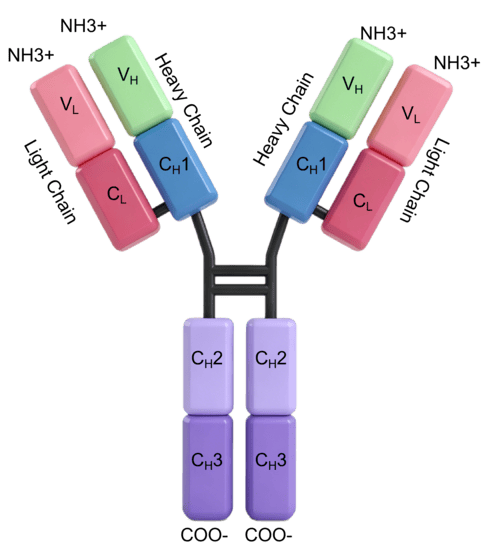
| Research Background | As a monomeric immunoglobulin that is predominately involved in the secondary antibody response and the only isotype that can pass through the human placenta, Immunoglobulin G (IgG) is synthesized and secreted by plasma B cells, and constitutes 75% of serum immunoglobulins in humans. IgG antibodies protect the body against the pathogens by agglutination and immobilization, complement activation, toxin neutralization, as well as antibody-dependent cell-mediated cytotoxicity (ADCC). IgG tetramer contains two heavy chains (5 kDa ) and two light chains (25 kDa) linked by disulfide bonds, that is the two identical halves form the Y-like shape. IgG is digested by pepsin proteolysis into Fab fragment (antigen-binding fragment) and Fc fragment ("crystallizable" fragment). IgG1 is most abundant in serum among the four IgG subclasses (IgG1, 2, 3 and 4) and binds to Fc receptors (FcγR ) on phagocytic cells with high affinity. Fc fragment is demonstrated to mediate phagocytosis, trigger inflammation, and target Ig to particular tissues. Protein G or Protein A on the surface of certain Staphylococcal and Streptococcal strains specifically binds with the Fc region of IgGs, and has numerous applications in biotechnology as a reagent for affinity purification. Recombinant IgG Fc Region is suggested to represent a potential anti-inflammatory drug for treatment of human autoimmune diseases. |
| Conjucates | Unconjugated |
| Immunogen | 0 |
| Antigen Species | Human |
| Stability & Storage | Store at 2°C-8°C for 1 month. Store at -20°C or -80°C for 12 months. Avoid repeated freeze-thaw cycles. Preservative-Free. |
| Transport | Shipping with blue ice. |
| Size | Quantity | Unit Price | Amount | Operation |
|---|
 Feedback
 Hello! How can I help you today?
Copyright © 2015-2026 TargetMol Chemicals Inc. All Rights Reserved.
