


Shopping Cart
Remove All Your shopping cart is currently empty

Synonyms: Tage4, PVSFLJ25946, PVS, PVR, nectin-like 5, NECL-5, NECL5, HVED, FLJ25946, CD155
Anti-CD155/PVR Polyclonal Antibody
| Pack Size | Price | USA Stock | Global Stock | Quantity |
|---|---|---|---|---|
| 50 µL | $222 | 7-10 days | 7-10 days | |
| 100 µL | $374 | 7-10 days | 7-10 days | |
| 200 µL | $528 | 7-10 days | 7-10 days |
| Description | Anti-CD155/PVR Polyclonal Antibody is a Rabbit antibody targeting CD155/PVR. Anti-CD155/PVR Polyclonal Antibody can be used in IF, IHC-Fr, IHC-P. |
| Synonyms | Tage4, PVSFLJ25946, PVS, PVR, nectin-like 5, NECL-5, NECL5, HVED, FLJ25946, CD155 |
| Ig Type | IgG |
| Reactivity | Mouse (predicted:Human,Rat,Rabbit) |
| Verified Activity | Paraformaldehyde-fixed, paraffin embedded (Mouse brain); Antigen retrieval by boiling in sodium citrate buffer (pH6.0) for 15 min; Block endogenous peroxidase by 3% hydrogen peroxide for 20 min; Blocking buffer (normal goat serum) at 37°C for 30 min; Antibody incubation with (CD155) Polyclonal Antibody, Unconjugated (TMAB-00336) at 1:400 overnight at 4°C, followed by a conjugated secondary antibody for 20 min and DAB staining. 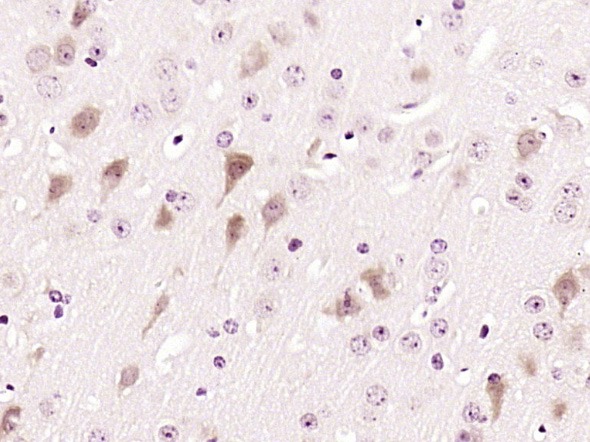 |
| Application | |
| Recommended Dose | IHC-P: 1:100-500; IHC-Fr: 1:100-500; IF: 1:100-500 |
| Antibody Type | Polyclonal |
| Host Species | Rabbit |
| Subcellular Localization | Isoform Alpha: Cell membrane; Single-pass type I membrane protein. Isoform Delta: Cell membrane; Single-pass type I membrane protein. Isoform Beta: Secreted. Isoform Gamma: Secreted. |
| Construction | Polyclonal Antibody |
| Purification | Protein A purified |
| Appearance | Liquid |
| Formulation | 0.01M TBS (pH7.4) with 1% BSA, 0.02% Proclin300 and 50% Glycerol. |
| Concentration | 1 mg/mL |
| Research Background | The protein encoded by this gene is a transmembrane glycoprotein belonging to the immunoglobulin superfamily. The external domain mediates cell attachment to the extracellular matrix molecule vitronectin, while its intracellular domain interacts with the dynein light chain Tctex-1/DYNLT1. The gene is specific to the primate lineage, and serves as a cellular receptor for poliovirus in the first step of poliovirus replication. Multiple transcript variants encoding different isoforms have been found for this gene. [provided by RefSeq]. |
| Immunogen | KLH conjugated synthetic peptide: human CD155 |
| Antigen Species | Human |
| Gene Name | PVR |
| Gene ID | |
| Protein Name | Poliovirus receptor |
| Uniprot ID | |
| Biology Area | Host Virus Interaction |
| Function | Mediates NK cell adhesion and triggers NK cell effector functions. Binds two different NK cell receptors: CD96 and CD226. These interactions accumulates at the cell-cell contact site, leading to the formation of a mature immunological synapse between NK cell and target cell. This may trigger adhesion and secretion of lytic granules and IFN-gamma and activate cytoxicity of activated NK cells. May also promote NK cell-target cell modular exchange, and PVR transfer to the NK cell. This transfer is more important in some tumor cells expressing a lot of PVR, and may trigger fratricide NK cell activation, providing tumors with a mechanism of immunoevasion. Plays a role in mediating tumor cell invasion and migration. Serves as a receptor for poliovirus attachment to target cells. May play a role in axonal transport of poliovirus, by targeting virion-PVR-containing endocytic vesicles to the microtubular network through interaction with DYNLT1. This interaction would drive the virus-containing vesicle to the axonal retrograde transport. |
| Molecular Weight | Theoretical: 47 kDa. |
| Stability & Storage | Store at -20°C or -80°C for 12 months. Avoid repeated freeze-thaw cycles. |
| Transport | Shipping with blue ice. |
| Size | Quantity | Unit Price | Amount | Operation |
|---|
 Feedback
 Hello! How can I help you today?
Copyright © 2015-2026 TargetMol Chemicals Inc. All Rights Reserved.
