


Shopping Cart
Remove All Your shopping cart is currently empty

Synonyms:
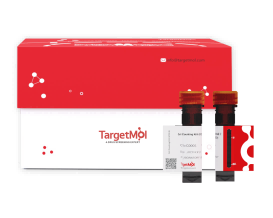
| Pack Size | Price | USA Stock | Global Stock | Quantity |
|---|---|---|---|---|
| 100 T | $242 | - | In Stock | |
| 100 T * 5 | $724 | - | In Stock |
 Related Products Product Information
E.G., Taking 100 T packing for example:
| Catalog No. | Product Name | Packing |
|---|---|---|
| C0179-1 | DHE(1000×) | 100 µL |
| C0179-2 | Rosup(200×) | 500 µL |
Features1.High sensitivity;
2.Well-established control system;
3.Suitable for various sample types;
4.Compatible with multiple detection instruments;
5.Good experimental reproducibility.
ApplicationDetection of intracellular oxidative stress;
Research on redox signaling pathways;
Oxidative stress-related drug development;
Environmental toxicology assessment.
InstructionsⅠ. Positive Control Setup
It is recommended to use the superoxide anion positive control Rosup (200×) provided in the kit, diluted at 1:200. After adding it to the cells, incubate at 37 ℃ in the dark for 0.5-2 hours. The optimal incubation time may vary depending on the cell type. After the positive control treatment is completed, add the DHE staining solution according to the subsequent detection procedure for staining and analysis.
Ⅱ. Preparation of DHE Working Solution
Dilute the DHE stock solution with an appropriate diluent (serum-free medium or PBS) to obtain a 1× working solution.
Note: DHE is easily oxidized by oxygen in the air. Minimize its exposure to air during handling. The DHE working solution should be prepared freshly before use to avoid loss of activity caused by prolonged exposure to air.
Ⅲ. Fluorescence Microscopy Detection
1.Seed the cells in a 96-well plate, culture dish, or on coverslips. Once the cells have stabilized, treat them according to the experimental protocol.
2.(Optional) Adherent cells: Remove the culture medium and wash once with PBS.
Suspension cells: Centrifuge at 250-1000 x g for 5 min, discard the supernatant, and wash once with PBS.
Note: If using medium containing phenol red or serum, it is recommended to thoroughly remove the medium to minimize background interference.
3.Add an adequate volume of the diluted DHE working solution to fully cover the cells. For a 96-well plate, add ≥100 µL per well. Incubate at 37 ℃ for 20 min (the incubation time can be adjusted between 10-30 min as needed).
4.After incubation, the sample can be observed directly under a fluorescence microscope. If background fluorescence is high, wash with PBS 1-3 times before imaging.
DHE fluorescence parameters: Ex/Em = 535/610 nm.
IV. Flow Cytometry Detection
1.Seed cells in 6-well plates or culture dishes, and treat according to the experimental design once cells are stabilized.
2.For adherent cells, digest with trypsin and wash once with PBS. For suspension cells, centrifuge at 250-1000 x g for 5 minutes, discard the supernatant, and wash once with PBS. It is recommended to prepare approximately 1 x 10^6 cells per group.
3.Resuspend the cells in 1 mL of DHE staining solution to form a single-cell suspension. Incubate in a 37 ℃ incubator for 20 minutes (adjustable between 20-30 minutes as needed). During incubation, gently invert the tube every 3-5 minutes to facilitate probe entry into the cells. After incubation, wash the cells 3 times with an appropriate diluent (serum-free medium, PBS, or HBSS) to remove excess probe that has not entered the cells.
4.Cells can be analyzed directly by flow cytometry, or centrifuged and resuspended in 0.5 mL of detection buffer before analysis.
DHE fluorescence parameters: Ex/Em = 535/610 nm.
Note: Flow cytometry is highly sensitive. The dye concentration can be reduced as appropriate, and the DHE concentration or dilution factor should be adjusted according to the cell type.
Ⅴ. Fluorescence Microplate Reader Detection
1.Seed cells into black, clear-bottom 96-well plates at 100-10,000 cells per well, with a recommended range of 2,000-5,000 cells per well. Treat the cells according to your experimental plan.
2.(Optional) For adherent cells: remove the culture medium and wash once with PBS.
3.For suspension cells: centrifuge at 250-1,000 x g for 5 min, discard the supernatant, and wash once with PBS.
Add 100 µL of the diluted DHE working solution, ensuring the solution completely covers the cells. Incubate in a 37 ℃incubator for 20 min (can be adjusted between 10-30 min depending on the experiment).
4.After incubation, detect fluorescence directly using a microplate reader. If background fluorescence is high, optionally wash 1-3 times with PBS before measurement.
DHE fluorescence parameters: Ex/Em = 535/610 nm. Evaluate reactive oxygen species (ROS) levels by comparing RFU (relative fluorescence units) between control and treated groups.
StorageStore at -20 ℃, protected from light, and use within one year.
This product is easily oxidized, so avoid exposure to air as much as possible.
Precautions1.The effect of Rosup may vary greatly between different cell types. It may work weakly or even not at all in certain cells. You can adjust the concentration of the positive control based on the results of preliminary experiments.
2.Differences in sample types and experimental conditions can affect staining efficiency. It is recommended to optimize the probe working solution concentration and staining time through preliminary experiments.
3.If strong fluorescence is observed in the unstimulated negative-control cells, you may reduce the probe concentration accordingly.
4.The cell density during resuspension before detection should be determined by the fluorescence intensity. If the fluorescence is strong, reduce the cell density by decreasing the volume of serum-free medium used for resuspension, and vice versa. At the same time, ensure that all treatment groups maintain consistent cell density.
5.Fluorescence is easily quenched by light, so avoid light exposure during the operation.
6.The product is for R&D use only, not for diagnostic procedures, food, drug, household or other uses.
7.Please wear a lab coat and disposable gloves.
Instruction Manual| Size | Quantity | Unit Price | Amount | Operation |
|---|
 Feedback
 Hello! How can I help you today?
Copyright © 2015-2026 TargetMol Chemicals Inc. All Rights Reserved.
