


Shopping Cart
Remove All Your shopping cart is currently empty

Synonyms:
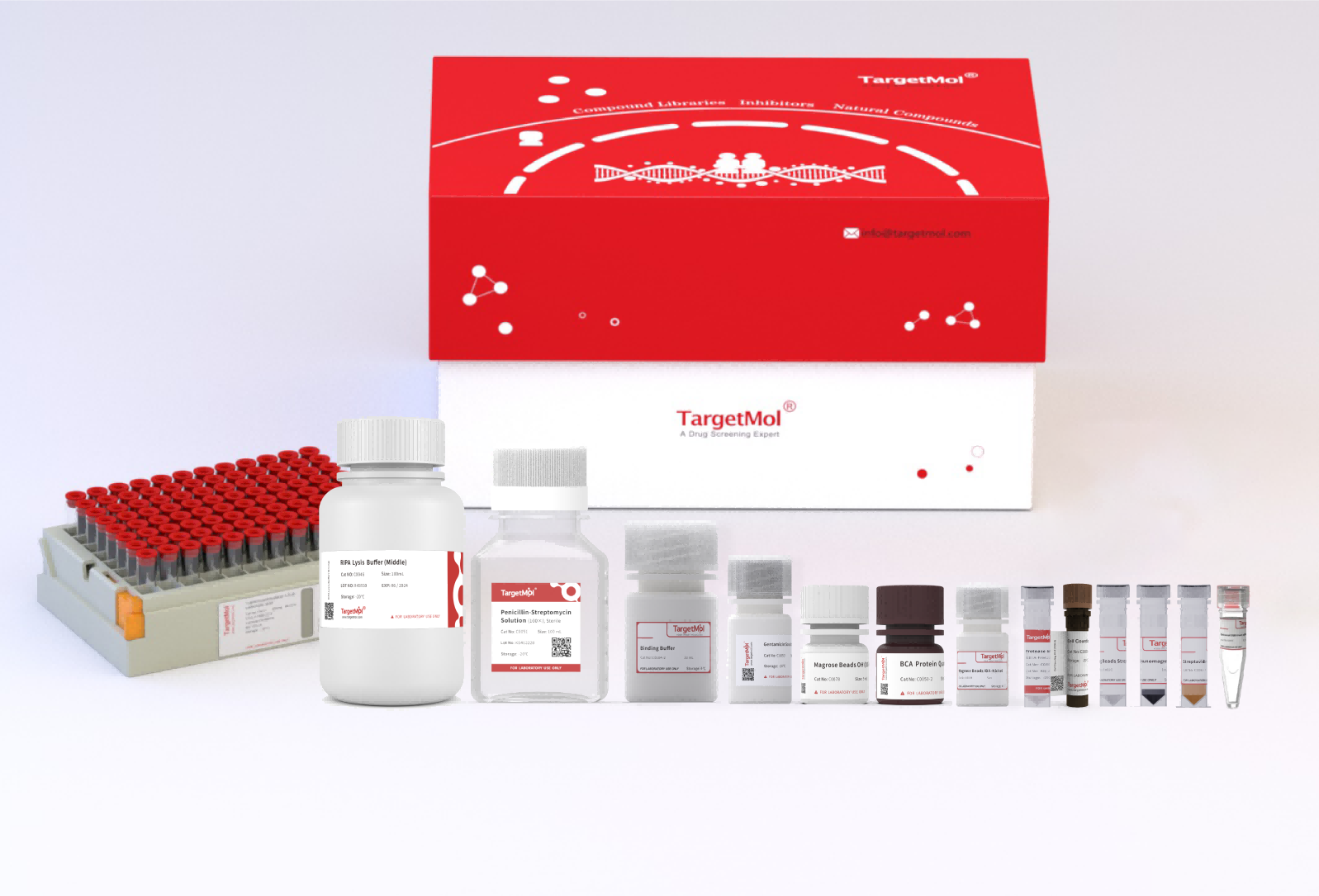
| Pack Size | Price | USA Stock | Global Stock | Quantity |
|---|---|---|---|---|
| 100 T | $216 | 7-10 days | 7-10 days |
 Detection Principle
The Protein Carbonyl Content Assay Kit provides a simple and direct method for determining carbonyl content in various biological samples. Carbonyl content is measured through the derivatization of protein carbonyl groups with 2,4-dinitrophenylhydrazine (DNPH) to form stable dinitrophenylhydrazone (DNP) adducts, which can be detected spectrophotometrically at 370 nm. The absorbance is proportional to the amount of carbonyl groups present.
PackingTaking 100T/48S packing for example:
| Components | Packing | Storage |
|---|---|---|
| CB0195M-ES | 100 mL x 1 | 4 °C |
| CB0195M-A | 1 vial (powder) x 5 | 4 °C, protected from light. * Before use, dissolve each vial with 1 mL of water according to the number of samples. Each vial is sufficient for 10 samples. |
| CB0195M-B | 6 mL x 1 | 4 °C, protected from light |
| CB0195M-C | 6 mL x 1 | 4 °C |
| CB0195M-D | 15 mL x 1 | 4 °C |
| CB0195M-E | Self-prepared | Mix ethyl acetate and absolute ethanol in equal volumes according to the sample volume. |
| CB0195M-F | 60 mL x 1 | 4 °C |
Note: Before the formal assay, perform a pilot test using 2–3 samples with relatively large expected differences.
InstructionsI. Preparation of Lab Instruments
UV spectrophotometer/plate reader, benchtop centrifuge, adjustable micropipettes, micro quartz cuvettes/96-well plates (UV plates), absolute ethanol, ethyl acetate.
II. Reagent pre-preparation
1.Preparation of tissue samples:
Homogenize the tissue on ice according to the ratio of tissue weight (g) : CB0195M-ES volume (mL) = 1 : 5–10 (it is recommended to weigh about 0.1 g of tissue and add 1 mL CB0195M-ES). Centrifuge at 4000 g, 4 °C for 10 min and collect the supernatant. Add 0.1 mL CB0195M-A, incubate at room temperature for 10 min, then centrifuge at 10000 g, 4 °C for 10 min. Collect the supernatant for assay.
2.Preparation of bacterial or cell samples:
Prepare according to the ratio of cell number (10⁴ cells) : CB0195M-ES volume (mL) = 500–1000 : 1 (it is recommended to add 1 mL CB0195M-ES to 5 × 10⁶ cells).
Disrupt the cells by ultrasonic treatment in an ice bath (power 300 W, 3 s sonication, 7 s interval, total time 3 min). Then centrifuge at 10000 g, 4 °C for 10 min, and collect the supernatant. Keep on ice for testing.
3.Serum and other liquid samples:
Measure directly.
III. Assay Procedure
| Control Tube (μL) | Sample Tube (μL) | |
|---|---|---|
| Sample | 60 | 60 |
| CB0195M-B | 120 | |
| CB0195M-C | 120 | |
| Mix thoroughly and incubate at 37 °C for 1 hour in the dark. | ||
| CB0195M-D | 150 | 150 |
| Stand for 5 min, then centrifuge at 4 °C, 12,000 rpm for 15 min. Discard the supernatant and retain the pellet. | ||
| CB0195M-E | 300 | 300 |
| Vortex to mix thoroughly, then centrifuge at 4 °C, 12,000 rpm for 10 min. Discard the supernatant and retain the pellet. | ||
| CB0195M-E | 300 | 300 |
| Vortex to mix thoroughly, then centrifuge at 4 °C, 12,000 rpm for 10 min. Discard the supernatant and retain the pellet. | ||
| CB0195M-E | 300 | 300 |
| Vortex to mix thoroughly, then centrifuge at 4 °C, 12,000 rpm for 10 min. Discard the supernatant and retain the pellet. | ||
| CB0195M-F | 300 | 300 |
| Vortex to mix thoroughly, incubate at 37 °C for 15 min, and after the precipitate is completely dissolved, centrifuge at 12,000 rpm for 15 min at 4 °C. Transfer 200 μL of the supernatant into a micro quartz cuvette or a 96-well plate (UV plate). Zero the instrument with CB0195M-F, and measure the absorbance at A370. | ||
Note: The sample tube only needs to be tested once.
IV. Calculation
a. The calculation formula for measurement using a micro quartz cuvette
1.Calculated based on sample protein concentration
Protein carbonyl content (μmol/mg prot) = [ΔA370 × V1 ÷ (ε × d)] ÷ (V2 × C_pr) = 0.227 × ΔA370 ÷ C_pr
2.Calculated based on sample weight
Protein carbonyl content (μmol/g) = [ΔA370 × V1 ÷ (ε × d)] ÷ (W × V2 ÷ V3) = 0.227 × ΔA370 ÷ W
3.Calculated based on cell number
Protein carbonyl content (μmol/10⁴ cells) = [ΔA370 × V1 ÷ (ε × d)] ÷ (Cell number × V2 ÷ V3) = 0.227 × ΔA370 ÷ Cell number
4.Calculated based on liquid volume
Protein carbonyl content (μmol/mL) = [ΔA370 × V1 ÷ (ε × d)] ÷ V2 = 0.227 × ΔA370
Note:
V1: Total volume of the reaction system, 0.3 mL;
ε: Millimolar extinction coefficient of carbonyl groups, 22 L/mmol/cm;
d: Optical path length of the cuvette, 1 cm;
V2: Volume of sample added, 0.06 mL;
V3: Total volume of extraction solution added, 1 mL;
C_pr: Protein concentration of the sample, mg/mL;
W: Sample weight, g.
b. The calculation formula for measurement using a 96-well plate
1.Calculated based on sample protein concentration
Protein carbonyl content (μmol/mg prot) = [ΔA370 × V1 ÷ (ε × d)] ÷ (V2 × C_pr) = 0.454 × ΔA370 ÷ C_pr
2.Calculated based on sample weight
Protein carbonyl content (μmol/g) = [ΔA370 × V1 ÷ (ε × d)] ÷ (W × V2 ÷ V3)= 0.454 × ΔA370 ÷ W
3.Calculated based on cell number
Protein carbonyl content (μmol/10⁴ cells) = [ΔA370 × V1 ÷ (ε × d)] ÷ (Cell number × V2 ÷ V3) = 0.454 × ΔA370 ÷ Cell number
4.Calculated based on liquid volume
Protein carbonyl content (μmol/mL) = [ΔA370 × V1 ÷ (ε × d)] ÷ V2 = 0.454 × ΔA370
Note:
V1: Total volume of the reaction system, 0.3 mL;
ε: Millimolar extinction coefficient of carbonyl groups, 22 L/mmol/cm;
d: Optical path length of the 96-well plate, 0.5 cm;
V2: Volume of sample added, 0.06 mL;
V3: Total volume of extraction solution added, 1 mL;
C_pr: Protein concentration of the sample, mg/mL;
W: Sample weight, g.
Precautions1.CB0195M-A should be freshly prepared according to the number of samples to be tested before use. After preparation, store at 4 °C. If the solution turns black, it should not be used.
2.CB0195M-B is light-sensitive and easily decomposed upon exposure to light; therefore, the reaction must be performed strictly protected from light.
3.The product is for R&D use only, not for diagnostic procedures, food, drug, household or other uses.
4.Please wear a lab coat and disposable gloves.
| Size | Quantity | Unit Price | Amount | Operation |
|---|
 Feedback
 Hello! How can I help you today?
Copyright © 2015-2026 TargetMol Chemicals Inc. All Rights Reserved.
