


Shopping Cart
Remove All Your shopping cart is currently empty

Synonyms: S100a, S100 calcium binding protein A1, S100, AI266795
Anti-S100A1 Antibody
(2K17)
| Pack Size | Price | USA Stock | Global Stock | Quantity |
|---|---|---|---|---|
| 50 µL | $296 | 7-10 days | 7-10 days | |
| 100 µL | $496 | 7-10 days | 7-10 days |
| Description | Anti-S100A1 Antibody (2K17) is a Rabbit antibody targeting S100A1. Anti-S100A1 Antibody (2K17) can be used in FCM,IHC,IP,WB. |
| Synonyms | S100a, S100 calcium binding protein A1, S100, AI266795 |
| Ig Type | IgG |
| Clone | 2K17 |
| Reactivity | Human,Mouse |
| Verified Activity | 1. Western blot analysis of S100 on mouse heart cells lysates using anti-S100 antibody at 1/500 dilution. 2. Immunohistochemical analysis of paraffin-embedded human tonsil tissue using anti- S100 antibody. Counter stained with hematoxylin. 3. Immunohistochemical analysis of paraffin-embedded human kidney tissue using anti- S100 antibody. Counter stained with hematoxylin. 4. Immunohistochemical analysis of paraffin-embedded mouse brain tissue using anti- S100 antibody. Counter stained with hematoxylin. 5. Immunohistochemical analysis of paraffin-embedded mouse spinal cord tissue using anti-S100 antibody. Counter stained with hematoxylin. 6. Flow cytometric analysis of SH-SY5Y cells with S100 antibody at 1/50 dilution (red) compared with an unlabelled control (cells without incubation with primary antibody; black). Alexa Fluor 488-conjugated goat anti rabbit IgG was used as the secondary antibody. 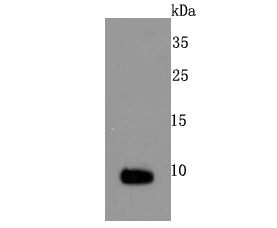 , ,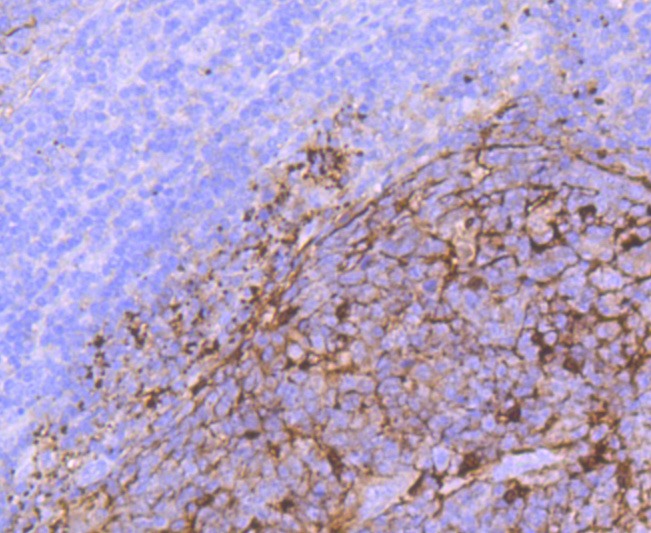 , ,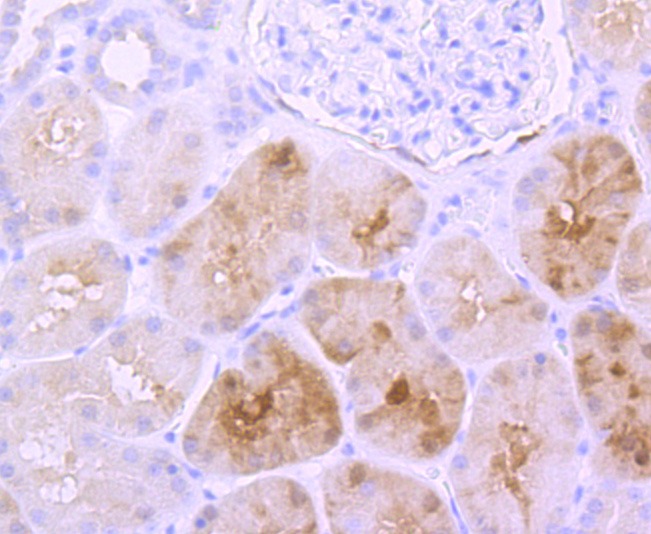 , ,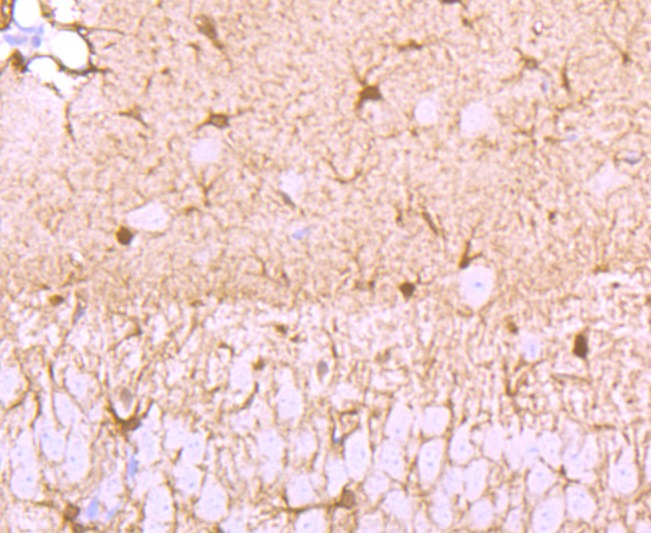 , ,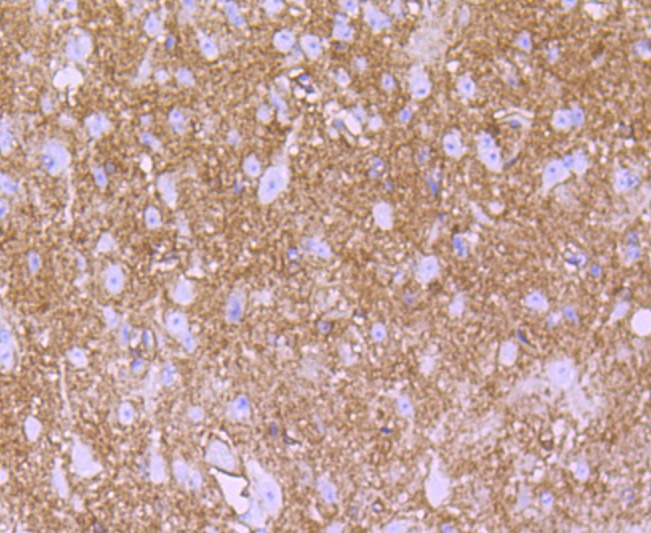 , ,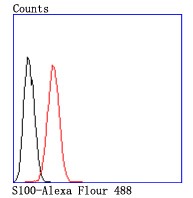 |
| Application | |
| Recommended Dose | WB: 1:500-2000; IHC: 1:50-200; IP: 1:10-50; FCM: 1:50-100 |
| Antibody Type | Monoclonal |
| Host Species | Rabbit |
| Construction | Recombinant Antibody |
| Purification | ProA affinity purified |
| Appearance | Liquid |
| Formulation | 1*TBS (pH7.4), 1%BSA, 40%Glycerol. Preservative: 0.05% Sodium Azide. |
| Research Background | The family of EF-hand type Ca2+-binding proteins includes calbindin (previously designated vitamin D-dependent Ca2+-binding protein), S-100 α and β, calgranulins A (also designated MRP8), B (also designated MRP14) and C (S-100 like proteins), and the parvalbumin family members, including parvalbumin α and parvalbumin β (also designated oncomodulin). The S-100 protein is involved in the regulation of cellular processes such as cell cycle progression and differentiation. Research also indicates that the S-100 protein may function in the activation of Ca2+ induced Ca2+ release, inhibition of microtubule assembly and inhibition of protein kinase C mediated phosphorylation. Two S-100 subunits, sharing 60% sequence identity, have been described as S-100 α chain and S-100 β chain. Three S-100 dimeric forms have been characterized, differing in their subunit composition of either two α chains, two β chains or one α and one β chain. S-100 localizes to the cytoplasm and nuclei of astrocytes, Schwann's cells, ependymomas and astrogliomas. S-100 is also detected in almost all benign naevi, malignant melanocytic tumours and in Langerhans cells in the skin. Calbindin, S-100 proteins and parvalbumin proteins are each expressed in neural tissues. In addition, S-100 α and β are present in a variety of other tissues, and calbindin is present in intestine and kidney. |
| Conjucates | Unconjugated |
| Immunogen | Recombinant Protein |
| Uniprot ID |
| Molecular Weight | Theoretical: 11 kDa. |
| Stability & Storage | Store at -20°C or -80°C for 12 months. Avoid repeated freeze-thaw cycles. |
| Transport | Shipping with blue ice. |
| Size | Quantity | Unit Price | Amount | Operation |
|---|
 Feedback
 Hello! How can I help you today?
Copyright © 2015-2026 TargetMol Chemicals Inc. All Rights Reserved.
