


Shopping Cart
Remove All Your shopping cart is currently empty

Synonyms: somatomedin C, MGF, insulin-like growth factor 1, IGF‑I, IGF-I, IGFI, IGF1A, IGF-1
| Pack Size | Price | USA Stock | Global Stock | Quantity |
|---|---|---|---|---|
| 50 µL | $209 | 7-10 days | 7-10 days | |
| 100 µL | $349 | 7-10 days | 7-10 days |
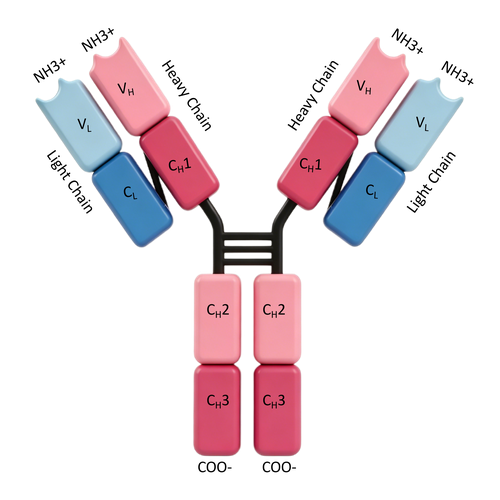
| Description | Anti-IGF1/IGF-I Antibody (9D219) is an antibody targeting IGF1/IGF-I. Anti-IGF1/IGF-I Antibody (9D219) can be used in ELISA,IHC. |
| Synonyms | somatomedin C, MGF, insulin-like growth factor 1, IGF‑I, IGF-I, IGFI, IGF1A, IGF-1 |
| Ig Type | hIgG2 |
| Clone | 9D219 |
| Reactivity | Human |
| Verified Activity | 1. IHC image of TMAH-00598 diluted at 1:100 and staining in paraffin-embedded human liver tissue performed on a Leica BondTM system. After dewaxing and hydration, antigen retrieval was mediated by high pressure in a citrate buffer (pH 6.0). Section was blocked with 10% normal goat serum 30min at RT. Then primary antibody (1% BSA) was incubated at 4°C overnight. The primary is detected by a Goat anti-Human IgG labeled by HRP and visualized using 0.05% DAB. 2. IHC image of TMAH-00598 diluted at 1:100 and staining in paraffin-embedded human pancreatic cancer performed on a Leica BondTM system. After dewaxing and hydration, antigen retrieval was mediated by high pressure in a citrate buffer (pH 6.0). Section was blocked with 10% normal goat serum 30min at RT. Then primary antibody (1% BSA) was incubated at 4°C overnight. The primary is detected by a Goat anti-Human IgG labeled by HRP and visualized using 0.05% DAB. |
| Application | |
| Recommended Dose | IHC:1:50-1:200. |
| Antibody Type | Monoclonal |
| Subcellular Localization | Secreted. |
| Construction | Recombinant Antibody |
| Purification | Affinity-chromatography |
| Appearance | Liquid |
| Formulation | Preservative: 0.03% Proclin 300. Constituents: 50% Glycerol, 0.01M PBS, PH 7.4. |
| Research Background | The insulin-like growth factors, isolated from plasma, are structurally and functionally related to insulin but have a much higher growth-promoting activity. May be a physiological regulator of [1-14C]-2-deoxy-D-glucose (2DG) transport and glycogen synthesis in osteoblasts. Stimulates glucose transport in bone-derived osteoblastic (PyMS) cells and is effective at much lower concentrations than insulin, not only regarding glycogen and DNA synthesis but also with regard to enhancing glucose uptake. May play a role in synapse maturation. Ca(2+)-dependent exocytosis of IGF1 is required for sensory perception of smell in the olfactory bulb. Acts as a ligand for IGF1R. Binds to the alpha subunit of IGF1R, leading to the activation of the intrinsic tyrosine kinase activity which autophosphorylates tyrosine residues in the beta subunit thus initiatiating a cascade of down-stream signaling events leading to activation of the PI3K-AKT/PKB and the Ras-MAPK pathways. Binds to integrins ITGAV:ITGB3 and ITGA6:ITGB4. Its binding to integrins and subsequent ternary complex formation with integrins and IGFR1 are essential for IGF1 signaling. Induces the phosphorylation and activation of IGFR1, MAPK3/ERK1, MAPK1/ERK2 and AKT1. |
| Conjucates | Unconjugated |
| Immunogen | Recombinant Protein: Human IGF1 Protein |
| Antigen Species | Human |
| Gene Name | IGF1 |
| Gene ID | |
| Uniprot ID | |
| Biology Area | Cancer, Developmental biology, Signal transduction |
| Stability & Storage | Store at -20°C or -80°C for 12 months. Avoid repeated freeze-thaw cycles. |
| Transport | Shipping with blue ice. |
| Size | Quantity | Unit Price | Amount | Operation |
|---|
 Feedback
 Hello! How can I help you today?
Copyright © 2015-2026 TargetMol Chemicals Inc. All Rights Reserved.
