


Shopping Cart
Remove All Your shopping cart is currently empty
Synonyms: N-formylpeptide receptor-like 2, Lipoxin A4 receptor-like protein, Fpr-rs2, Fpr2, Formylpeptide receptor-related sequence 2, Formyl peptide receptor 2

| Pack Size | Price | USA Stock | Global Stock | Quantity |
|---|---|---|---|---|
| 5 µg | $129 | 20 days | 20 days | |
| 10 µg | $216 | 20 days | 20 days | |
| 20 µg | $360 | - | In Stock | |
| 50 µg | $543 | 20 days | 20 days | |
| 100 µg | $745 | 20 days | 20 days | |
| 200 µg | $1,070 | 20 days | 20 days | |
| 500 µg | $1,730 | 20 days | 20 days | |
| 1 mg | $2,530 | 20 days | 20 days |
| Bioactivity | Activity has not been tested. It is theoretically active, but we cannot guarantee it. If you require protein activity, we recommend choosing the eukaryotic expression version first. |
| Description | High affinity receptor for N-formyl-methionyl peptides (FMLP), which are powerful neutrophil chemotactic factors. Stimulates chemotaxis in immune cells to site of infection or tissue damage upon recognition of several ligands, such as FMLP, or ligand involved in cell damage, disease or inflammation. Receptor for the chemokine-like protein FAM19A5, mediating FAM19A5-stimulated macrophage chemotaxis and the inhibitory effect on TNFSF11/RANKL-induced osteoclast differentiation. FPR2 Protein, Mouse, Recombinant (GST & His & Myc) is expressed in E. coli expression system with N-10xHis-GST and C-Myc tag. The predicted molecular weight is 33.3 kDa and the accession number is O88536. |
| Species | Mouse |
| Expression System | E. coli |
| Tag | N-10xHis-GST, C-Myc |
| Accession Number | O88536 |
| Amino Acid | MESNYSIHLNGSEVVVYDSTISRVLWILS |
| Construction | 1-29 aa |
| Protein Purity | > 85% as determined by SDS-PAGE. 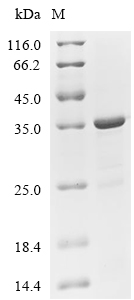 |
| Endotoxin | < 1.0 EU/μg of the protein as determined by the LAL method. |
| Formulation | Tris-based buffer, 50% glycerol |
| Reconstitution | Reconstitute the lyophilized protein in distilled water. The product concentration should not be less than 100 μg/ml. Before opening, centrifuge the tube to collect powder at the bottom. After adding the reconstitution buffer, avoid vortexing or pipetting for mixing. |
| Synonyms | N-formylpeptide receptor-like 2, Lipoxin A4 receptor-like protein, Fpr-rs2, Fpr2, Formylpeptide receptor-related sequence 2, Formyl peptide receptor 2 |
| Research Background | High affinity receptor for N-formyl-methionyl peptides (FMLP), which are powerful neutrophil chemotactic factors. Stimulates chemotaxis in immune cells to site of infection or tissue damage upon recognition of several ligands, such as FMLP, or ligand involved in cell damage, disease or inflammation. Receptor for the chemokine-like protein FAM19A5, mediating FAM19A5-stimulated macrophage chemotaxis and the inhibitory effect on TNFSF11/RANKL-induced osteoclast differentiation. |
| Molecular Weight | 33.3 kDa (predicted) |
| Shipping | In general, lyophilized powders are shipped with blue ice, while solutions are shipped with dry ice. |
| Storage | Lyophilized powders can be stably stored for over 12 months, while liquid products can be stored for 6-12 months at -80°C. For reconstituted protein solutions, the solution can be stored at -20°C to -80°C for at least 3 months. Please avoid multiple freeze-thaw cycles and store products in aliquots. |
| Size | Quantity | Unit Price | Amount | Operation |
|---|
 Feedback
 Hello! How can I help you today?
Copyright © 2015-2026 TargetMol Chemicals Inc. All Rights Reserved.
