


Shopping Cart
Remove All Your shopping cart is currently empty

Synonyms: t-plasminogen activator, T-PA, TPA, Tissue plasminogen activator
Anti-tPA Antibody
(2G74)
| Pack Size | Price | USA Stock | Global Stock | Quantity |
|---|---|---|---|---|
| 50 µL | $296 | 7-10 days | 7-10 days | |
| 100 µL | $497 | 7-10 days | 7-10 days |
| Description | Anti-tPA Antibody (2G74) is a Rabbit antibody targeting tPA. Anti-tPA Antibody (2G74) can be used in IHC,WB. |
| Synonyms | t-plasminogen activator, T-PA, TPA, Tissue plasminogen activator |
| Ig Type | IgG |
| Clone | 2G74 |
| Reactivity | Human,Mouse,Rat |
| Verified Activity | 1. Immunohistochemical analysis of paraffin-embedded rat brain tissue using anti-PLAT antibody. Counter stained with hematoxylin. 2. Immunohistochemical analysis of paraffin-embedded mouse brain tissue using anti-PLAT antibody. Counter stained with hematoxylin. 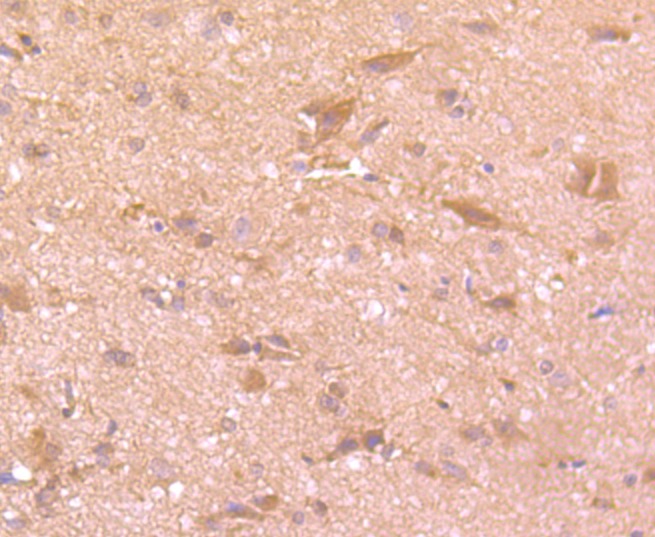 , ,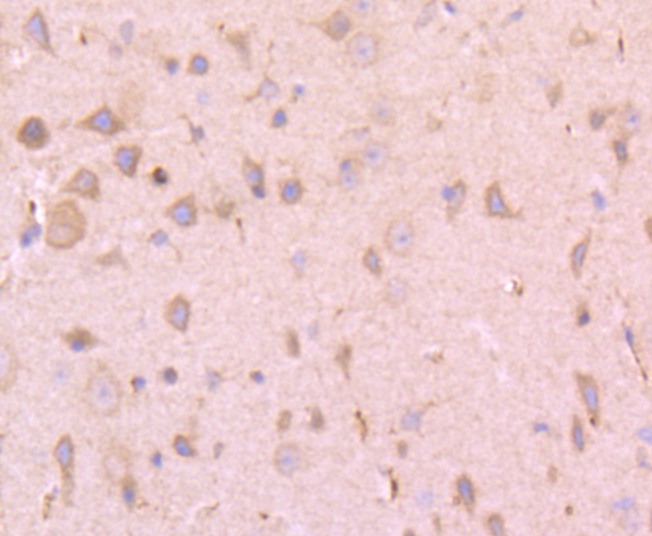 |
| Application | |
| Recommended Dose | WB: 1:500-1000; IHC: 1:50-200 |
| Antibody Type | Monoclonal |
| Host Species | Rabbit |
| Construction | Recombinant Antibody |
| Purification | ProA affinity purified |
| Appearance | Liquid |
| Formulation | 1*TBS (pH7.4), 1%BSA, 40%Glycerol. Preservative: 0.05% Sodium Azide. |
| Research Background | uPA (urokinase-type plasminogen activator) and tPA (tissue plasminogen activator), which are serine proteases and members of the trypsin family, are essential to the intrinsic coagulation system. tPA is primarily involved in fibrinolysis, whereas uPA principally mediates cell migration and tissue remodeling processes. uPA and tPA are responsible for cleaving plasminogen, a large serum β-globulin that is deposited on the Fibrin strands within a thrombus. uPA and tPA preferentially target plasminogen at the Arg-Val bond to produce plasmin (also designated fibrinolysin), which is a trypsin-like enzyme that acts on Arg-Lys bonds in Fibrin and Fibrinogen and contributes to the systematic activation of the coagulation cascade. uPA and tPA each consist of two chains that are designated A and B. The A chain of uPA can be cleaved, resulting in low and high molecular mass forms. uPA and tPA are regulated by the serpin family members PAI-1 and PAI-2, which are serine proteinase inhibitors that complex with uPA, tPA and other targeted proteinases and then slowly disassociate to produce cleaved species that fold into stable inactive conformations. |
| Conjucates | Unconjugated |
| Immunogen | Recombinant Protein |
| Uniprot ID |
| Molecular Weight | Theoretical: 63 kDa. |
| Stability & Storage | Store at -20°C or -80°C for 12 months. Avoid repeated freeze-thaw cycles. |
| Transport | Shipping with blue ice. |
| Size | Quantity | Unit Price | Amount | Operation |
|---|
 Feedback
 Hello! How can I help you today?
Copyright © 2015-2026 TargetMol Chemicals Inc. All Rights Reserved.
