


Shopping Cart
Remove All Your shopping cart is currently empty

Synonyms:
| Pack Size | Price | USA Stock | Global Stock | Quantity |
|---|---|---|---|---|
| 50 µL | $296 | 7-10 days | 7-10 days | |
| 100 µL | $470 | 7-10 days | 7-10 days |
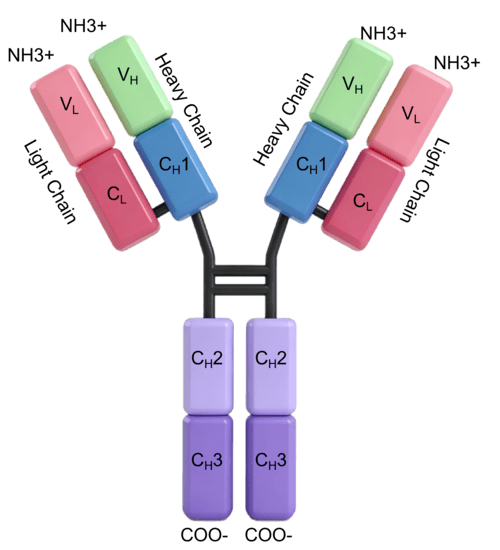
| Description | Anti-Raptor Antibody (4Q46) is a Mouse antibody targeting Raptor. Anti-Raptor Antibody (4Q46) can be used in WB,ELISA. |
| Ig Type | IgG1 |
| Clone | 4Q46 |
| Reactivity | Human |
| Verified Activity | Sample: A549 (Human) Cell Lysate at 30 μg k562 (human) Cell Lysate at 30 μg Primary: Anti-Raptor (TMAB-12091) at 1/1000 dilution Secondary: IRDye800CW Goat Anti-Mouse IgG at 1/20000 dilution Predicted band size: 147 kD Observed band size: 140 kD |
| Application | |
| Recommended Dose | WB: 1:500-2000; ELISA: 1:5000-10000 |
| Antibody Type | Monoclonal |
| Host Species | Mouse |
| Subcellular Localization | Cytoplasm. Lysosome. Note=Targeting to lysosomes depends on amino acid availability. |
| Tissue Specificity | Highly expressed in skeletal muscle, and in a lesser extent in brain, lung, small intestine, kidney and placenta. |
| Construction | Hybridoma Monoclonal Antibody |
| Purification | Protein G purified |
| Appearance | Liquid |
| Formulation | 0.01M TBS (pH7.4) with 1% BSA, 0.02% Proclin300 and 50% Glycerol. |
| Concentration | 1mg/ml |
| Research Background | mTOR controls cell growth, in part by regulating p70 S6 kinase alpha (p70alpha) and eukaryotic initiation factor 4E binding protein 1 (4EBP1). Raptor is a 150 kDa mTOR binding protein that also binds 4EBP1 and p70alpha. The binding of Raptor to mTOR is necessary for the mTOR-catalyzed phosphorylation of 4EBP1 in vitro, and it strongly enhances the mTOR kinase activity toward p70alpha. Rapamycin or amino acid withdrawal increases, whereas insulin strongly inhibits, the recovery of 4EBP1 and raptor on 7-methyl-GTP Sepharose. Partial inhibition of raptor expression by RNA interference (RNAi) reduces mTOR-catalyzed 4EBP1 phosphorylation in vitro. RNAi of C. elegans raptor yields an array of phenotypes that closely resemble those produced by inactivation of Ce-TOR. Thus, raptor is an essential scaffold for the mTOR-catalyzed phosphorylation of 4EBP1 and mediates TOR action in vivo. |
| Immunogen | Recombinant Protein: human Raptor protein |
| Antigen Species | Human |
| Gene Name | RPTOR |
| Gene ID | |
| Protein Name | Regulatory-associated protein of mTOR |
| Uniprot ID | |
| Function | Involved in the control of the mammalian target of rapamycin complex 1 (mTORC1) activity which regulates cell growth and survival, and autophagy in response to nutrient and hormonal signals; functions as a scaffold for recruiting mTORC1 substrates. mTORC1 is activated in response to growth factors or amino-acids. Growth factor-stimulated mTORC1 activation involves a AKT1-mediated phosphorylation of TSC1-TSC2, which leads to the activation of the RHEB GTPase that potently activates the protein kinase activity of mTORC1. Amino-acid-signaling to mTORC1 requires its relocalization to the lysosomes mediated by the Ragulator complex and the Rag GTPases. Activated mTORC1 up-regulates protein synthesis by phosphorylating key regulators of mRNA translation and ribosome synthesis. mTORC1 phosphorylates EIF4EBP1 and releases it from inhibiting the elongation initiation factor 4E (eiF4E). mTORC1 phosphorylates and activates S6K1 at 'Thr-389', which then promotes protein synthesis by phosphorylating PDCD4 and targeting it for degradation. |
| Molecular Weight | Theoretical: 147 kDa. Actual: 140 kDa. |
| Stability & Storage | Store at 2°C-8°C for 1 month. Store at -20°C or -80°C for 12 months. Avoid repeated freeze-thaw cycles. |
| Transport | Shipping with blue ice. |
| Size | Quantity | Unit Price | Amount | Operation |
|---|
 Feedback
 Hello! How can I help you today?
Copyright © 2015-2026 TargetMol Chemicals Inc. All Rights Reserved.
