


Shopping Cart
Remove All Your shopping cart is currently empty

Synonyms:
| Pack Size | Price | USA Stock | Global Stock | Quantity |
|---|---|---|---|---|
| 25 µL | $150 | 7-10 days | 7-10 days | |
| 50 µL | $262 | 7-10 days | 7-10 days | |
| 100 µL | $471 | 7-10 days | 7-10 days |
| Description | Anti-PTGER2 Antibody (1O173) is a Rabbit antibody targeting PTGER2. Anti-PTGER2 Antibody (1O173) can be used in WB,IHC-P,IHC-Fr,ICC/IF,IF. |
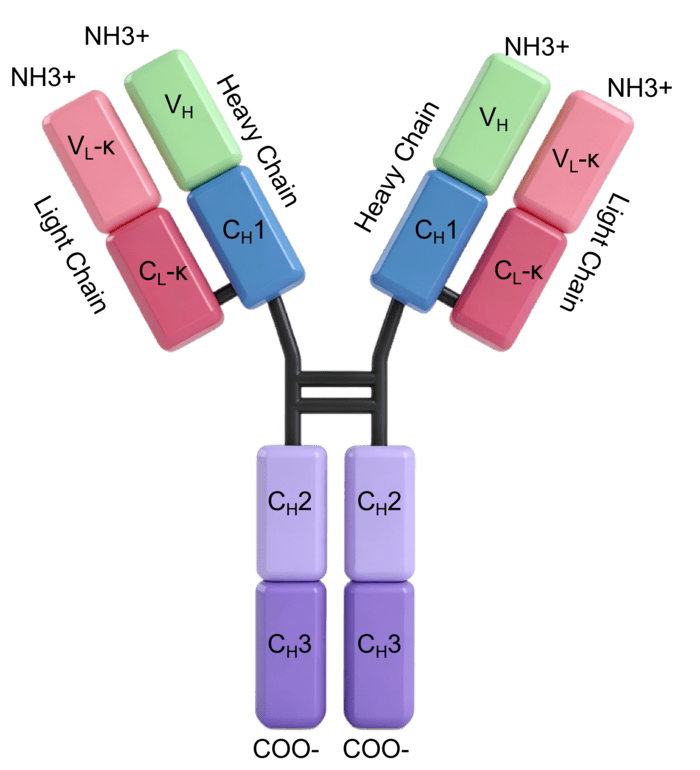
| Ig Type | IgG/Kappa |
| Clone | 1O173 |
| Reactivity | Human,Mouse,Rat |
| Verified Activity | 1. Blocking buffer: 5% NFDM/TBST Primary ab dilution: 1:1000 Primary ab incubation condition: 4°C overnight Secondary ab: Goat Anti-Rabbit IgG H&L (HRP) Lysate: HeLa, JAR, F9, Rat liver Protein loading quantity: 20 μg Exposure time: 10 s Predicted MW: 52 kDa Observed MW: 56 kDa 2. Tissue: Rat lung Section type: Formalin fixed & Paraffin-embedded section Retrieval method: High temperature and high pressure Retrieval buffer: Tris/EDTA buffer, pH 9.0 Primary ab dilution: 1:100 Primary ab incubation condition: 1 hour at room temperature Secondary ab: SP Kit (Rabbit) Counter stain: Hematoxylin (Blue) Comment: Color brown is the positive signal for TMAB-11897 3. Tissue: Human placenta Section type: Formalin fixed & Paraffin-embedded section Retrieval method: High temperature and high pressure Retrieval buffer: Tris/EDTA buffer, pH 9.0 Primary ab dilution: 1:100 Primary ab incubation condition: 1 hour at room temperature Secondary ab: SP Kit (Rabbit) Counter stain: Hematoxylin (Blue) Comment: Color brown is the positive signal for TMAB-11897 4. Tissue: Mouse liver Section type: Formalin fixed & Paraffin-embedded section Retrieval method: High temperature and high pressure Retrieval buffer: Tris/EDTA buffer, pH 9.0 Primary ab dilution: 1:100 Primary ab incubation condition: 1 hour at room temperature Secondary ab: SP Kit (Rabbit) Counter stain: Hematoxylin (Blue) Comment: Color brown is the positive signal for TMAB-11897 5. Cell line: HeLa Fixative:100% Ice-cold methanol Permeabilization: 0.1% TritonX-100 Primary ab dilution: 1:50 Primary incubation condition: 4°C overnight Secondary ab: Goat Anti-Rabbit IgG Nuclear counter stain: DAPI (Blue) Comment: Color green is the positive signal for TMAB-11897 |
| Application | |
| Recommended Dose | WB: 1:500-2000; IHC-P: 1:100-500; IHC-Fr: 1:100-500; ICC/IF: 1:50-200; IF: 1:100-500 |
| Antibody Type | Monoclonal |
| Host Species | Rabbit |
| Subcellular Localization | Cell membrane; Multi-pass membrane protein. |
| Tissue Specificity | Placenta and lung. |
| Construction | Recombinant Antibody |
| Purification | Protein A purified |
| Appearance | Liquid |
| Formulation | 0.01M TBS (pH7.4) with 1% BSA, 0.02% Proclin300 and 50% Glycerol. |
| Concentration | 1mg/ml |
| Research Background | Prostaglandins are produced by the metabolism of arachidonic acid. Prostaglandin E2 is one of the five physiologically significant prostanoids known. Its wide spectrum of physiologic and pharmacologic effects in various tissues is mediated through binding to the Prostaglandin E2 receptors (EP1, EP2, EP3 & EP4). These include effects on the immune, endocrine, cardiovascular, renal and reproductive systems as well as smooth muscle. It is also one of the most abundant of the prostanoid family in the brain where it plays an important role in many neural functions, particularly in newborn babies, and as a mediator of inflammation. Prostaglandin E2 signals through a family of G-protein coupled receptors known as EP receptors. There are 4 subtypes of EP receptors, known as EP1, EP2, EP3 and EP4. EP2 receptors are 358 amino acid proteins with a short third intracellular loop. EP2 receptors stimulate adenylyl cyclase by their coupling to Gs and do not undergo Prostaglandin E2 induced internalization. The EP2 receptors is involved with the contration and relaxation of smooth muscle tissue. These receptors are mainly localized in lung and placental tissues and in smooth muscle. |
| Gene Name | PTGER2 |
| Gene ID | |
| Protein Name | Prostaglandin E2 receptor EP2 subtype |
| Function | Receptor for prostaglandin E2 (PGE2). The activity of this receptor is mediated by G(s) proteins that stimulate adenylate cyclase. The subsequent raise in intracellular cAMP is responsible for the relaxing effect of this receptor on smooth muscle. |
| Stability & Storage | Store at 2°C-8°C for 1 month. Store at -20°C or -80°C for 12 months. Avoid repeated freeze-thaw cycles. |
| Transport | Shipping with blue ice. |
| Size | Quantity | Unit Price | Amount | Operation |
|---|
 Feedback
 Hello! How can I help you today?
Copyright © 2015-2026 TargetMol Chemicals Inc. All Rights Reserved.
