


Shopping Cart
Remove All Your shopping cart is currently empty

Synonyms: interferon (α, β and ω) receptor 1, interferon (alpha, beta and omega) receptor 1
Anti-IFNAR1 Antibody
(1R657)
| Pack Size | Price | USA Stock | Global Stock | Quantity |
|---|---|---|---|---|
| 50 µL | $298 | 7-10 days | 7-10 days | |
| 100 µL | $498 | 7-10 days | 7-10 days |
| Description | Anti-IFNAR1 Antibody (1R657) is a Rabbit antibody targeting IFNAR1. Anti-IFNAR1 Antibody (1R657) can be used in FCM,IHC,IP,WB. |
| Synonyms | interferon (α, β and ω) receptor 1, interferon (alpha, beta and omega) receptor 1 |
| Ig Type | IgG |
| Clone | 1R657 |
| Reactivity | Human,Mouse,Rat |
| Verified Activity | 1. Immunohistochemical analysis of paraffin-embedded human tonsil tissue using anti-IFNAR1 antibody. Counter stained with hematoxylin. 2. Immunohistochemical analysis of paraffin-embedded human spleen tissue using anti-IFNAR1 antibody. Counter stained with hematoxylin. 3. Immunohistochemical analysis of paraffin-embedded rat brain tissue using anti-IFNAR1 antibody. Counter stained with hematoxylin. 4. Immunohistochemical analysis of paraffin-embedded mouse brain tissue using anti-IFNAR1 antibody. Counter stained with hematoxylin. 5. Flow cytometric analysis of Jurkat cells with IFNAR1 antibody at 1/50 dilution (blue) compared with an unlabelled control (cells without incubation with primary antibody; red). Alexa Fluor 488-conjugated goat anti rabbit IgG was used as the secondary antibody. 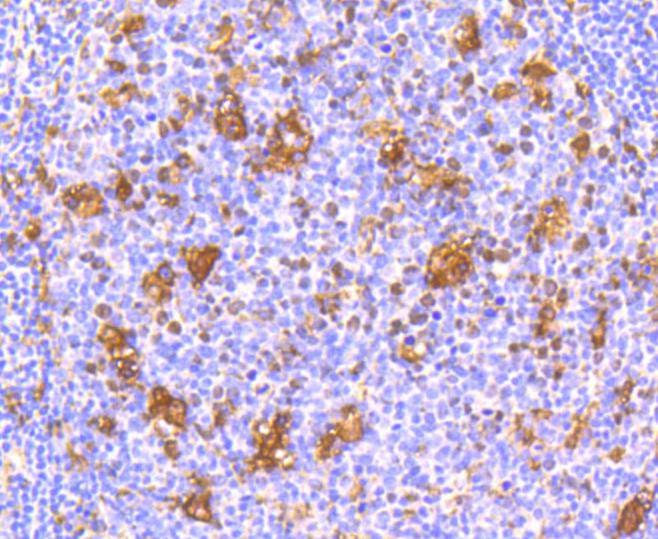 , ,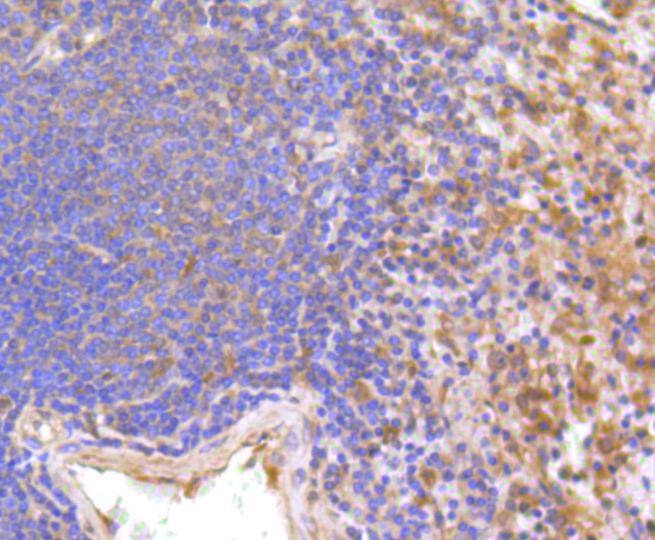 , ,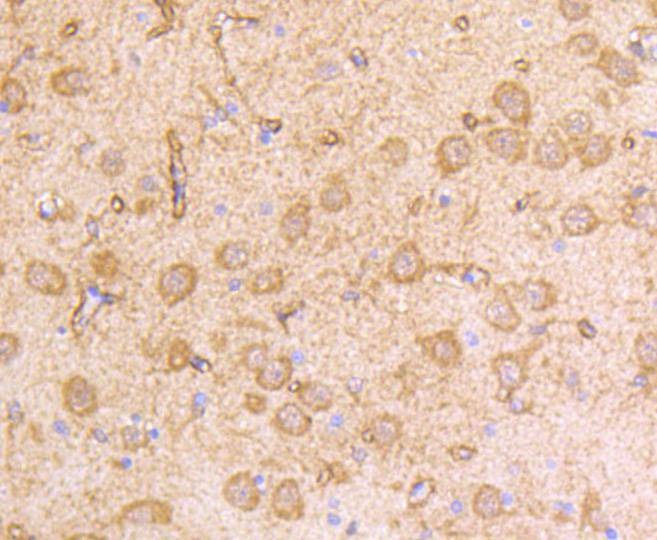 , ,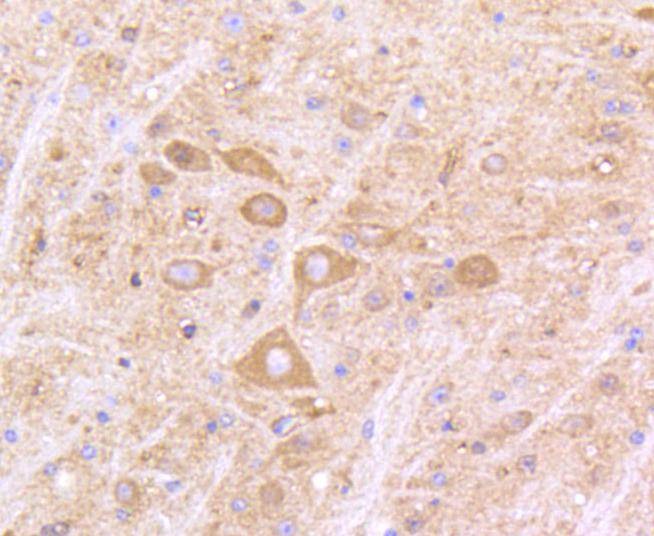 , ,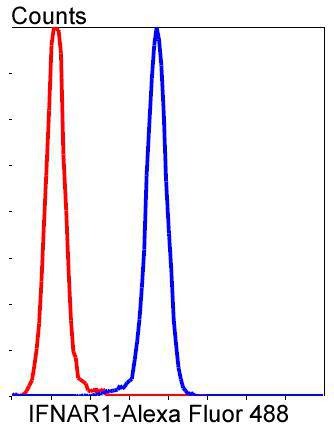 |
| Application | |
| Recommended Dose | WB: 1:1000-2000; IHC: 1:50-200; FCM: 1:50-100 |
| Antibody Type | Monoclonal |
| Host Species | Rabbit |
| Construction | Recombinant Antibody |
| Purification | ProA affinity purified |
| Appearance | Liquid |
| Formulation | 1*TBS (pH7.4), 1%BSA, 40%Glycerol. Preservative: 0.05% Sodium Azide. |
| Research Background | The type I interferons (IFNs), α and β, are a group of structurally and functionally related proteins that are induced by either viruses or double stranded RNA and defined by their ability to confer an antiviral state in cells. The α and β IFNs appear to compete with one another for binding to a common cell surface receptor, while immune IFN (IFNγ) binds to a distinct receptor. The latter protein, IFN-αR, is only weakly responsive to type I interferons in contrast to IFN-α/βR, which binds to and responds effectively to IFN-β and to several of the IFN-? subtypes. Moreover, IFN-α/βR is physically associated with the cytoplasmic tyrosine kinase JAK1 and thus, in addition to ligand binding, appears to be functionally involved in signal transduction. IFN-αR1 is a receptor for IFN-α/β and is present as the full chain (IFN-αR1a) and as a splice-variant (IFN-αR1). The IFN-γ receptor complex consists of an alpha subunit (IFN-γRα) and a beta subunit that is 332 amino acids in length (mouse) and 337 amino acids in length (human). |
| Conjucates | Unconjugated |
| Immunogen | Recombinant Protein |
| Uniprot ID |
| Molecular Weight | Theoretical: 90/130 kDa. |
| Stability & Storage | Store at -20°C or -80°C for 12 months. Avoid repeated freeze-thaw cycles. |
| Transport | Shipping with blue ice. |
| Size | Quantity | Unit Price | Amount | Operation |
|---|
 Feedback
 Hello! How can I help you today?
Copyright © 2015-2026 TargetMol Chemicals Inc. All Rights Reserved.
